Plant Overview
Often called the "Fried Egg Plant," Romneya trichocalyx is a showstopper of the California wilderness. Known for producing some of the largest flowers of any California native, it brings a dramatic, crinkled elegance to sun-drenched landscapes. While it looks delicate, this "Bristly Matilija Poppy" is a rugged survivor, famous for its ability to colonize dry, rocky slopes with ease.
🔍 How to Identify
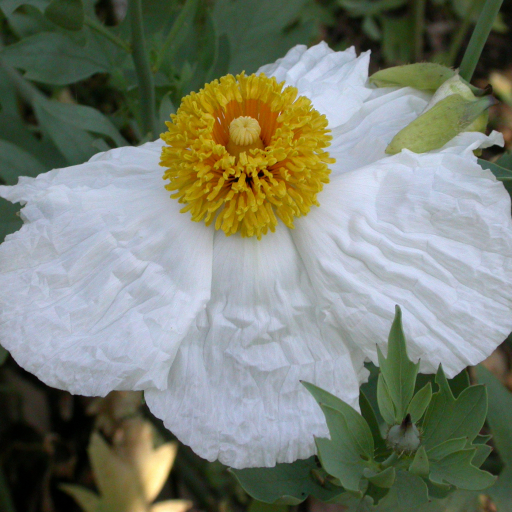
- 🍳 The "Fried Egg" Bloom: Massive, 6-inch wide flowers with six snowy-white, crepe-paper-like petals surrounding a dense, globe-like cluster of bright yellow stamens.
- 🌿 Silver Foliage: The leaves are a striking blue-gray or glaucous green, deeply lobed, and provide a cool contrast to the brilliant white flowers.
- 🌵 Bristly Buds: Unlike its close relative (R. coulteri), the flower buds and the stems just below the flower are covered in fine, stiff hairs or "bristles," which gives this species its name.
🏡 In Your Garden
- 🏃 A Garden Wanderer: This plant spreads aggressively via underground rhizomes. While it is stunning, it is often called a "garden thug" because it can pop up several feet away from where it was originally planted. Give it plenty of room to roam.
- 🚫 Don't Touch the Roots: It is notoriously difficult to transplant. The Matilija Poppy has a sensitive root system that "sulks" or dies if disturbed. It is best to plant it from a container and leave it in its forever home.
- ☀️ Drought Warrior: Once established, it requires almost no supplemental water. It thrives in lean, well-draining soil and full sun, making it perfect for xeriscaping or hillside stabilization.
⚠️ Safety & Toxicity
- 🟢 Generally Safe: This plant is not considered highly toxic to humans or common household pets.
- 🧤 Skin Irritation: Some gardeners report mild skin redness or itching after handling the bristly stems or the sap. It is always a good idea to wear gloves when pruning back the woody stems in late autumn.
✨ Fun Fact
The Matilija Poppy is a "fire follower" in the wild. Its seeds have a very tough outer coating that often requires the intense heat of a wildfire or the chemical cues from smoke to trigger germination!

Detailed Care Instructions
To grow Romneya Trichocalyx, also known as the Matilija Poppy or California Tree Poppy, follow these steps:
- Climate: Check if your climate is suitable for growing Romneya Trichocalyx. It is native to California and prefers a Mediterranean climate with mild, wet winters and hot, dry summers. It may struggle in areas with high humidity or extreme cold.
- Location: Choose a sunny location with well-draining soil. This plant requires full sun to thrive.
- Soil Preparation: Prepare the soil by removing weeds and loosening it to ensure good drainage. Add organic matter like compost to improve fertility.
- Planting: Plant Romneya Trichocalyx in early spring or fall. Dig a hole slightly larger than the root ball, place the plant in the hole, and backfill with soil. Ensure the crown of the plant is level with the soil surface.
- Watering: Water the plant deeply after planting, and then gradually reduce the frequency of watering. Once established, Romneya Trichocalyx is drought-tolerant and does not require much water.
- Mulching: Mulch around the plant with a layer of organic material like wood chips or straw. This will help retain moisture and suppress weed growth.
- Pruning: Prune the plant in late winter or early spring to remove dead or damaged stems. This will promote healthy growth and prevent overcrowding.
- Propagation: Propagate Romneya Trichocalyx from seeds or by division. You can collect seeds from mature pods in the fall and sow them in containers or directly in the ground. To divide the plant, carefully dig up a mature clump and separate the sections, ensuring each division has roots attached.
- Pests and Diseases: This plant is relatively resistant to pests and diseases. However, occasional aphids or spider mites can be treated with insecticidal soap or horticultural oil if necessary.
- Patience: Romneya Trichocalyx can take a few years to establish and start blooming abundantly. Be patient and provide the plant with proper care, and it will reward you with its beautiful large white flowers.
Remember to check local regulations regarding the cultivation of this plant as it may be considered invasive in some regions.

To properly water this particular plant, it is important to pay attention to the soil moisture level. The plant prefers well-draining soil, so it is important not to let the soil become waterlogged. The best way to water it is to wait until the top inch of soil is dry to the touch before watering. When watering, it is recommended to water deeply and thoroughly to ensure the entire root system is receiving water. In drought conditions, it is important to give the plant extra water, but still avoiding making the soil too waterlogged. It is also important to avoid getting water on the foliage, as this can lead to fungal infections. Proper watering techniques will ensure a healthy and thriving plant.
To fertilize this plant, you should give it a slow-release fertilizer in the spring. Be sure to mix the fertilizer with water and apply it directly to the soil around the plant, rather than on the leaves. Avoid fertilizing after the flowering period has ended.
Romneya trichocalyx prefers to grow in well-draining soil that is rich in nutrients. The soil should be a mix of sand, clay, and loam to provide proper aeration, moisture retention, and drainage. It should have a pH level between 6.0 and 7.5, which is slightly acidic to neutral. The plant does not tolerate waterlogged soil, so it is important to keep the soil moist but not overly wet. Adding organic matter, such as compost or leaf mold, to the soil can help improve its fertility and texture. It is important to avoid using soil that is compacted, heavy, or contaminated with chemicals or pollutants. Soil that is too alkaline or saline can also be detrimental to the growth and health of this plant.
Romneya Trichocalyx can be propagated by dividing the rhizomes. The rhizomes should be dug up from the ground and separated into sections, making sure that each section has at least one stem and a few roots attached. The sections should be replanted in well-draining soil and watered regularly until they establish themselves. It is recommended to do this in the early spring before new growth appears.








