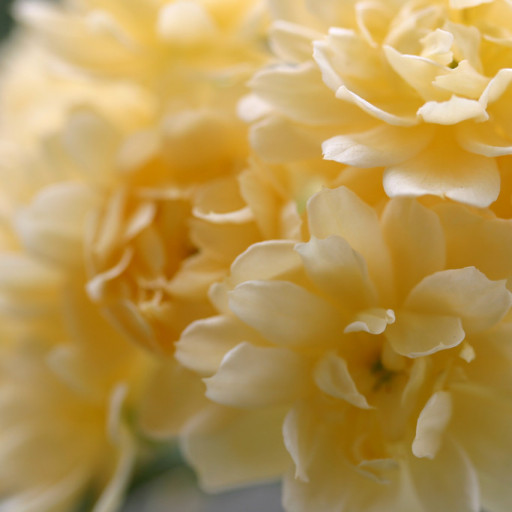
Plant Overview
Often called the Lady Banks' Rose, this vigorous climber is the "gentle giant" of the rose world. Unlike its prickly cousins, it is famous for its nearly thornless stems and cascading "waterfalls" of thousands of tiny, pom-pom-like blossoms. Named after the wife of the legendary botanist Sir Joseph Banks, it brings a romantic, old-world charm to any garden it graces.
🔍 How to Identify
- 🌸 The Blooms: Small, 1-inch wide flowers that appear in massive, dense clusters. They are typically butter-yellow (the 'Lutea' variety) or creamy white and have a light, violet-like fragrance.
- 🌿 The Foliage: Rich, glossy green leaves with 3 to 5 slender, pointed leaflets. The leaves often stay on the vine through mild winters, providing year-round greenery.
- 🎋 The Stems: Long, arching canes that are remarkably smooth. While an occasional small prickle might appear on older wood, it is widely celebrated as a "thornless" rose.
🏡 In Your Garden
- 🏗️ Space Seekers: This is not a plant for a small pot. It is a massive, sprawling climber that can easily reach 20–30 feet. It needs a very sturdy trellis, a large fence, or even a sturdy tree to scramble through.
- ✂️ Pruning Nuance: Unlike many modern roses, Lady Banks only blooms once a year in late spring. It flowers on "old wood," meaning you should only prune it immediately after it finishes flowering. If you prune it in winter, you’ll accidentally cut off all of next year's blossoms!
- ☀️ Sun & Resilience: It is incredibly long-lived and more disease-resistant than most roses. It thrives in full sun and, once established, is surprisingly drought-tolerant.
⚠️ Safety & Toxicity
- ✅ Status: Generally non-toxic and safe.
- 🐾 Details: This rose is considered safe for cats, dogs, and horses. Because it lacks the sharp thorns typical of other species, it is an excellent choice for gardens where children or pets play frequently, as there is little risk of scratches or "ouches."
✨ Fun Fact
The world's largest rose bush is a Rosa banksiae planted in 1885 in Tombstone, Arizona. It covers over 8,000 square feet—large enough for a whole crowd to sit under its canopy!

Detailed Care Instructions
To successfully grow a Rosa Banksiae plant, follow these steps:
- Select a suitable planting location: Choose a spot that receives full sun (at least six hours of direct sunlight per day). The soil should be well-draining, with a slightly acidic pH around 6.0-6.5.
- Prepare the soil: Remove any weeds or grass from the planting area, dig a hole that is slightly larger and deeper than the plant’s root ball, and amend the soil with organic matter such as compost or well-rotted manure.
- Planting: Gently remove the plant from its container and loosen the roots. Place the plant in the prepared hole, making sure the bud union (the swollen area between the graft and roots) is slightly above the soil level. Fill the hole with soil, firming it gently around the roots.
- Watering: Give the plant a thorough watering after planting to settle the soil. Keep the soil evenly moist, especially during the plant’s first growing season. Once established, Rosa Banksiae is fairly drought-tolerant, but regular watering during dry periods will promote healthy growth and more abundant blooms.
- Fertilizing: Apply a balanced, slow-release fertilizer in early spring. Follow the package instructions for the correct amount to use. Avoid over-fertilizing, as this may promote excess foliage growth at the expense of flowers.
- Pruning: Prune Rosa Banksiae lightly after flowering, removing any dead or damaged wood and cutting back any unwanted growth. Train the long canes to grow in the desired direction by tying them to a support structure, such as a trellis or pergola.
- Protection: Rosa Banksiae is generally disease-resistant, but it's recommended to monitor for common rose diseases such as blackspot or powdery mildew. If issues arise, treat them with appropriate fungicides or insecticides.
- Winter care: Rosa Banksiae is hardy in USDA Zones 7-10. In colder regions, protect the plant during winter by adding a layer of mulch around the base to insulate the roots. In severe winters, consider wrapping the canes in burlap or covering the entire plant with a frost cloth.
By providing proper care and maintenance, your Rosa Banksiae plant should grow healthy and produce beautiful clusters of flowers.

Place in a bright room that is sun drenched almost all day. Or directly in a south-facing window.

The plant requires regular watering during its growing season, which is usually spring and early summer. It is important to ensure that the soil around the plant is moist but not waterlogged, as excessive water can lead to root rot. It is recommended to check the soil moisture level by inserting a finger into the soil about 1-2 inches deep. If the soil feels dry, it is time to water the plant. A good way to water this plant is to use a hose or watering can, being careful not to wet the foliage too much as this can cause disease. It is also recommended to water the plant in the morning, as watering in the evening can increase the risk of disease due to the plant remaining damp overnight. During the dormant season, watering can be reduced, but the plant should never be allowed to completely dry out.
To fertilize the plant, use a balanced, slow-release fertilizer in the spring and summer. Apply the fertilizer per the packaging instructions. Be sure to water the plant thoroughly before and after fertilizing to avoid root burn. Avoid fertilizing in the fall or winter when the plant is dormant.
It is best to use a well-draining soil for this plant. The soil should have a slightly acidic to neutral pH level and contain a good amount of organic matter. Adding compost or well-rotted manure to the soil can help improve its fertility and water-holding capacity. It is also important to avoid planting in soil that is too compacted or heavy as this can lead to poor drainage and root rot. Adding sand or perlite to the soil can help improve drainage. Additionally, adding mulch around the base of the plant can help retain moisture in the soil and inhibit weed growth.
To propagate this plant, one can take stem cuttings from healthy, mature growth and place them in a rooting hormone solution to encourage root growth. The cuttings should then be planted in a well-draining soil mix and kept in a warm, bright location with consistent moisture until roots develop and new growth appears. Alternatively, one can also propagate this plant through layering, where a section of a mature stem is bent down to the ground and covered with soil until roots develop before being cut and transplanted. Propagation can also be achieved through seed germination, although this method can be more challenging and may result in variations in plant characteristics.
Common pests of the lady bank's rose include Spider mites, aphids, larvae. Make a habit of checking your lady bank's rose frequently for pests so that any infestations can be caught and managed early.








