Plant Overview
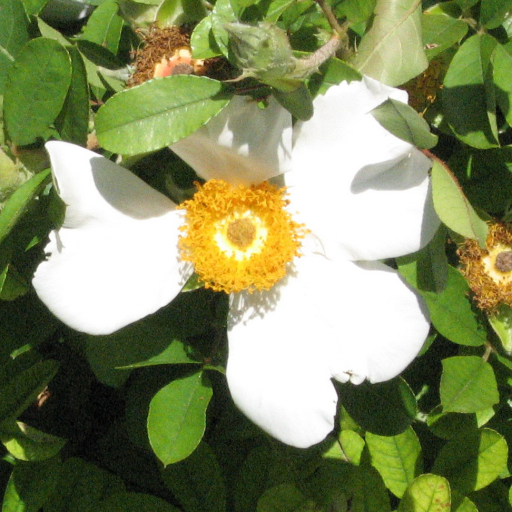
Often called the Macartney Rose, this robust evergreen climber was brought from China to the West in the late 1700s as a gift for Lord Macartney. While it carries a delicate "Fried Egg" appearance with its snowy white petals and golden centers, it is a fierce survivor. In the Southern United States, it has transitioned from a garden favorite to a wild wanderer, often seen sprawling over old homesteads and fencelines with untamed vigor.
🔍 How to Identify
- 🌸 The Bloom: Single, five-petaled white flowers that look remarkably like a sunny-side-up egg due to their dense cluster of bright yellow central stamens.
- 🍃 The Foliage: Small, leathery leaflets (usually 5 to 9) that are dark green and exceptionally glossy; unlike many roses, this foliage stays green throughout the winter in warmer zones.
- ⚔️ The Armor: Stems are stout and covered in a velvety fuzz interspersed with very sharp, broad, curved thorns that act like hooks for climbing.
🏡 In Your Garden
- 🧗 Scrambling Habit: This rose doesn't just grow; it conquers. It is a "rambler" that uses its hooked thorns to hoist itself over fences or other shrubs, eventually forming massive, impenetrable mounds.
- 🌱 Toughness: It is notoriously difficult to kill once established because it can root wherever its long canes touch the ground. It thrives in sunny spots with well-drained soil and is highly resistant to many common rose diseases like black spot.
⚠️ Safety & Toxicity
- ✅ Status: Generally non-toxic to humans and pets.
- 🩸 Physical Hazard: The primary danger is mechanical. The thorns are numerous, backward-curved, and exceptionally sharp. They can easily snag skin or tear through light clothing, so heavy-duty leather gloves are a "must" for any maintenance.
✨ Fun Fact
🏰 In the mid-19th century, the Macartney Rose was so prized for its density that it was planted as a "living fence" to contain livestock; its thickets are so thorny and tightly woven that even a determined bull struggle to push through them!

Detailed Care Instructions
To grow Rosa Bracteata, also known as the Macartney rose, follow these steps:
- Choose a suitable location: Rosa Bracteata prefers full sun but can tolerate partial shade. It is important to select a location with well-draining soil.
- Prepare the soil: Before planting, prepare the soil by removing any weeds or grass. Loosen the soil to a depth of about 12 inches (30 cm) and mix in organic matter, such as compost, to improve drainage and fertility.
- Plant the rose: Dig a hole slightly larger than the root ball. Place the rose plant in the hole ensuring that the bud union (the swollen area where the rose was grafted onto the rootstock) is level with or slightly above the soil surface. Backfill the hole with soil, firming it gently around the roots.
- Water the plant: After planting, water the rose thoroughly to settle the soil. Roses require regular watering, especially during the initial establishment phase. Water deeply once or twice a week, ensuring that the soil is evenly moist but not waterlogged.
- Mulch around the plant: Apply a layer of organic mulch, such as wood chips or compost, around the rose plant. This helps conserve moisture, suppresses weeds, and improves soil fertility. Make sure to keep the mulch a few inches away from the base of the plant to prevent rotting.
- Prune as needed: Rosa Bracteata is a fairly vigorous climber, so regular pruning is essential to maintain its shape and control its growth. Pruning can be done in late winter or early spring before new growth begins. Remove any dead, damaged, or weak wood, and cut back any excessive growth to maintain the desired shape.
- Provide support: Since Rosa Bracteata is a climbing rose, it requires support to grow vertically. Install trellises, arbors, or other structures for the plant to climb on. As the rose grows, carefully train and tie its canes to the support structure to encourage upward growth.
- Fertilize regularly: Feed the rose plant with a balanced rose fertilizer according to the package instructions. Generally, roses benefit from a monthly application during the growing season, starting in early spring and finishing in late summer.
- Monitor pests and diseases: Keep an eye out for common rose pests, such as aphids or Japanese beetles, and take appropriate measures to control them. Additionally, watch for any signs of diseases like blackspot or powdery mildew and treat accordingly.
By following these steps, you can successfully grow Rosa Bracteata and enjoy its charming blooms. Remember to provide adequate care and maintenance to keep the plant healthy and thriving.

Place in a bright room that is sun drenched almost all day. Or directly in a south-facing window.

To water this specific plant, it is important to make sure the soil is moist but not overly saturated. This can be achieved by using a watering can or hose with a gentle spray attachment. Water should be applied directly to the roots of the plant, taking care not to wet the leaves or flowers. It is recommended to water this plant consistently, but avoid watering too frequently as this can lead to root rot. Additionally, it is important to allow the soil to partially dry out before watering again.
- Choose a suitable fertilizer: Look for a well-balanced, slow-release fertilizer with a balanced ratio of nitrogen (N), phosphorus (P), and potassium (K). This can be indicated by N-P-K numbers on the packaging, such as 10-10-10 or 14-14-14.
- Timing: Start fertilizing in early spring, just when new growth begins. Repeat the process every 4-6 weeks during the growing season, usually until late summer or early fall. Avoid fertilizing during winter or dormant periods.
- Dilution: Mix the fertilizer with water before application. Follow the instructions on the fertilizer packaging regarding the recommended dilution rate. Generally, dilute to half strength or less to prevent over-fertilization, especially with a slow-release fertilizer.
- Application method: Apply the diluted fertilizer to the soil around the base of the Rosa Bracteata plant, avoiding contact with its foliage. Pour the solution evenly, covering the root zone of the plant. A gentle, slow watering technique helps ensure proper absorption.
- Amount: Apply the fertilizer according to the recommended amount on the packaging, based on the size and age of your Rosa Bracteata plant. Avoid excessive fertilization, which can lead to nutrient imbalances or damage the plant's roots.
- Watering: After fertilization, water the plant thoroughly to help the nutrients reach the root system. Monitor the soil moisture level and adjust regular watering throughout the growing season, keeping it consistently moist but not waterlogged.
- Observations: Pay attention to the plant's response to fertilization. If the leaves start turning yellow or show signs of burning, reduce the amount or frequency of fertilizer application. Conversely, if growth seems weak or pale, you may increase the frequency or amount of fertilization, but do so gradually.
- Soil testing: It can be beneficial to periodically test the soil to monitor nutrient levels. Soil tests help determine if any specific deficiencies or imbalances exist, allowing for more targeted fertilization.
Note: It is advisable to research specific requirements for Rosa Bracteata plants as appropriate, as fertilizing methods may differ slightly based on individual plant characteristics or preferences.
The Rosa Bracteata plant prefers well-drained soil that is rich in organic matter. The ideal pH range for the soil should be between 5.5 to 7.5. The plant does not tolerate waterlogged soil, so make sure to choose a soil mix that allows for proper drainage. A loamy soil mix that is a combination of sand, silt, and clay is recommended. To improve the fertility of the soil, you can mix compost or aged manure into the soil. Avoid using soil that has high salinity levels as it can damage the roots of the plant. Additionally, the soil should be fertile enough to support healthy growth and blooming of the Rosa Bracteata plant.
To propagate this plant, you should take a stem cutting in early summer, ideally in the morning. The cutting should be about 4-6 inches long, and you should make a clean cut with a sharp knife just below a leaf node. Remove the lower leaves and any flowers or buds from the stem.
Dip the cut end of the stem into rooting hormone powder, and then insert it into a pot filled with well-draining soil. Water the soil thoroughly and place the pot in a bright, but not overly sunny location.
Keep the soil moist but not waterlogged, and mist the cutting regularly to increase humidity around it. After two to three weeks, roots should start to form, and new growth will appear above the soil line.
Once the cutting has established roots and a few leaves, you can transplant it into a larger pot or into your garden. Keep the soil around the new plant moist while it continues to establish itself, and avoid over-fertilizing or overwatering, as this can stress the young plant.








