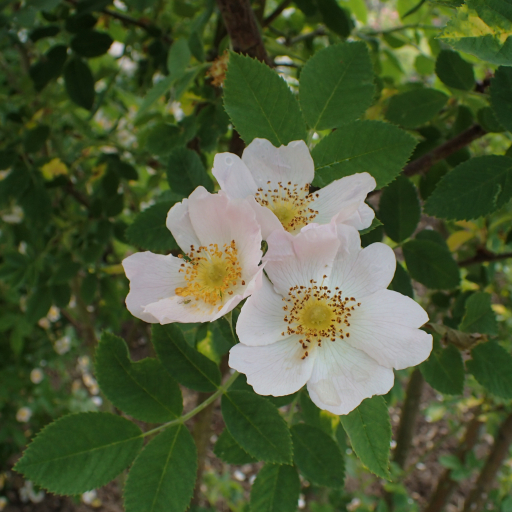
Plant Overview
Often called the "Golden Rose of Afghanistan," Rosa ecae is a desert-born beauty that brings a splash of sunshine to the early spring garden. Unlike the heavy, multi-petaled roses found in traditional English gardens, this wild species is prized for its minimalist elegance and its incredible resilience. It is a tough, wiry shrub that thrives in the rugged terrain of Central Asia, making it a favorite for gardeners looking for something "wild" yet sophisticated.
🔍 How to Identify
- 🌼 Buttercup Blooms: It produces small, single, five-petaled flowers in a brilliant, saturated yellow. These blooms look more like wild buttercups than modern roses and appear in great profusion along the stems.
- 🌿 Fern-like Foliage: The leaves are exceptionally tiny and delicate, resembling fern fronds. This gives the shrub a light, airy texture that contrasts beautifully with its rugged growth habit.
- 🪵 Mahogany Stems: The young branches are a striking reddish-brown or mahogany color. They are densely packed with small, straight, and very sharp prickles that give the plant a fierce look in winter.
🏡 In Your Garden
- ☀️ Sun-Seeker: Originating from the rocky slopes of Afghanistan and Pakistan, this rose craves "baking" heat. It requires full sun and exceptionally well-draining soil; it will quickly decline if its "feet" stay wet in heavy clay.
- 🌬️ Early Herald: This is one of the very first roses to bloom in the spring. It often finishes its floral display before modern hybrid tea roses have even started, making it essential for extending the flowering season.
- ✂️ Low Maintenance: Because it is a wild species, it dislikes heavy pruning. It prefers to be left to its own devices, only requiring the occasional removal of dead wood to keep it looking tidy.
⚠️ Safety & Toxicity
- 🐾 Non-Toxic: This rose is considered safe and non-toxic for cats, dogs, and horses. It contains no known poisonous compounds.
- 🧤 Physical Hazard: While not chemically toxic, it is physically aggressive. The stems are covered in fine, needle-like thorns. It should be planted away from walkways or play areas where children or pets might accidentally brush against it.
✨ Fun Fact
The name "Ecae" isn't a traditional Latin descriptive term. It was actually created by the botanist Dr. Aitchison using the initials of his wife, Edith Charlotte Aitchison (E.C.A.), as a romantic tribute to her during his 19th-century expeditions!

Detailed Care Instructions
To grow a Rosa Ecae plant, also known as the Ecae Rose, you can follow these steps:
- Choose the right location: Ecae roses prefer a sunny area with well-draining soil. Make sure the spot you choose receives at least six hours of direct sunlight a day.
- Prepare the soil: Ecae roses thrive in organically rich soil. Amend the soil with compost or well-rotted manure to improve its fertility and drainage.
- Planting: Dig a hole that is wide and deep enough to accommodate the roots of the rose plant. Place the plant in the hole, ensuring that the bud union (the swollen area where the rose plant has been grafted onto the rootstock) stays above the soil level. Backfill the hole with soil, firming it gently around the roots.
- Watering: After planting, water the rose plant thoroughly to settle the soil and help the roots establish. Water the plant regularly, aiming for deep watering sessions rather than frequent shallow watering. Ensure the plant receives about an inch of water every week, either through rainfall or manual watering.
- Mulching: Apply a layer of organic mulch around the base of the rose plant to conserve moisture, suppress weeds, and maintain more consistent soil temperatures.
- Fertilizing: Ecae roses benefit from regular feeding. Apply a balanced slow-release rose fertilizer in spring, following the package instructions. Additionally, you can supplement with liquid rose fertilizer during the growing season, every 4-6 weeks.
- Pruning: Prune Ecae roses in late winter or early spring before new growth starts. Remove any dead, weak, or diseased branches, as well as any crossing branches that may rub against each other. Open up the center of the plant to allow for better air circulation. Also, remove spent flowers throughout the growing season to encourage more blooms.
- Pest and disease control: Keep an eye out for common rose pests like aphids, thrips, and spider mites. Treat infestations with organic insecticidal soap or neem oil. Ecae roses are also susceptible to diseases like blackspot and powdery mildew. Maintain good airflow around the plant, avoid overhead watering, and consider using fungicidal sprays if necessary.
By following these steps and providing proper care, you can successfully grow a Rosa Ecae plant and enjoy its beautiful blooms.

Place in a bright room that is sun drenched almost all day. Or directly in a south-facing window.

To water this particular plant, you should thoroughly water the soil around the base of the plant until the water begins to run out the bottom of the pot or onto the surrounding soil in the garden. Allow the soil to dry out slightly between watering, but be careful not to let it dry out completely. It is important to avoid getting water on the leaves as this can lead to disease and pest problems. This plant prefers to be kept evenly moist but not waterlogged. It is best to water in the morning or evening to avoid evaporation during the hottest parts of the day.
To fertilize this plant, choose a balanced fertilizer with equal amounts of nitrogen, phosphorus, and potassium. Apply it in the early spring before new growth begins, and again in the summer after the first flush of blooms. Water the plant deeply before and after fertilizing to avoid burning the roots. Spread the fertilizer evenly around the base of the plant, avoiding contact with the foliage. Lastly, gently rake the fertilizer into the soil, and water again to help it soak in.
When planting Rosa Ecae, it is recommended to use well-drained soil that is rich in organic matter. The pH level of the soil should range from 5.5 to 7.0, which is slightly acidic to neutral. It is important to ensure that the soil is not waterlogged, as this can lead to root rot and other problems. The soil should be loose and easy to work with, to allow for proper root growth. Adding compost or other organic matter to the soil can improve its structure and fertility, and provide an ideal environment for the plant to thrive. Overall, the ideal soil for Rosa Ecae should be well-drained, nutrient-rich, and have a slightly acidic to neutral pH level.
To propagate Rosa Ecae plant, you can follow the steps below:
- Choose a healthy and mature Rosa Ecae plant from which you want to take cuttings.
- Take a pair of sharp and sterile pruning shears, and cut a stem of about 15-20 cm length from the plant. The stem should have at least 2-3 nodes or bud areas where new leaves and branches will grow.
- Remove all the leaves from the bottom half of the stem, leaving the top half with a few leaves.
- Dip the cut end of the stem in rooting hormone powder, which will stimulate the growth of roots.
- Prepare a pot or container of potting soil, moisten it, and make a hole in the middle of the soil with a pencil or stick.
- Insert the cut end of the stem into the hole, and gently press the soil around it to secure the stem.
- Cover the top of the pot or container with a plastic bag or a clear plastic dome to create a humid and warm environment for the cutting.
- Keep the cutting in a bright and warm place, but away from direct sunlight.
- Check the soil moisture regularly, and water the cutting when the top inch of soil feels dry to the touch.
- After about 6-8 weeks, you should notice new leaves and roots growing from the stem. At this stage, you can remove the plastic cover and transplant the cutting into a larger pot or your garden, where it can continue to grow and bloom.








