Plant Overview
Often called the "Apothecary’s Rose," Rosa gallica is a living piece of history. It is one of the oldest species of roses cultivated in Europe, cherished by the Greeks, Romans, and medieval herbalists alike. Unlike the delicate modern tea rose, this "French Rose" possesses a wild, untamed charm and an intense, spicy fragrance that has defined perfumes and medicines for centuries.
🔍 How to Identify
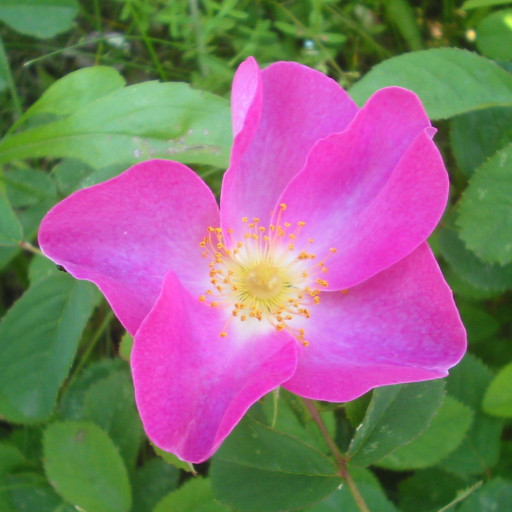
- 🌸 The Bloom: Open-faced, velvety flowers that range from deep pink to a rich crimson-purple. They often feature a striking "eye" of golden-yellow stamens at the center.
- 🌿 The Foliage: Leaves are a distinctive matte, dusty green. They are leathery to the touch and usually grow in groups of five to seven leaflets with jagged edges.
- 🎋 The Stems: The canes are famously "bristly," covered in a mix of small prickles and larger thorns, giving the shrub a rugged, antique appearance.
🏡 In Your Garden
- 🌱 Growth Habit: Unlike modern hybrids, Rosa gallica grows on its own roots and loves to "wander." It produces underground runners (suckers) that can eventually turn a single plant into a lush, flowering thicket.
- ☀️ The Summer Show: This is a "once-blooming" rose. It pours all its energy into one spectacular, head-turning display in early summer. Because it is incredibly cold-hardy, it thrives in northern gardens where more delicate roses might fail.
⚠️ Safety & Toxicity
- ✅ Non-Toxic: This rose is entirely safe for curious pets and children. Its petals are a staple in culinary history, used for rose water, jellies, and teas.
- ⚔️ Physical Hazard: While not poisonous, the stems are very prickly. Always wear thick leather gloves when pruning to avoid "rose gardener’s disease" (sporotrichosis), a rare fungal infection that can enter through thorn scratches.
✨ Fun Fact
This specific rose was the "Red Rose of Lancaster" during the 15th-century "War of the Roses" in England. It was also so highly valued by medieval apothecaries that they believed its scent alone could lift a person's spirits and cure a heavy heart.

Detailed Care Instructions
| Lighting | Full Sun |
To grow Rosa Gallica, also known as the Gallic rose or French rose, you can follow these steps:
- Choose a suitable location: Rose Gallica prefers a spot with full sun exposure, ideally at least 6 hours of direct sunlight per day. The soil should be well-draining and slightly acidic. Choose a location where the rose will have enough space to grow and spread.
- Prepare the soil: Before planting, prepare the soil by removing any weeds or grass. Loosen the soil to a depth of around 12 inches and mix in some organic matter or compost to improve drainage and fertility.
- Planting: Dig a hole wide and deep enough to accommodate the root ball of the rose plant. Place the rose in the hole, ensuring that the bud union (bulge where the plant is grafted onto the rootstock) is above ground level. Backfill the hole with soil, gently tamping it down around the roots to remove air pockets. Water the plant thoroughly after planting.
- Watering: Rosa Gallica prefers moderate watering, with about 1-2 inches of water per week during the growing season. Water deeply and consistently, allowing the soil to dry slightly between waterings. Avoid overwatering, as this can lead to root rot.
- Fertilizing: Apply a balanced rose fertilizer in early spring, following the package instructions for proper dosage. Repeat the application after the first flush of flowers. Avoid fertilizing in late summer or fall to prevent new growth that may be susceptible to winter damage.
- Pruning: Pruning helps maintain the shape and health of the rose plant. In late winter or early spring, before new growth starts, remove any dead, damaged, or crossing branches. Cut back about one-third of the overall height of the rose, making clean cuts just above an outward-facing bud. Regular deadheading of spent flowers promotes more blooms.
- Mulching: Apply a layer of organic mulch around the base of the plant to suppress weeds, retain moisture, and regulate soil temperature. Keep the mulch a few inches away from the trunk to prevent rot.
- Pest and disease control: Keep an eye out for common rose pests such as aphids, spider mites, and powdery mildew. Follow integrated pest management practices and take necessary measures to control them, such as spraying with organic insecticidal soap or using neem oil.
- Winter care: Rosa Gallica is generally hardy and can tolerate cold temperatures. However, in areas with severe winters, you can protect the plant by adding a layer of mulch or wrapping the base with burlap for insulation.
By following these steps, you can successfully grow Rosa Gallica and enjoy its beautiful blooms.

Place in a bright room that is sun drenched almost all day. Or directly in a south-facing window.

Rosa Gallica is a type of plant that requires regular watering to stay healthy and grow properly. When watering Rosa Gallica, it is important to avoid over-watering as it can cause root rot and other fungal diseases. It is recommended to water the plant deeply once a week, and allow the soil to dry out slightly between watering sessions.
To water Rosa Gallica, you should begin by thoroughly soaking the soil around the plant. This can be done using a watering can, hose or sprinkler. It is important to water at the base of the plant, avoiding the leaves and flowers as excessive moisture can cause them to wilt and die.
To check if the soil is adequately moist, you can insert a finger into the soil about an inch deep. If the soil feels dry, it is time to water the plant. Alternatively, you may use a moisture meter to determine the soil dryness.
In addition, it is important to avoid watering late in the day as the plant will be less able to absorb water during the cooler night temperatures. Watering in the early morning is advised as the plant will be better able to absorb water and nutrients throughout the day.
Overall, with proper watering and care, Rosa Gallica can thrive and produce beautiful blooms for many years.
To fertilize your plant, begin by selecting a well-balanced, slow-release fertilizer. Apply the fertilizer around the base of the plant, being careful not to get any on the leaves or stem. Water the plant thoroughly after fertilizing to help the nutrients soak in. Repeat this process once every four to six weeks during the growing season (spring and summer). Limit fertilizer applications in the fall and winter as the plant enters a period of dormancy.
The Rosa Gallica plant prefers a well-draining soil that is fertile and rich in organic matter. A mix of loam, sand, and peat moss can be a good combination. The soil should be slightly acidic, with a pH of around 6.0-6.5. It is important to avoid heavy clay soils, as they can cause waterlogging and inhibit the growth of the plant's roots. The soil should also be kept moist, but not waterlogged, as excess water can lead to root rot. Adding a layer of mulch around the base of the plant can help retain moisture and regulate soil temperature.
Propagation of this flowering plant can be done through various methods such as cuttings, layering, and grafting. For cuttings, select healthy stems that are at least 30 cm long and remove the lower leaves. Dip the cut end of the stem in rooting hormone and plant it in a well-draining soil mix. Keep the soil moist and place the cutting in a shaded area until it establishes roots.
For layering, bend a healthy stem from the parent plant towards the ground and bury the middle section in the soil. The buried section should still have leaves on it. The stem will develop roots and can then be separated from the parent plant and potted.
Grafting involves attaching a cutting of the Rosa Gallica plant onto a rootstock of a different rose variety. This is often done to create a hardier plant or to combine desired traits from two different species.
Regardless of the method chosen, it is important to choose a healthy parent plant with no signs of disease or pests. Propagation should be done during the plant's dormant period in late winter or early spring.
Common pests of the french rose include Spider mites, aphids, larvae. Make a habit of checking your french rose frequently for pests so that any infestations can be caught and managed early.








