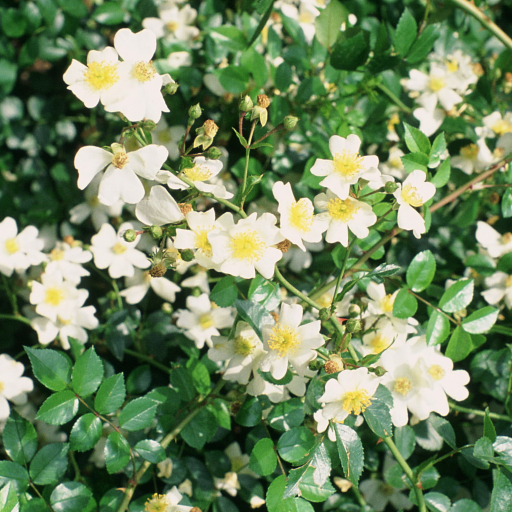
Plant Overview
Often called the Memorial Rose or Wichura Rose, this sprawling beauty is the tough-as-nails ancestor of many of our favorite modern climbing roses. Originally hailing from the coastal cliffs of East Asia, it creates a lush, glossy carpet of white blooms that carries a delicate, clove-like fragrance. It is the perfect choice for gardeners who want a romantic, "wild" aesthetic without the high-maintenance "diva" attitude of modern hybrids.
🔍 How to Identify
- 🌸 The Blooms: Small, star-shaped white flowers with five petals and a bright burst of golden stamens in the center. They typically appear in large, cheering clusters during the mid-to-late summer.
- 🍃 The Foliage: Exceptionally glossy, dark green leaves that often stay green through mild winters. The leaves are leathery to the touch and provide excellent natural resistance to common rose diseases like black spot.
- 🌱 Growth Habit: Long, flexible, trailing canes that creep along the ground or scramble over obstacles. These stems are unique because they can actually take root wherever they touch moist soil.
🏡 In Your Garden
- 🧱 Natural Stabilizer: Because of its creeping nature and ability to root as it grows, it is an elite choice for stabilizing steep banks or covering unsightly retaining walls. It essentially creates a "living mulch" that chokes out weeds.
- 💪 Coastal Warrior: Unlike many delicate roses, Rosa luciae is remarkably tolerant of salt spray and poor, sandy soils. It thrives in seaside gardens where other plants might wither under the salty breeze.
- ✂️ Space Management: Give this plant room to breathe! It is a vigorous grower and can quickly overtake smaller perennials if not occasionally guided or pruned back.
⚠️ Safety & Toxicity
- 🧤 Prickly Protection: While not chemically toxic, this rose is armed with sharp, curved prickles. Always wear heavy-duty gardening gloves when pruning or training the canes to avoid "rose gardener's skin."
- 🐾 Pet & Child Safety: It is generally considered non-toxic to cats, dogs, and humans. However, if a curious pet eats the "hips" (the red fruit that appears after flowering), they might experience very minor digestive upset due to the fiber.
✨ Fun Fact
- 🧬 A Famous Parent: This wild species is the "secret ingredient" in the DNA of some of the world's most famous climbing roses, including the iconic 'Dorothy Perkins'. It passed on its signature glossy leaves and iron-clad constitution to its famous descendants!

Detailed Care Instructions
To grow Rosa Luciae, also known as the Cherokee rose, follow these steps:
- Choose a suitable location: Cherokee roses prefer full sun, so select a spot in your garden that receives at least 6-8 hours of direct sunlight daily. The soil should be well-draining and fertile.
- Prepare the soil: Prior to planting, amend the soil with organic matter such as compost or well-rotted manure to improve its fertility and drainage. Remove any weeds or rocks from the area.
- Planting: Dig a hole that is twice as wide and deep as the root ball of the plant. Place the Rosa Luciae in the hole, ensuring that the top of the root ball is level with the soil surface. Backfill the hole with soil, gently firming it around the roots. Water thoroughly.
- Watering: Keep the soil consistently moist but not waterlogged. Water deeply when the top inch of soil feels dry. Avoid overhead watering, as Cherokee roses are susceptible to fungal diseases. Instead, water at the base of the plant to prevent foliage wetting.
- Mulching: Apply a 2-3 inch layer of organic mulch around the base of the plant, leaving a small gap around the stem to prevent rot. Mulch helps retain moisture, suppresses weeds, and keeps the roots cool.
- Pruning: Rosa Luciae may require regular pruning to maintain its shape and promote healthy growth. Prune in late winter or early spring before new growth emerges. Remove any dead, damaged, or crossing branches. Trim the remaining stems to maintain the desired size and shape.
- Fertilizing: Feed the plant with a balanced, slow-release fertilizer in spring and again in midsummer. Follow the manufacturer's instructions for application rates.
- Pest and disease management: Cherokee roses are generally resistant to most pests and diseases. However, keep an eye out for common rose problems such as aphids, black spot, or powdery mildew. If necessary, treat with appropriate insecticides or fungicides following the label instructions.
- Support: As Cherokee roses can grow as climbers, consider providing support such as a trellis or arbor for them to climb on. Install the support structure before planting the rose.
- Monitor and maintain: Regularly monitor your Rosa Luciae for any signs of stress, pests, or diseases. Remove any spent flowers to encourage more blooms. Ensure proper watering and care to promote healthy growth.
Remember to check your local climate and growing conditions to ensure the best success with your Rosa Luciae plant.

Place in a bright room that is sun drenched almost all day. Or directly in a south-facing window.

To water this particular plant, you should ensure that the soil is completely dry before watering. Once the soil has dried out, you should water the plant deeply, making sure that the water reaches the roots and drains away properly. It is important to avoid getting water on the leaves or flowers, as this can cause damage to the plant. Watering should be done consistently, but not excessively, to prevent the risk of overwatering or under watering. Additionally, it is important to choose an appropriate container with proper drainage holes to prevent water stagnant.
To fertilize this plant, use a balanced fertilizer with equal amounts of nitrogen, phosphorus, and potassium. Apply the fertilizer every four to six weeks during the growing season, from spring to summer. Be sure to water thoroughly before and after applying the fertilizer to avoid burning the roots. Use a smaller amount of fertilizer if the plant is in a container compared to if it is planted in the ground. Avoid over-fertilizing, as it can cause the plant to produce excessive foliage at the expense of flowers.
The recommended soil to use for the plant in question is a well-draining soil with a neutral to slightly acidic pH level. It should be rich in organic matter and nutrients, but not overly fertile, as this can lead to excessive foliage growth at the expense of flower production. Additionally, the soil should be loose and airy to allow for proper drainage and aeration, as heavy, compacted soils can lead to root rot and other issues. A mixture of equal parts compost, sand, and garden soil is a good option for this plant. Avoid using soils that are too sandy or too clayey, as these can both present challenges for proper growth and development.
To propagate this plant, first select a healthy stem that is at least 6 inches long and has several leaves. Using a clean pair of pruning shears, cut the stem at a 45-degree angle just below a node.
Next, remove the leaves from the bottom half of the stem, leaving only the top few leaves intact.
Prepare a rooting medium made of equal parts perlite and peat moss, and moisten it thoroughly. Insert the stem into the rooting medium, making sure the bottom half is buried.
Cover the cutting with a plastic bag or dome to retain moisture and warmth, and place it in a location that receives bright, indirect light.
Check the cutting regularly to ensure the rooting medium remains moist, and mist it with water if necessary.
After several weeks, the cutting should begin to develop roots. Once the roots are a few inches long, the cutting can be transplanted into a pot with well-draining soil and placed in a sunny location.
Water the plant regularly and fertilize it with a balanced fertilizer to promote healthy growth.








