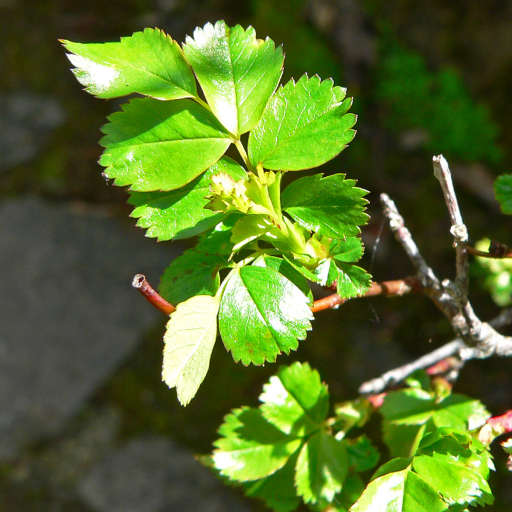
Plant Overview
Known affectionately as the Peafruit Rose or Cluster Rose, this Pacific Northwest native is a wild, brambling beauty often found whispering alongside streams and wetlands. Unlike the dramatic, heavy-headed roses found in florist shops, this species offers a delicate, airy charm that feels like a piece of the mountain brought into your landscape. It is a resilient survivor that celebrates the damp, misty corners of the forest.
🔍 How to Identify
- 🌸 The Bloom: Clusters of small, five-petaled flowers in shades of deep pink to magenta, featuring a bright yellow "eye" of stamens in the center.
- 🔴 The "Pea" Hips: Its most iconic trait—tiny, round, bright red fruits (hips) that are the size of a pea, lacking the neck found on other wild roses.
- 🌿 The Foliage: Bright green, compound leaves typically divided into 5 to 9 leaflets with finely "toothed" or serrated edges.
🏡 In Your Garden
- 💧 The "Swamp" Rose: Unlike many roses that fear "wet feet," the Peafruit Rose thrives in moist-to-wet soils. It is the perfect choice for rain gardens or low-lying areas of your yard.
- 🐦 A Wildlife Sanctuary: Because it grows into a dense thicket, it provides excellent nesting cover for small birds. In the winter, its hips provide a vital food source for waxwings and thrushes when other food is scarce.
⚠️ Safety & Toxicity
- ✅ Safe for Pets: This plant is considered non-toxic to dogs, cats, and horses.
- 🛡️ Prickly Defense: While not poisonous, the stems are armed with straight, sharp thorns. Use caution when pruning and keep it away from high-traffic paths where children or pets might run into it.
- 👅 Irritant Note: While the fruit (hips) is technically edible for humans, the "hairy" seeds inside can irritate the digestive tract if swallowed raw and whole.
✨ Fun Fact
Indigenous tribes of the Pacific Northwest traditionally used the Peafruit Rose for both food and medicine; the hips were often mashed into a pulp or dried, and the leaves were sometimes used to make a soothing tea to treat sore throats.

Detailed Care Instructions

Place in a bright room that is sun drenched almost all day. Or directly in a south-facing window.

Water-loving plants flourish in wet or sloppy soil and near ponds. The extensive root system enables these plants to absorb plenty of water. The surface of the soil should be kept moist at all times. Place your pot in a container filled with water to guarantee that plants get enough water. If the ground becomes dry, it is recommended that you water it well. Plants in smaller pots will need to be watered more frequently. Water the soil in which the plant is standing thoroughly using a watering can.








