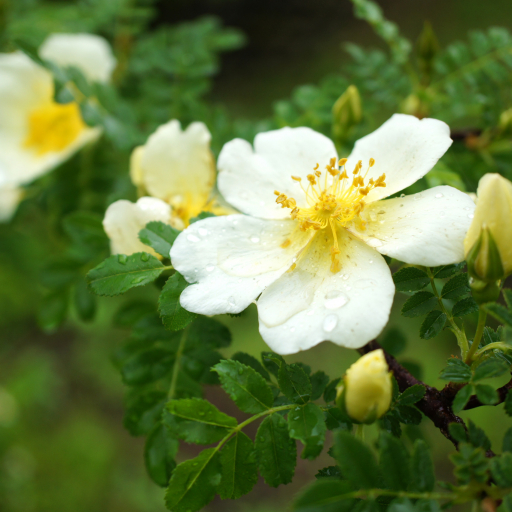
Plant Overview
Often called the "Incense Rose," Rosa primula is a breath of fresh air for gardeners tired of waiting for summer's arrival. As one of the very first roses to wake up in the spring, it greets the season with a delicate cloud of primrose-yellow blossoms. Unlike most roses, its most famous feature isn't just the flower—it is the spicy, balsamic fragrance that drifts from its unique foliage, especially after a light rain.
🔍 How to Identify
- 🌸 Early Blooms: It features small, single (five-petaled) flowers in a soft, buttery yellow that appear well before most other rose species.
- 🌿 Fern-like Foliage: The leaves are tiny, elegant, and deeply divided, resembling the fronds of a fern rather than a traditional rose leaf.
- 🩸 Translucent Prickles: The stems are densely packed with wide, triangular thorns that often glow with a beautiful reddish tint when backlit by the morning sun.
🏡 In Your Garden
- 🌬️ Scented Breezes: This is a "sensory garden" essential. Because the aromatic oils are stored in the leaves, the plant releases a rich incense-like scent on humid days, even when it isn't in bloom.
- 💪 Rugged Independence: Unlike modern hybrid tea roses that require constant pampering, the Incense Rose is a tough, woody shrub. It is exceptionally cold-hardy and can handle poorer soils, making it a great choice for low-maintenance borders or windbreaks.
⚠️ Safety & Toxicity
- 🟢 Non-Toxic: Rosa primula is generally considered safe and non-poisonous for humans, cats, and dogs.
- ⚔️ Physical Defense: While it lacks chemical toxins, it is heavily armed. The abundant prickles can cause significant skin scratches, so it is best planted away from narrow walkways where children or pets play frequently.
✨ Fun Fact
🕯️ The name "Incense Rose" is literal—in its native Central Asia, the fragrance of the damp foliage is so strong and distinct that it has been compared to the smell of old wooden cathedrals or burning sandalwood.

Detailed Care Instructions

Place in a bright room that is sun drenched almost all day. Or directly in a south-facing window.

The presence of a dry surface layer of soil does not indicate that the plant requires water. Instead, stick your finger 1-2" (3-5 cm) deep in the soil to feel dampness or moisture content. If the soil seems dry, it's time to water your greens. If the soil is still moist, however, it is better not to water your plant and instead wait a day or two. Overwatering or waterlogging raises the risk of root rot. So if the soil takes longer than a week to dry, check the light conditions because it's likely that the plant isn't getting enough light. It's fine if the upper layer of soil is dry between waterings, but the deeper soil layer should always have some moisture.








