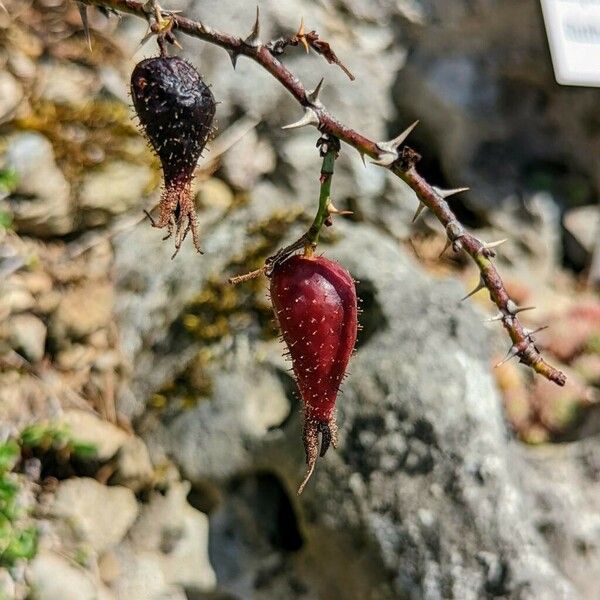
Plant Overview
Often called the Peppery Rose, this wild beauty is a rugged survivor native to the rocky mountainsides of Southern Europe and the Middle East. Unlike the pampered tea roses found in florist shops, Rosa pulverulenta carries a wild, untamed charm. It is most famous for its "dusty" appearance and the spicy, resinous fragrance that drifts from its leaves on a warm day.
🔍 How to Identify
- 🌸 The Bloom: Features delicate, five-petaled flowers that range from a pale shell-pink to a vibrant rose hue, often accented by a cluster of bright yellow stamens in the center.
- 🍃 The "Dusty" Foliage: The small, rounded leaflets are covered in tiny glandular hairs. These glands give the plant a greyish, powdery look and release a peppery scent when touched.
- 🛡️ The Armor: The stems are densely packed with straight, needle-like prickles and smaller bristles, making the plant look almost "fuzzy" from a distance until you get close enough to see the sharp points.
🏡 In Your Garden
- ⛰️ The Rock Specialist: Because it naturally grows on limestone slopes, this rose requires exceptional drainage. It is the perfect choice for a rock garden or a sunny bank where other roses might struggle with dry soil.
- ☀️ Sun & Air: It thrives in full sun and prefers a spot with good air circulation. This helps keep the "dusty" foliage healthy and prevents the fungal issues that often plague more delicate rose varieties.
⚠️ Safety & Toxicity
- 🐾 Non-Toxic: This species is generally considered safe and non-toxic for cats, dogs, and horses.
- 🩹 Prickly Defense: The primary danger is physical. Its dense coat of prickles can easily pierce skin or paws, so it should be planted away from high-traffic paths where children or pets play.
✨ Fun Fact
- ✨ Dusty by Name: The specific epithet pulverulenta comes from the Latin word for "powdery" or "dusty," referring to the unique resinous coating on the leaves that protects the plant from the intense mountain sun.

Detailed Care Instructions
To grow Rosa Pulverulenta plant, also known as the White Rose of Yorkshire, follow these steps:
- Climate and soil requirements: This plant prefers a Mediterranean climate with mild winters and hot summers. It thrives in well-draining soil with a pH between 6.0 and 6.5.
- Selecting a suitable location: Choose a spot with full sun exposure, as this plant requires at least 6 hours of direct sunlight each day.
- Planting: Dig a hole twice as wide and deep as the plant's rootball. Gently remove the plant from its container and place it in the hole. Ensure that the plant is planted at the same depth it was in the container. Backfill the hole with soil, firming it gently around the plant.
- Watering: Water the plant deeply after planting and maintain regular watering, especially during dry periods. Avoid overwatering, as it can lead to root rot. Watering once or twice a week is usually sufficient.
- Mulching: Apply a layer of organic mulch around the base of the plant. This helps retain moisture, suppresses weed growth, and keeps the soil temperature stable.
- Pruning: Prune the shrub in early spring to remove any dead or damaged wood. This will promote new growth and maintain its shape. Avoid pruning too late in the season, as it may interfere with the next year's blooms.
- Fertilizing: Apply a balanced fertilizer in early spring and early summer to provide the necessary nutrients. Follow the package instructions for the correct dosage.
- Pests and diseases: Regularly inspect the plant for pests such as aphids or black spot diseases. Treat them accordingly using organic insecticides or fungicides.
- Support: If the plant grows tall and exceeds its natural shape, consider providing support like a trellis or stakes.
- Winter care: In regions with cold winters, protect the plant by covering it with a layer of mulch or burlap to insulate the roots and reduce the risk of frost damage.
Keep in mind that growing conditions may vary depending on your specific location, so it's always helpful to consult with local gardening experts or nursery professionals for personalized advice.

Place in a bright room that is sun drenched almost all day. Or directly in a south-facing window.

To properly water this type of plant, it is important to consider the soil moisture level and the environmental conditions. The plant should be given a deep watering when the soil is dry to the touch, but not completely dry. It is important to avoid overwatering as this can lead to root rot and other issues. Watering should be adjusted based on the season and weather conditions, with less water required during cooler months and more water needed during warmer months. Additionally, it is important to water at the base of the plant to avoid getting the leaves and flowers excessively wet, which can lead to disease.
To fertilize this plant, apply a slow-release fertilizer in the early spring before new growth appears. Follow the manufacturer's instructions for application rates. Additionally, you can supplement with a liquid fertilizer every 3-4 weeks during the growing season. Water the plant before and after applying fertilizer to prevent fertilizer burn. Avoid applying fertilizer in late fall or winter, as this can stimulate new growth that may not have time to harden off before winter.
The ideal soil for the Rosa Pulverulenta plant is a well-draining and fertile soil that is rich in organic matter. The soil should have a slightly acidic to neutral pH, ideally between 6.0 to 7.0. It should also be able to retain moisture without becoming waterlogged. The addition of perlite or sand can help improve drainage, while the inclusion of compost, peat moss, or well-rotted manure can increase its nutrient content. It is important to avoid using soil that is compacted, heavy, or clayey as these may inhibit proper drainage and aeration, which can lead to root rot and other plant problems.
To propagate this plant, take a cutting from a healthy and well-established mother plant during the early summer. Use a sharp and sterile pruning shears to cut a 6-inch long stem that has at least three or four leaves. Remove the bottom leaves, leaving only the top ones intact. Dip the cut end in rooting hormone powder and plant it in a pot filled with well-draining soilless mix or perlite. Water the soil well and cover the pot with a clear plastic bag to hold moisture and keep the cutting humid. Keep the pot in a warm and bright spot but away from full sun. Mist the cutting and check the soil moisture regularly to ensure it stays moist but not soaking. After about 4 to 6 weeks, roots should have formed, and new growth should be visible. Transplant the rooted cutting into a bigger pot or the ground once it has outgrown its container.








