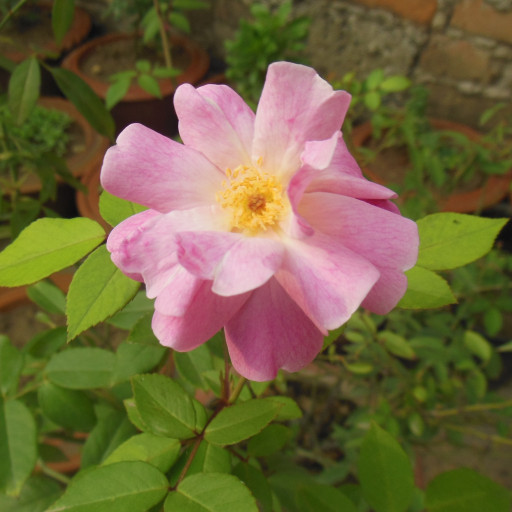
Plant Overview
Commonly known as the Sweetbriar Rose or Eglantine, this isn't your typical pampered garden hybrid. This wild beauty is famous for a secret hidden in its foliage: when it rains or when the leaves are lightly brushed, the plant releases a refreshing fragrance of crisp green apples. It has been a staple of romantic literature for centuries, famously immortalized by William Shakespeare.
🔍 How to Identify
- 🍎 Scented Foliage: The small, dark-green leaflets are covered in tiny resinous glands. Rubbing them releases a distinct "Granny Smith" apple aroma.
- 🌸 Simple Flowers: Unlike "cabbage" roses, these produce delicate, five-petaled flowers in a soft clear pink with a pale white center and bright yellow stamens.
- 🏹 Hooked Prickles: The arching stems are heavily armed with sturdy, downward-curving thorns that are excellent at "grabbing" onto nearby support or passersby.
- 🍒 Bright Hips: In autumn, the plant produces abundant, oval-shaped red or orange seed pods (hips) that persist long after the leaves fall.
🏡 In Your Garden
- 🛡️ Natural Security: Because of its vigorous growth habit and "vicious" thorns, the Sweetbriar makes an exceptional, impenetrable boundary hedge that provides both privacy and fragrance.
- 💪 Rugged Resilience: This rose is much hardier than modern varieties. It thrives in poor soil and is highly resistant to many common rose diseases, though it does require plenty of horizontal space to sprawl.
- 🦋 Wildlife Magnet: It is a powerhouse for local ecology; bees love the accessible pollen, and birds rely on the hips for winter food.
⚠️ Safety & Toxicity
- ✅ Pet & Child Safe: Rosa rubiginosa is non-toxic to dogs, cats, and horses.
- ⚔️ Physical Hazard: The primary danger is mechanical. The hooked thorns can cause deep scratches or ruin delicate clothing. It is best planted away from narrow walkways or play areas.
- 🥣 Internal Caution: While the fruit (hips) is edible and high in Vitamin C, the seeds inside are covered in tiny, irritating hairs that must be thoroughly removed before consumption to avoid "itching powder" effects in the throat.
✨ Fun Fact
The Sweetbriar is the primary source of Rosehip Oil used in high-end skincare. It contains high concentrations of Vitamin A (retinol) and essential fatty acids, making this "wild weed" one of the most valuable plants in the cosmetic industry!

Detailed Care Instructions
| Lighting | Full Sun |
To grow the Rosa rubiginosa plant, also known as Rosa moschata or the Sweetbriar Rose, follow these steps:
- Select a suitable planting location: Choose a sunny spot in your garden or yard with well-drained soil. The location should receive at least 6 hours of direct sunlight daily.
- Prepare the soil: Prepare the planting area by removing weeds, rocks, and debris. Ensure the soil is loose and well-draining. If your soil is heavy or clay-like, add compost or organic matter to improve drainage and fertility.
- Obtain rosa rubiginosa seeds or seedlings: You can either purchase Rosa rubiginosa seeds from a local nursery or order them online. Alternatively, you can get established seedlings or bare-root plants. It's generally easier to start with young plants.
- Plant the seeds or seedlings: If using seeds, sow them in pots or trays filled with a mixture of lightly moistened seed-starting soil. Cover the seeds with a thin layer of soil, mist with water, and place in a warm and bright location. Once the seedlings are 4-6 inches tall, transplant them into the garden.
- If using seedlings or bare-root plants, dig a hole deep and wide enough to accommodate the roots. Place the seedling in the hole so that the bud union (swelling) is slightly above the soil level. Fill the hole with soil, gently firm it around the plant, and water thoroughly.
- Watering: Water the Rosa rubiginosa regularly, ensuring the soil is evenly moist but not waterlogged. During dry periods, increase watering to keep the roots hydrated. Avoid overhead watering, as this can promote fungal diseases. Instead, water at the base of the plant.
- Mulching: Mulch around the base of the plant with organic mulch, such as wood chips or straw. This helps retain soil moisture and suppresses weed growth.
- Pruning: Rosa rubiginosa benefits from regular pruning to maintain its shape, remove dead or diseased branches, and promote air circulation. Prune during the dormant season (late winter to early spring) before new growth emerges.
- Fertilizing: Apply a balanced slow-release organic fertilizer in spring and early summer to provide necessary nutrients. Follow the manufacturer's instructions regarding application rates.
- Pests and diseases: Keep an eye out for common rose pests like aphids, spider mites, and Japanese beetles. Use organic solutions like insecticidal soap or neem oil to control infestations. Diseases like blackspot and powdery mildew can be managed by providing good air circulation, avoiding overhead watering, and removing infected leaves.
- Enjoy the blooms: Rosa rubiginosa blooms in late spring or early summer, producing fragrant pink or white flowers. After flowering, it may also develop red or orange rosehips, which can be harvested and used to make tea, jams, or skincare products.
Remember to consult local gardening resources or local experts for specific advice, as recommendations may vary depending on your region's climate and growing conditions.

Place in a bright room that is sun drenched almost all day. Or directly in a south-facing window.

To water this particular plant, it is important to keep in mind its watering needs. It is recommended to water thoroughly but infrequently, allowing the soil to dry out slightly before watering again. Overwatering can lead to root rot and other diseases. It is also important to water the plant at its base, avoiding getting water on the leaves and flowers as this can encourage fungal growth. Using room temperature water is also recommended rather than cold water straight from the tap.
To provide proper nourishment to the Rosa Rubiginosa plant, you should apply a granular fertilizer with a balanced N-P-K ratio of 10-10-10 or 14-14-14 once every four to six weeks during the growing season. Apply the fertilizer around the base of the plant, making sure not to get any on the leaves or stems. Water the plant immediately after fertilizing to help the nutrients soak into the soil. Avoid fertilizing the plant in late summer or early fall to prevent new growth from being damaged by frost or cold weather.
The best soil for Rosa Rubiginosa is rich, well-draining soil with ample nutrients. It should have a slightly acidic to neutral pH ranging from 6.0 to 7.0. The soil should be loamy and not heavy in clay or sand, with a good amount of humus to retain moisture and support the plant's growth. Avoid using soils that are too alkaline or salty, as it can harm the plant. To improve the soil's quality, you can add compost or well-rotted manure before planting the Rosa Rubiginosa. Additionally, ensure that the soil is well-draining to prevent waterlogging and root rot.
To propagate this plant, you can start by selecting healthy stem cuttings from the parent plant. It is recommended to take cuttings in the early morning or late evening to reduce stress on the plant. The cuttings should be around 6-8 inches long and taken from a healthy branch.
Next, remove the bottom leaves from the stem, leaving only 2-3 leaves on the top. Dip the cut end of the stem into a rooting hormone to encourage root growth. Then, plant the stem cutting in a pot filled with a well-draining soil mix.
Water the cutting thoroughly and place it in a location that receives bright, indirect sunlight. Keep the soil moist but not waterlogged, and avoid placing the cutting in direct sunlight as this can cause it to dry out.
Within a few weeks, the cutting should begin to develop roots and new growth. Once the new plant has established a strong root system, it can be transplanted into a larger pot or directly into the ground.
Common pests of the sweet-briar include Spider mites, aphids, larvae. Make a habit of checking your sweet-briar frequently for pests so that any infestations can be caught and managed early.








