Plant Overview
Often called a cousin of the hardy Dog Rose, Rosa squarrosa is a testament to nature's resilience. These wild beauties were the original residents of European hedgerows long before delicate garden hybrids were engineered. They tell a story of survival, standing tall against wind and cold with their arching, armor-plated branches and delicate, blushing blooms.
🔍 How to Identify
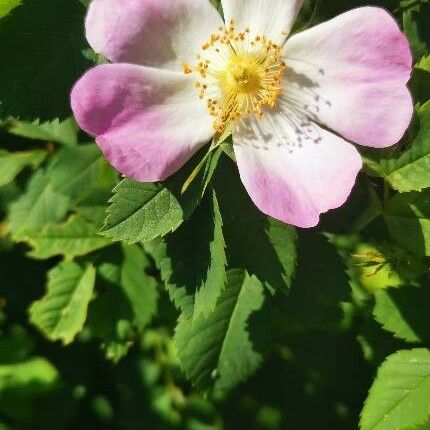
- 🌸 The Bloom: Features simple, elegant flowers with five heart-shaped petals, usually appearing in shades of pale pink or snowy white with a cluster of yellow stamens at the center.
- ⚔️ The Armor: Covered in stout, hooked "prickles" (thorns) that curve downward like a cat’s claw, helping the plant "climb" by hooking onto nearby structures or trees.
- 🌿 The Foliage: Leaves are typically divided into five to seven small, oval leaflets with sharply serrated (saw-toothed) edges and a matte green finish.
- 🍎 The Fruit: In autumn, the flowers give way to "hips"—smooth, oval-shaped red or orange fruits that persist long after the leaves have fallen.
🏡 In Your Garden
- 🏗️ Natural Scrambler: This isn't a neat, upright bush; it is a "scrambler." It uses its thorns to hoist itself over fences or through neighboring shrubs, making it a fantastic choice for a wild, impenetrable "living fence" or security hedge.
- 🪵 Taproot Toughness: This rose develops a deep, stubborn taproot very quickly. This makes it incredibly drought-tolerant and hardy in poor soil, but it also means it hates being moved. Once planted, it prefers to stay put for a lifetime.
- 🐦 Wildlife Haven: It is a high-value plant for local ecology. The dense, thorny interior provides a safe nesting site for small birds, while the nectar-rich flowers are a magnet for early-season bees.
⚠️ Safety & Toxicity
- 🩹 Physical Warning: While the plant is not chemically toxic, it is physically aggressive. The hooked thorns can cause deep scratches; always wear heavy-duty gauntlet gloves when pruning.
- 🐾 Pet & Child Safety: The plant is generally non-toxic if ingested by cats, dogs, or horses. However, the "hairs" inside the seed-filled hips can be a mechanical irritant to the throat and digestive tract if eaten raw in large quantities.
✨ Fun Fact
During World War II, when citrus fruits were impossible to import, the "hips" of wild roses were harvested by the ton to create rose hip syrup. This syrup provided a vital source of Vitamin C for children, containing significantly more of the vitamin by weight than an orange!

Detailed Care Instructions
To grow Rosa Squarrosa (also known as scotch rose or Scotch briar) plants, follow these steps:
- Choose a suitable planting location: Rosa Squarrosa thrives in full sun, so choose a spot in your garden that receives at least 6 hours of direct sunlight per day. The soil should be well-drained and fertile.
- Prepare the soil: Before planting, prepare the soil by removing any weeds or debris. Incorporate organic matter, such as compost or well-rotted manure, into the soil to improve its fertility and drainage.
- Planting: Dig a hole that is wide and deep enough to accommodate the plant's root system. Place the Rosa Squarrosa plant in the hole and backfill with soil, gently firming it around the roots. Water the plant well after planting to settle the soil.
- Watering: Rosa Squarrosa plants require regular watering, especially during dry spells. Water deeply, ensuring that the soil is moist but not waterlogged. Avoid overhead watering, as wet foliage can lead to diseases.
- Mulching: Apply a layer of organic mulch, such as wood chips or straw, around the base of the plant. Mulch helps retain soil moisture, suppresses weed growth, and improves soil health.
- Fertilizing: Apply a balanced slow-release fertilizer in early spring to promote healthy growth and blooming. Follow the manufacturer's instructions for application rates.
- Pruning: Prune Rosa Squarrosa plants in late winter or early spring, before new growth begins. Remove any dead, damaged, or crossing branches, as well as any weak or overcrowded growth. Pruning helps maintain the plant's shape, removes diseased or pest-infested wood, and stimulates new growth.
- Pests and diseases: Keep an eye out for common rose pests and diseases, such as aphids, black spot, and powdery mildew. Regularly inspect the plants and take appropriate measures, such as using insecticidal soap or fungicides if necessary.
- Propagation: Rosa Squarrosa can be propagated through hardwood cuttings or by division. In early spring or late fall, take 6-8 inch cuttings from healthy, disease-free plants and insert them in a pot filled with moistened potting soil. Keep the cuttings in a warm, bright location until roots develop. Division can be done by carefully splitting the plant into sections, ensuring each section has roots attached.
By following these steps, you can successfully grow Rosa Squarrosa plants in your garden. Remember to provide proper care and maintenance to ensure healthy growth and beautiful blooms.

Place in a bright room that is sun drenched almost all day. Or directly in a south-facing window.

To water this plant, it is important to first understand its water needs. This plant requires moderate watering, which means that it needs to be watered once a week during the growing season and less frequently during the dormant season.
When watering, it is important to avoid getting water on the leaves and flowers as this can lead to fungal diseases. Instead, water directly at the base of the plant, allowing the water to soak into the soil.
It is also important to ensure that the soil is well-draining, as this plant does not tolerate wet feet. To achieve this, consider adding organic matter to the soil or planting in a raised bed.
Finally, pay attention to the weather and adjust watering accordingly. During periods of hot, dry weather, the plant may need additional watering, while during periods of heavy rain, it may require less.
To ensure healthy growth of this flowering plant, it is recommended to fertilize it twice a year - once in the early spring and again in the late summer. Use a complete, balanced fertilizer with equal amounts of nitrogen, phosphorus, and potassium. Apply the fertilizer around the perimeter of the plant, avoiding direct contact with its stem. Water thoroughly after fertilizing to activate the nutrients. Avoid over fertilization, as it can lead to excessive foliage growth and reduced flower production.
When planting Rosa Squarrosa plants, it is important to use soil that is well-draining, loose, and rich in organic matter. The ideal soil pH should be slightly acidic, between 5.5-6.5. The soil should also be able to hold moisture, but not be waterlogged as this can cause root rot. Adding compost or aged manure to the soil mix will help with soil structure and nutrient availability for the plant. It is also recommended to avoid using heavy or compacted soils as they can hinder root growth and lead to plant stress.
To propagate this plant, first select a healthy stem that is approximately the thickness of a pencil and has at least three nodes. Cut the stem at a 45-degree angle using pruning shears, making sure to make a clean cut. Remove any leaves or buds from the lower third of the stem.
Dip the cut end of the stem into rooting hormone powder and tap off any excess. Plant the stem into a pot filled with a well-draining potting mix and water thoroughly.
Cover the pot with a transparent plastic bag and place it in a warm, bright area, but out of direct sunlight. Ensure that the soil remains moist, but not waterlogged. After a few weeks, new growth will begin to appear, indicating that the cutting has rooted successfully.
Once the new plant is established with several healthy leaves and roots growing from the base, it can be transplanted into a larger pot or directly into the soil in a well-draining, sunny location.








