Plant Overview
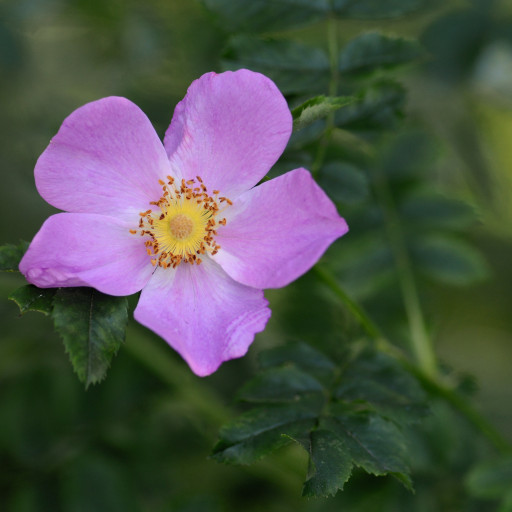
The Virginia Rose, often called the "Pioneer Rose," is a hardy North American native that bridges the gap between wild woodland beauty and polished garden aesthetics. Famous for its shimmering pink petals and dramatic autumn foliage, this resilient shrub has been a staple of the Atlantic coastline for centuries, braving salty sea breezes and rocky soils with ease. It is the perfect choice for gardeners who want the romance of a rose without the high-maintenance "diva" behavior of modern hybrids.
🔍 How to Identify
- 🌸 The Bloom: Features delicate, five-petaled flowers in shades of candy-pink to rose-purple, usually appearing in mid-summer with a cluster of bright yellow stamens at the center.
- 🌿 Glossy Foliage: The leaves are dark green, glossy, and oval with serrated edges; they are famously vibrant, turning spectacular shades of bronze, red, and purple in the fall.
- 🪵 Prickly Canes: The stems are reddish-brown and armed with straight, needle-like prickles rather than the thick, hooked thorns found on many commercial rose varieties.
🏡 In Your Garden
- 🌊 Coastal Resilience: This is one of the few roses that thrives near the ocean. It is exceptionally salt-tolerant, making it a go-to for seaside hedging or sandy, wind-exposed landscapes.
- 🦋 Pollinator Hub: Because it is a "single" rose (having only one row of petals), the nectar and pollen are easily accessible to bumblebees, butterflies, and beneficial hoverflies.
- 🏗️ Erosion Control: It spreads via underground runners (rhizomes). While this means it needs some "elbow room," it is incredibly effective at stabilizing soil on slopes or creating a thick, impenetrable natural privacy screen.
⚠️ Safety & Toxicity
- ✅ Non-Toxic: Rosa virginiana is considered non-toxic to humans, dogs, and cats. In fact, many parts of the plant have been used traditionally in teas and jams.
- 🩹 Physical Hazard: The primary safety concern is its "armor." The numerous fine prickles can cause skin irritation or scratches, so it is best planted away from narrow walkways where children or pets play.
- 🍎 Hips: The bright red fruits (hips) are edible, but the seeds inside are covered in tiny, irritating hairs that must be filtered out or removed before consumption.
✨ Fun Fact
The red, marble-like "hips" of the Virginia Rose are a nutritional powerhouse, containing significantly more Vitamin C by weight than oranges. During World War II, "Victory Gardeners" were encouraged to harvest wild rose hips to create Vitamin C-rich syrups when citrus imports were blocked.

Detailed Care Instructions
| Lighting | Full Sun |
To grow Rosa virginiana (Virginia rose), you can follow these steps:
- Choose a suitable location: Virginia rose prefers a sunny spot with well-draining soil. Make sure the location receives at least six hours of sunlight per day.
- Prepare the soil: Dig a hole that is deep and wide enough to accommodate the root ball of the plant. Amend the soil with organic matter such as compost to improve drainage and fertility.
- Planting: Place the plant in the hole, ensuring that the bud union (the swollen area where the rose was grafted onto the rootstock) is slightly above the soil level. Fill the hole with soil, gently firming it around the roots.
- Watering: Water the plant thoroughly after planting and then regularly during the growing season. Keep the soil evenly moist, but avoid overwatering, as it can cause root rot.
- Mulching: Apply a layer of organic mulch around the base of the plant, such as wood chips or straw, to help retain moisture, suppress weeds, and regulate soil temperature.
- Pruning: Virginia rose generally requires minimal pruning. However, you can prune dead, damaged, or crossing branches in early spring to promote a healthier and more open structure.
- Fertilizing: Feed the plant with a balanced rose fertilizer in late spring and mid-summer following the package instructions. Avoid over-fertilizing, as it can lead to excessive vegetative growth and reduced blooming.
- Pests and diseases: Monitor the plant regularly for common rose pests, such as aphids or spider mites, and treat them promptly using organic or chemical insecticides if necessary. Preventing diseases like black spot or powdery mildew can be achieved by providing adequate air circulation, avoiding overhead watering, and removing infected leaves.
- Winter care: Virginia rose is hardy and can withstand freezing temperatures. However, in colder climates, you can protect the plant by adding a layer of mulch around the base and taking measures to prevent winter damage, such as wrapping the canes in burlap.
Remember to regularly check on the plant, monitor its growth, and make adjustments as necessary to ensure its health and vigor.

Place in a bright room that is sun drenched almost all day. Or directly in a south-facing window.

The best way to water this plant is to give it a deep watering once a week, especially during the summer months when the weather is dry. Make sure the soil is evenly moist but not waterlogged, as this can lead to root rot and other issues.
To water the plant, either use a hose or watering can with a gentle stream of water to avoid damaging the leaves or flowers. Water around the base of the plant, avoiding wetting the foliage or flowers as much as possible.
After watering, check the soil to ensure it is moist but not saturated. If the top layer of soil feels dry, it's time to water again.
During the winter months, reduce watering frequency to prevent overwatering and ensure the plant has a chance to dry out between waterings.
To fertilize the Rosa Virginiana plant, use a balanced fertilizer with equal parts nitrogen, phosphorus, and potassium. Apply the fertilizer in early spring and again in late summer, following the package instructions for the appropriate amount to use. It is important to water the plant before and after fertilizing to prevent damage to the roots. Avoid fertilizing during hot, dry weather to prevent burning the plant.
The Rosa Virginiana plant grows best in well-draining soil that is slightly acidic and nutrient-rich. The ideal soil pH range is between 6.0 and 6.5. It also thrives in soil that is rich in humus, organic matter, and has adequate moisture retention capacity.
The soil should be prepared well in advance by removing any weeds or debris and amending it with compost or aged manure to enrich the soil. The planting hole should be dug deep enough to accommodate the root ball and the soil should be firmed around the plant after planting.
It is recommended to use a balanced slow-release fertilizer to provide the necessary nutrients for the plant's growth. The fertilizer should be applied in the spring and again in the summer.
In addition, mulching around the plant with natural materials such as leaves, straw, or wood chips can help improve soil nutrients, retain moisture, and suppress weeds.
To propagate this plant, cuttings can be taken in the early spring or late summer. Select a healthy stem that is approximately 4-6 inches long and has several leaves. Remove any leaves on the bottom half of the cutting and dip the end in rooting hormone powder. Plant the cutting in a well-draining potting mix and water thoroughly. Keep the cutting in a warm, humid environment and mist regularly. After several weeks, the cutting should develop roots and can be transplanted into a larger pot or into the ground.
Common pests of the virginia rose include Spider mites, aphids, larvae. Make a habit of checking your virginia rose frequently for pests so that any infestations can be caught and managed early.








