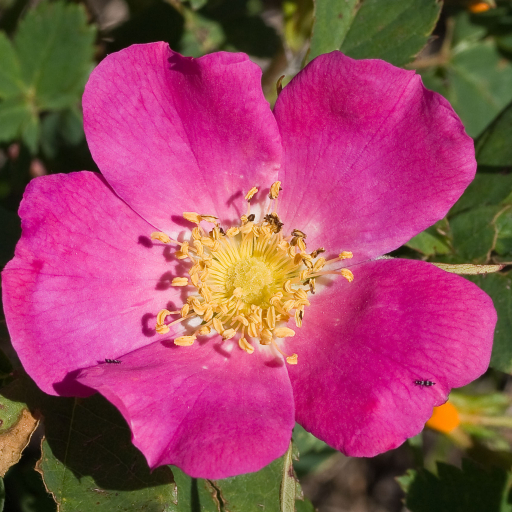
Plant Overview
Often called the Woods' Rose or the Western Wild Rose, this resilient beauty is the rugged, pink-petaled soul of North American prairies and mountain slopes. Unlike the pampered hybrid roses found in florist shops, this wild species thrives on neglect and can survive harsh winters and dry summers with grace. It is a favorite for those looking to bring a touch of the "Old West" wilderness into their landscape.
🔍 How to Identify
- 🌸 The Bloom: Look for five delicate, heart-shaped pink petals surrounding a cluster of golden-yellow stamens. They usually appear in clusters and have a soft, sweet fragrance.
- 🌿 The Foliage: The leaves are divided into 5 to 9 small, oval leaflets with "toothed" or serrated edges. In autumn, these leaves often shift into vibrant shades of yellow or orange.
- 🗡️ The Stems: The branches are typically reddish-brown and armed with straight, slender prickles (thorns) that are most concentrated near the base of the plant.
- 🍒 The Hips: After the flowers fade, the plant produces small, round, bright red "hips" (seed pods) that persist throughout the winter.
🏡 In Your Garden
- 🏜️ Drought Warrior: This rose is exceptionally hardy because of its deep taproot system. It prefers well-drained soil and, once established, can handle significant dry spells that would wither a standard garden rose.
- 🏘️ Natural Fencing: Because it spreads via underground runners (rhizomes) and has sharp prickles, it makes an excellent "living fence" or privacy hedge that keeps unwanted visitors (and critters) at bay.
- 🐝 Pollinator Magnet: It is a high-value plant for native bees and butterflies. Because the flower is "open" (single-petaled), pollinators can easily access the nectar and pollen compared to complex hybrid roses.
⚠️ Safety & Toxicity
- ✅ Pet Friendly: Rosa woodsii is non-toxic to dogs, cats, and horses. It is a very safe choice for a family backyard.
- 🩹 Sharp Prickles: The primary safety concern is physical. The thorns are sharp and can easily puncture skin or thin clothing; always wear heavy-duty gloves when pruning.
- 🍵 Edible Caution: While the red hips are famous for being packed with Vitamin C and are often used in teas, they contain tiny, irritating hairs inside the seeds. Always strain your infusions carefully to avoid throat irritation.
✨ Fun Fact
- ✨ Survival Food: The hips of the Woods' Rose stay on the bush all winter long. Historically, they were known as "famine food" by Indigenous tribes and early settlers because they provided life-saving Vitamin C when no other fresh fruit was available in the snow.

Detailed Care Instructions
| Lighting | Full Sun |
To grow Rosa woodsii, also known as the Woods' rose, you can follow these steps:
- Choose a suitable location: Rosa woodsii prefers full sun to partial shade, so select a spot in your garden that receives at least 6 hours of direct sunlight per day. Ensure the soil is well-draining.
- Prepare the soil: Before planting, amend the soil by adding organic matter such as compost or aged manure. This will improve the soil's fertility and drainage. Rake the area to remove any debris and ensure an even surface.
- Planting: Dig a hole that is wide and deep enough to accommodate the plant's root ball. Place the rose plant in the hole, ensuring that the bud union (the swollen area where the rose was grafted onto the rootstock) is level with or slightly above the soil surface. Backfill the hole with soil, gently firming it around the roots.
- Watering: After planting, water the rose thoroughly to promote root establishment. Keep the soil consistently moist, especially during the first growing season. Avoid overwatering, as it may lead to root rot. Water deeply but infrequently, allowing the soil to dry out slightly between waterings.
- Mulching: Apply a layer of organic mulch around the base of the plant, taking care to keep it away from the stem. Mulching helps retain soil moisture, suppresses weeds, and regulates soil temperature.
- Pruning: In late winter or early spring, prune Rosa woodsii to remove dead or damaged branches and encourage new growth. Thin out crowded branches to improve airflow and reduce the risk of diseases. Cut the branches just above a healthy bud or outward-facing node.
- Fertilizing: Apply a balanced rose fertilizer according to the manufacturer's instructions in early spring and again in late spring or early summer. Avoid fertilizer applications in late summer to prevent encouraging new growth that might not have enough time to harden off before winter.
- Pest and disease management: Rosa woodsii is generally resistant to diseases and pests but monitor your plant for any signs of issues. Aphid infestations or fungal diseases may occasionally occur. Spray with an appropriate pesticide or fungicide if necessary, following the instructions carefully.
- Winter care: Provide winter protection for Rosa woodsii in areas with harsh winters by adding a layer of mulch around the base of the plant. Protect tender stems by wrapping them with burlap or using a protective cover.
By following these steps, you can successfully grow Rosa woodsii in your garden and enjoy its beautiful flowers and foliage.

Place in a bright room that is sun drenched almost all day. Or directly in a south-facing window.

Rosa woodsii is a deciduous shrub that needs to be watered regularly to maintain healthy growth. When watering the plant, it is important to apply water directly to the base of the plant and avoid getting water on the leaves or flowers. This helps prevent the growth of harmful fungi and other diseases.
The ideal watering schedule for Rosa woodsii depends on the climate and weather conditions. In general, the plant should be watered deeply once a week in dry conditions. This means allowing the water to penetrate the soil to a depth of at least 6 inches.
During periods of heavy rainfall, the plant may not need extra watering. However, in very hot or dry conditions, the plant may require additional watering to remain healthy. It is important to monitor the soil moisture level and adjust watering frequency as needed.
It is also important to avoid overwatering the plant, which can lead to root rot and other issues. To prevent this, allow the soil to dry out slightly between waterings and avoid watering during prolonged periods of rain or high humidity.
To fertilize this plant, use a balanced slow-release fertilizer with equal amounts of nitrogen, phosphorus, and potassium. Apply the fertilizer in early spring before new growth appears, and then again after the first bloom in summer. Water the plant thoroughly before and after applying the fertilizer. Avoid over-fertilizing, as this can cause damage to the plant.
The ideal soil for Rosa Woodsii plant should be well-draining and fertile, with a pH range of 5.5 to 6.5. It should be rich in organic matter, such as compost or well-rotted manure, to provide essential nutrients and improve soil structure. The soil should also be moist, but not waterlogged, to promote healthy root growth and prevent fungal diseases. Avoid using heavy clay soils or those that are excessively sandy, as they can hinder plant growth and cause root rot. Additionally, it's important to amend the soil with a balanced fertilizer before planting to ensure your Rosa Woodsii plant has all the necessary nutrients to thrive.
To propagate this plant, one can collect seeds from mature plants or take cuttings from new growth. To collect seeds, wait until the fruits have fully ripened and turned a dark color. Cut open the fruit and remove the seeds, making sure to remove any pulp or debris. To take cuttings, select a healthy stem with at least two nodes and remove any leaves except the top two. Dip the bottom of the cutting in rooting hormone and place in a pot filled with moist potting soil. Cover the pot with plastic or a clear plastic bag to create a humid environment and keep the soil moist until the cutting has rooted. Once rooted, the new plant can be transplanted to a larger container or directly into the ground.








