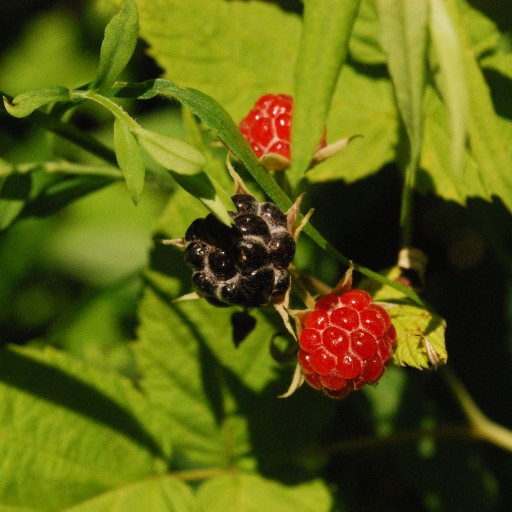
Plant Overview
Often called the Allegheny Blackberry, this wild wonder is the quintessential "wild berry" of the American Northeast. Known for its arching, thorny canes and deep-purple fruits, it has long been a staple for foragers and wildlife alike. While it can be a bit of a prickly neighbor in the garden, its sweetness is unrivaled during the peak of the late summer heat.
🔍 How to Identify
- 🌿 The Canes: Sturdy, arching stems that start green and turn a reddish-brown or purple as they age. These canes are "armed" with straight, formidable thorns that demand respect.
- 🍃 Leaf Shape: Each leaf is typically divided into 3 to 5 serrated leaflets arranged like the palm of a hand. The central leaflet usually has a longer stalk, and the undersides feel softly velvety to the touch.
- 🌸 The Bloom & Berry: In late spring, clusters of white, five-petaled flowers emerge. These transform into oblong, aggregate fruits that turn from green to red, and finally to a glossy, deep black when ripe.
🏡 In Your Garden
- 🏗️ Space Enthusiast: This plant is an "early successional" species, meaning it loves to colonize cleared spots or the sunny edges of woods. If you are keeping it in a backyard setting, give it plenty of room or a sturdy trellis, as it spreads aggressively via underground runners.
- ✂️ The Second-Year Rule: Blackberries have a unique "biennial" growth habit. First-year canes (primocanes) grow only leaves, while second-year canes (floricanes) produce the flowers and fruit. Pruning out the canes that have finished fruiting helps keep the patch productive and prevents a tangled mess.
⚠️ Safety & Toxicity
- 😋 Edible & Delicious: The ripe berries are perfectly safe for humans and are packed with vitamin C and antioxidants. They are excellent for jams, pies, or eating straight off the bush.
- 🩸 Thorny Defense: The primary safety concern is physical. The sharp thorns can easily snag skin or clothing. Small children and curious pets should be supervised near thickets to avoid painful scratches or "hooked" fur.
✨ Fun Fact
The specific name allegheniensis refers to the Appalachian Mountains, but one of its old folk nicknames is the "Sow-teat Blackberry." This colorful name was coined by early settlers who noticed the berries were unusually long and pointed compared to other rounder wild varieties!

Detailed Care Instructions
To grow Rubus allegheniensis, also known as the Allegheny blackberry or Allegheny dewberry, follow these steps:
- Choose a suitable location: Blackberries grow best in full sun, so find a spot in your garden that receives at least 6-8 hours of direct sunlight each day. The soil should be well-draining and rich in organic matter.
- Prepare the soil: Prior to planting, amend the soil with organic matter such as compost or well-rotted manure to improve its fertility and drainage. Remove any weeds or grass from the planting area.
- Propagation: You can either purchase healthy Rubus allegheniensis plants from a nursery or propagate them from existing plants. To propagate by tip layering, bend a flexible cane to the ground and bury the tip under a few inches of soil, securing it in place with a U-shaped garden staple. The buried tip will send out roots, and you can separate it from the parent plant after it has developed a strong root system.
- Planting: Dig a hole that is wide and deep enough to accommodate the root system of the plant. Place the plant in the hole, making sure the crown (where the stem meets the roots) is level with or slightly above the soil surface. Backfill the hole with soil, firming it gently around the roots.
- Watering: After planting, water the blackberry plant thoroughly to settle the soil. Water regularly, providing about 1 inch of water per week, either through rainfall or irrigation. Avoid over-watering, as excessive moisture can cause root rot.
- Mulching: Apply a layer of organic mulch around the base of the plant, such as straw, wood chips, or shredded leaves. Mulch helps to conserve moisture, suppress weeds, and regulate soil temperature.
- Pruning: Rubus allegheniensis produces fruit on 2nd-year canes. After harvest, prune out the old, fruiting canes to the ground, as they will not produce again. This encourages new shoots to grow and bear fruit in the following year. Additionally, remove any weak or damaged canes and thin out overcrowded growth to improve air circulation.
- Support: Install a trellis or supports for the blackberry canes to grow on. This helps keep the canes upright and reduces the risk of breakage under the weight of the fruit.
- Fertilizing: Apply slow-release balanced fertilizer in early spring to provide nutrients for the growing plants. Follow the manufacturer's instructions for application rates and timing.
- Pest and disease control: Monitor your blackberry plants regularly for pests such as aphids or spider mites, and take appropriate measures like using insecticidal soap or introducing natural predators. Watch out for diseases like cane blight or anthracnose, which can be managed by removing infected canes and practicing good sanitation.
By following these steps, you can successfully grow Rubus allegheniensis and enjoy a bountiful harvest of delicious blackberries.

Place in a window with dappled sun or a spot in the middle of a room. Or directly in a window facing west or east.

Rubus allegheniensis is a plant that requires regular watering to thrive. It prefers moist soil conditions, but it is important to avoid over-watering, as this can lead to root rot and other problems. The best way to water Rubus allegheniensis is to use a watering can or hose with a gentle spray nozzle to moisten the soil around the base of the plant. It is important to water deeply, ensuring that the water reaches the root zone, but be careful not to get water on the leaves or flowers, as this can cause damage or disease. The frequency of watering will depend on the climate and soil conditions, but it is recommended to water Rubus allegheniensis once or twice a week during dry periods, and less frequently during cooler or wetter weather. In addition to regular watering, it is important to mulch around the base of the plant to retain soil moisture and reduce competition from weeds. By following these simple guidelines, you can help ensure that your Rubus allegheniensis plant grows healthy and strong.
- Choose a balanced fertilizer with equal parts nitrogen, phosphorus, and potassium.
- Apply the fertilizer in the early spring before new growth begins.
- Spread the fertilizer evenly around the base of the plant.
- Water the plant immediately after the application to help the roots absorb the nutrients.
- Use caution not to apply too much fertilizer, as it can burn the roots and damage the plant.
- Repeat the fertilization process once per year to maintain healthy growth and fruit production.
For optimal growth of this plant, it is recommended to use a well-draining soil with a pH range of 5.5 to 6.5. The soil should be rich in organic matter and have good water retention capacity. It is best to avoid heavy clay or sandy soils. Adding compost or aged manure to the soil can help improve its fertility. It is also recommended to mulch the soil around the plant to help retain moisture and suppress weed growth.
Rubus Allegheniensis is a woody deciduous plant that can be propagated by several methods. One approach is to harvest the fruit when it ripens and extract the seeds, which can be directly planted in a suitable soil or germination bed. Alternatively, the plant can be propagated by rooting stem cuttings taken from mature plants. To do this, take cuttings of the current year's growth in late winter or early spring, ideally with two or three leaf nodes per cutting. Remove the leaves from the bottom half of each cutting and dip the base of each cutting in rooting hormone. Then plant the cuttings in well-drained soil or rooting medium and keep them moist and shaded until they establish roots. Another option is to divide established plants in early spring, digging up the entire plant and separating it into smaller pieces that can then be replanted in soil or pots. To ensure the success of these propagation methods, it is essential to choose healthy donor plants, use proper sanitation practices, and provide suitable light, temperature, and humidity conditions for the new plants to thrive.
Common pests of the sow-teat blackberry include Aphids. Make a habit of checking your sow-teat blackberry frequently for pests so that any infestations can be caught and managed early.








