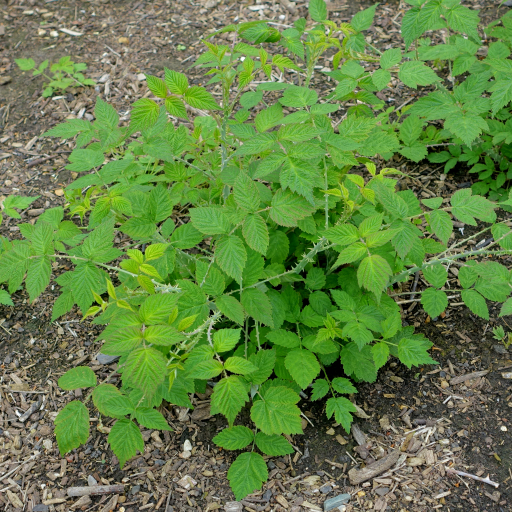
Plant Overview
Known as the "Ghost Bramble" or "Silver-stemmed Bramble," Rubus biflorus is a dramatic ornamental shrub that looks like it belongs in a gothic fairy tale. Native to the high-altitude slopes of the Himalayas and Western China, it is famous for its luminous, white-washed canes that appear to glow in the dim light of winter. While most brambles are hidden away in thickets, this one is a centerpiece grown specifically for its eerie, architectural beauty.
🔍 How to Identify
- 👻 The Canes: Its most striking feature is the thick, arching stems covered in a heavy, chalky-white waxy coating (called a "bloom"). This coating is so thick it can be rubbed off with a finger, revealing green wood beneath.
- 🍃 The Foliage: The leaves are compound, usually featuring 3 to 5 leaflets. They are dark green on the top side but have a contrasting, soft, silvery-white felted texture on the underside.
- 🌸 The Flowers & Fruit: In late spring, it produces small, five-petaled white flowers that often grow in pairs (which is what biflorus means). These are followed by round, yellow-to-pale-orange edible fruits that resemble small raspberries.
🏡 In Your Garden
- ✂️ The Pruning Secret: To keep the "ghostly" look, you must prune it aggressively. The white waxy coating is brightest on young, first-year stems. Many gardeners cut the entire plant back to the ground in early spring (stooling) to force the growth of vibrant new white canes.
- ☀️ Light & Space: It thrives in full sun to partial shade. The more sunlight the stems receive, the more intense the white wax becomes. Because of its arching habit, it needs plenty of room to spread—give it a dark evergreen backdrop to make those white stems truly "pop."
⚠️ Safety & Toxicity
- 🧤 Physical Hazard: While not chemically toxic, this plant is armed. The canes are covered in sharp prickles that can easily snag skin or clothing. Always wear heavy-duty gardening gloves when handling or pruning.
- 🐾 Pet & Child Safety: The plant and its berries are generally considered non-toxic to humans, dogs, and cats. However, the thorns pose a risk of scratches or eye injuries for playful pets or curious toddlers.
✨ Fun Fact
The white powder on the stems isn't just for decoration; it’s a natural "sunscreen." In its native Himalayan habitat, the waxy coating reflects intense UV rays and helps the plant retain moisture against the drying mountain winds.

Detailed Care Instructions
Rubus biflorus, commonly known as the Himalayan bramble or a type of wild blackberry, is a perennial shrub that can be grown in a variety of conditions. Here are some steps to help you successfully grow this plant:
1. Climate and Hardiness
- Hardiness Zone: Rubus biflorus is typically well-suited to temperate climates. Ensure your local climate is suitable for this plant, generally tolerating USDA hardiness zones 5 to 8.
2. Soil Preparation
- Soil Type: It prefers well-draining, slightly acidic to neutral soil. Loamy or sandy soil that retains some moisture but also allows excess water to drain is ideal.
- Soil Amendments: Before planting, you may want to improve soil fertility by adding organic matter like compost or well-rotted manure.
3. Planting
- Location: Choose a sunny location, as Rubus biflorus thrives in full sun (at least 6-8 hours of sunlight).
- Spacing: If planting multiple plants, space them about 3-4 feet apart to allow for spreading.
- Depth: Dig a hole that is twice the diameter of the root ball and just deep enough to cover the roots.
4. Watering
- Initial Watering: Water the plant thoroughly just after planting.
- Ongoing Care: Keep the soil consistently moist during the growing season, especially during dry spells, but avoid waterlogging.
5. Pruning and Maintenance
- Pruning: Prune the plant annually to remove dead or damaged canes and to encourage new growth. This also helps maintain an open center for better air circulation.
- Support Structures: If desired, you can use a trellis or support to help manage the plant’s growth, as it can be a vigorous spreader.
6. Fertilization
- Type: Use a balanced, slow-release fertilizer at the beginning of the growing season to promote healthy growth.
- Application: Follow the instructions for the amount required based on the size of your plant.
7. Pests and Diseases
- Monitor for common pests such as aphids or spider mites, and manage them with appropriate organic or chemical controls if necessary.
- Ensure good air circulation and avoid overhead watering to prevent diseases like powdery mildew.
8. Harvesting
- The berries are typically ready for harvest in late summer to early fall when they have ripened and turned dark.
- Be gentle when picking to avoid damaging the canes.
9. Winter Care
- In colder regions, apply a layer of mulch around the base of the plant in winter to protect the roots from freezing temperatures.
By following these guidelines, you can successfully grow Rubus biflorus and enjoy its delicious berries! If you have specific conditions or challenges, feel free to ask for more tailored advice.
Rubus Biflorus plant requires regular watering throughout its active growth period. It is important to ensure that the soil is evenly moist but not waterlogged. The frequency and amount of watering required for this plant will vary depending on factors such as the temperature and humidity levels in the surrounding environment.
When watering Rubus Biflorus, it is important to apply the water directly to the soil around the base of the plant. Avoid watering the leaves or flowers as this can promote disease and damage. It is also important to avoid getting water on the stem or trunk of the plant as this can cause rotting.
One way to ensure even watering is to use a watering can or hose with a gentle spray nozzle. This allows for a slow and controlled watering process that ensures the soil is evenly moistened. It is also a good idea to water early in the morning or in the late afternoon to avoid evaporation and ensure the water has time to soak into the soil.
During periods of drought or hot weather, Rubus Biflorus may require additional watering. It is important to monitor the soil and adjust the watering schedule accordingly. Over-watering can be just as harmful as under-watering and can lead to root rot and other issues.
For optimal growth of Rubus biflorus, consider the following fertilization guidelines:
- Soil Test: Before fertilizing, conduct a soil test to determine the nutrient levels and pH. This will help you tailor your fertilization approach.
- Base Fertilization: Use a balanced fertilizer with equal parts nitrogen, phosphorus, and potassium (e.g., 10-10-10) at the beginning of the growing season. Apply according to soil test recommendations, usually at a rate of about 1 pound per 100 square feet.
- Nitrogen Boost: In addition to the base fertilizer, provide a nitrogen-rich fertilizer in early spring to promote vigorous vegetative growth. You might consider an application of around 0.5 to 1 pound per 100 square feet.
- Organic Matter: Incorporate organic matter such as compost or well-rotted manure into the soil at planting and annually. This improves soil structure, enhances nutrient availability, and promotes beneficial microbial activity.
- Timing: Apply fertilizers in early spring when new growth begins. If using granular fertilizers, lightly till them into the soil surface to ensure better uptake.
- Avoid Over-Fertilization: Apply fertilizers conservatively, as excessive nutrients can lead to foliage at the expense of fruit production and could also increase susceptibility to pests and diseases.
- Watering: Ensure adequate watering after fertilization to help the nutrients penetrate the root zone effectively. Regular watering is crucial, especially during dry periods.
- Seasonal Adjustments: In the growing season, monitor the plant's health and adjust your fertilization based on growth, fruiting, and overall vigor. Consider a second fertilizer application in midsummer if growth appears weak.
By following these guidelines, you can support the healthy growth and productivity of the Rubus biflorus plant.
Rubus biflorus thrives in well-drained soils with good organic content. Here are the preferred soil characteristics for optimal growth:
- Texture: A loamy soil is ideal, combining sand, silt, and clay to provide a good balance of drainage and moisture retention. However, sandy loam or silty loam can also work well.
- Drainage: Excellent drainage is crucial to prevent waterlogging, which can lead to root rot and other fungal diseases. Avoid heavy clay soils that retain too much moisture.
- pH Level: The plant prefers slightly acidic to neutral pH levels, typically in the range of 5.5 to 7.0. Soil testing can be useful to determine current pH and make any necessary amendments.
- Organic Matter: Incorporating well-rotted compost or organic matter into the soil enhances fertility, improves soil structure, and aids moisture retention. This is particularly important for establishment and growth.
- Nutrient Content: A fertile soil rich in organic matter supports healthy growth. Adding a balanced fertilizer or organic compost can help provide necessary nutrients.
- Moisture: While the plant prefers well-drained soil, it also needs consistent moisture, especially during its growth period. Therefore, regular watering is essential, particularly in dry conditions.
When preparing soil for planting, mixing in compost and ensuring a proper balance of texture and drainage will create an optimal growing environment for healthy development.
Rubus biflorus can be propagated through several methods, including seeds, cuttings, and layering. Here is a detailed overview of each method:
1. Propagation by Seeds
Seed Collection:
- Harvest ripe fruits and extract the seeds. This is typically done in late summer to early fall.
Seed Preparation: - Clean the seeds to remove any fruit pulp, then spread them out to dry.
Stratification: - To enhance germination, consider cold stratification by placing the seeds in a damp medium (like sand or sphagnum moss) inside a sealed plastic bag. Refrigerate for about 4-6 weeks.
Sowing: - After stratification, sow seeds in a well-draining seed-starting mix. Lightly cover them with soil, as some seeds require light for germination.
Conditions: - Keep the soil moist but not soggy. Place the pots in a warm, bright area with indirect sunlight. Germination may take several weeks to months.
2. Propagation by Cuttings
Selection of Cuttings: - Choose healthy, non-flowering stems from the current season’s growth. Semi-hardwood cuttings (about 4-6 inches long) are ideal.
Preparation: - Remove the lower leaves, leaving a few at the top. You may dip the cut end in rooting hormone to encourage root development.
Planting: - Insert the cuttings into a well-draining medium, such as a mix of perlite and potting soil. Water the cuttings thoroughly.
Conditions: - Cover the cuttings with a plastic bag or place them in a humidity dome to maintain moisture. Keep them in a warm spot with indirect sunlight. After a few weeks, check for rooting by gently tugging on the cuttings.
3. Propagation by Layering
Select a Stem: - Identify a healthy, flexible stem that can be buried while still attached to the parent plant.
Preparation: - Make a small wound on the stem where it will be buried to encourage rooting.
Burying: - Bend the selected stem down to the ground and bury the wounded section in soil, leaving the tip exposed above ground. Secure it with a U-shaped wire or a stone to keep it in place.
Conditions: - Water the buried section regularly to maintain moisture. Roots should develop in a few months.
Care After Propagation
Once the new plants have established roots (for seeds, cuttings, or layers), they can be transplanted into pots or directly into the garden. Ensure they are acclimatized to their new environment gradually, and maintain soil moisture as they establish themselves in their new location.
Additional Notes
- Choose a well-draining soil mix for all propagation methods.
- Ensure proper spacing when planting new plants to allow for growth and airflow.
- Monitor for pests and diseases, especially during the early stages of growth.
By following these methods, you should be able to propagate effectively and cultivate healthy new plants.








