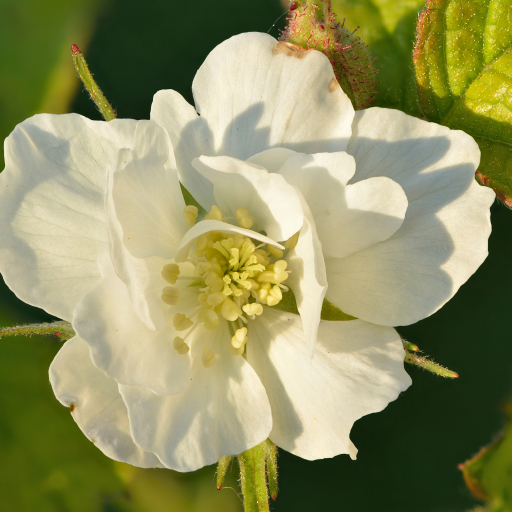
Plant Overview
The European Dewberry, often nicknamed the "Blue Bramble," is the subtle, ground-hugging cousin of the common blackberry. Known for its frosty-looking berries that appear as if they are permanently dusted with morning dew, this hardy perennial has been a staple of wild foraging across Europe and Asia for centuries. Unlike its upright relatives, the Dewberry weaves a delicate, thorny carpet across the forest floor.
🔍 How to Identify
- 🌿 The Leaves: Usually features three broad, serrated leaflets (trifoliate) that stay green deep into the autumn, sometimes turning a bruised purple hue.
- 🍇 The Fruit: Smaller than a blackberry with fewer "bumps" (drupelets). The most striking feature is the "glaucous" bloom—a thin, waxy, bluish-grey coating that rubs off when touched.
- 🦯 The Stems: Long, slender canes that trail along the ground rather than arching upward. They are armed with small, needle-like prickles rather than the heavy, hooked thorns found on standard blackberries.
🏡 In Your Garden
- 💧 Moisture Lover: While most brambles are happy in dry thickets, the Dewberry thrives in damp, alkaline soils. It is often found near riverbanks, marshes, or in the dappled shade of moist woodlands.
- 🌱 Natural Groundcover: Because it creeps along the soil, it is excellent for stabilizing banks or filling "wild" corners of a garden. However, be wary: where the tips of the stems touch the ground, they will grow new roots, allowing the plant to "walk" across your yard.
⚠️ Safety & Toxicity
- 🟢 Status: Generally safe and edible.
- 👅 Details: The berries are edible and have a pleasantly tart, acidic flavor, though they are less sweet than garden blackberries. As with all wild foraging, ensure the area hasn't been sprayed with pesticides. The small prickles can cause minor skin irritation, so gloves are recommended when harvesting.
✨ Fun Fact
The species name caesius comes from the Latin word for "sky blue." This refers to the distinct misty-blue color of the berries, which distinguishes them from the deep, shiny black of the common blackberry.

Detailed Care Instructions
To grow Rubus Caesius, also known as European dewberry or blue vine, you can follow these steps:
- Choose the right location: Dewberries prefer full sun, so select a spot in your garden that receives at least 6 hours of sunlight daily. The soil should be well-draining and slightly acidic.
- Preparing the soil: Before planting, prepare the soil by loosening it with a garden fork or tiller. Remove any weeds or rocks and amend the soil with compost or well-rotted manure to improve its fertility and drainage.
- Planting: Plant your dewberry plants in early spring or fall, while the weather is mild. Dig holes that are wide and deep enough to accommodate the roots. Place each plant in a hole and backfill with soil, firming it gently around the roots. Space the plants about 3-4 feet apart to allow for their spreading habit.
- Watering: Water the newly planted dewberries thoroughly and keep the soil consistently moist but not waterlogged. During dry periods, provide about 1 inch of water per week. However, avoid overwatering as these plants are susceptible to root rot.
- Mulching: Apply a layer of organic mulch around the base of the plants to conserve moisture, suppress weed growth, and regulate the soil temperature. Wood chips, straw, or compost can be used as mulch.
- Pruning: Prune dewberries in late winter or early spring before new growth begins. Remove any dead or damaged canes as well as weak or overcrowded ones. Training the canes on a support, such as a trellis or wire, can make harvesting easier.
- Fertilizing: Dewberries generally don't require heavy fertilization. You can apply a balanced fertilizer in early spring to promote healthy growth. Follow the package instructions for the recommended amount and frequency of application.
- Pest and disease management: Monitor your dewberry plants regularly for any signs of pests or diseases, such as aphids, spider mites, or fungal infections. Use organic pest control methods like handpicking or spraying with insecticidal soap if necessary.
- Harvesting: Dewberries are ready to harvest when they turn a deep purple or black color and easily detach from the plant. Gently pick or pluck the berries, being careful not to crush them, as they are delicate.
- Enjoying the berries: Dewberries can be eaten fresh, used in baked goods, or made into jams, jellies, or sauces. Enjoy the sweet and tangy flavor of these delicious berries!
Remember to check if your specific region is suitable for growing Rubus Caesius, as it may have specific climate requirements.

Place in a bright room that is sun drenched almost all day. Or directly in a south-facing window.

Rubus Caesius plant should be watered regularly to keep the soil consistently moist, but not waterlogged. To avoid overwatering, the soil should be checked before watering by inserting a finger into the soil up to the second knuckle. If the soil feels dry at that depth, it's time to water the plant. The plant should also be watered thoroughly, ensuring that the water reaches the roots of the plant.
To avoid causing any potential damage or water stress, it's recommended to water the plant in the morning or evening, when the sun's heat isn't as strong. It's also important to avoid watering the leaves of the plant, as this can promote fungal growth and increase the risk of disease.
During winter or periods of low growth, the plant should be watered less frequently, as the plant won't be actively using as much water as it would during the growing season. Proper watering is essential for the health and vitality of the Rubus Caesius plant, ensuring it produces healthy foliage and blooms.
To fertilize this plant, choose a balanced fertilizer with an N-P-K ratio of 10-10-10. Apply the fertilizer at a rate of 1 pound per 100 square feet of soil in early spring, just before new growth begins. Mix the fertilizer into the soil around the base of the plant, being careful not to damage the roots. Water thoroughly after fertilizing to help the nutrients reach the roots. Repeat the fertilization once a month during the growing season to support healthy growth and fruit production.
Rubus Caesius plant thrives in soil that is well-drained and loamy. It prefers soil that has moderate fertility levels with a pH ranging from slightly acidic to neutral. It is essential that the soil has good aeration to avoid waterlogging, as compacted soil can lead to root rot. The plant prefers a soil that is rich in organic matter, such as compost or peat moss.
When planting the Rubus Caesius plant, it is important to ensure that the soil is deeply dug and free of weeds. This will allow the roots to establish themselves and avoid competition for nutrients. The plant should also be regularly watered to maintain soil moisture levels.
Adding a layer of mulch around the base of the plant can help to retain moisture in the soil, regulate temperatures and reduce weed growth. It also provides a slow-release of nutrients that can benefit the plant.
Overall, the Rubus Caesius plant prefers a soil that is well-drained, loamy, and rich in organic matter. It is important to maintain appropriate moisture levels and avoid compacted soil to ensure the plant thrives.
Rubus Caesius plant can be propagated through various methods such as division, layering, and stem cuttings.
Division involves separating the plant into smaller sections, each with a portion of the root system. This method is best done in early spring or fall, as the plant is less likely to suffer from shock during these times.
Layering involves bending a lower stem of the plant to the ground and burying a portion of it in the soil to encourage root growth. After a few months, the new plant can be separated from the parent plant and planted elsewhere.
Stem cuttings involve taking a piece of the stem, usually about 4-6 inches long, and removing any leaves from the bottom half. The cutting should then be dipped in rooting hormone and planted in a peat-based soil mix. The cutting should be watered regularly and kept in a warm, humid environment until roots form.
No matter which method is chosen, it is important to keep the plant well-watered and to provide it with the proper amount of sunlight and nutrients to ensure successful propagation.








