Plant Overview
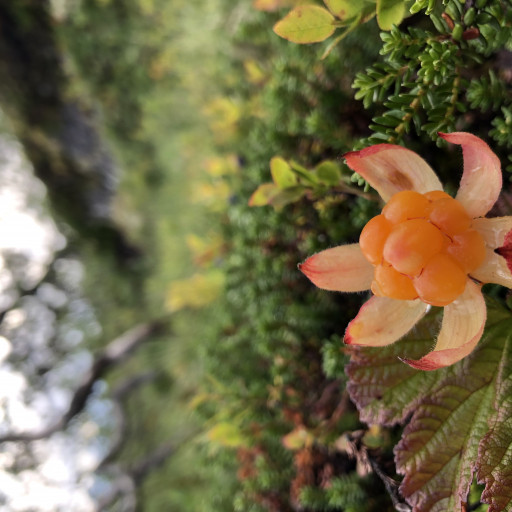
Known as the "Arctic Gold" or "Bakeapple," the Cloudberry is a prized treasure of the far north. Thriving in the acidic peat bogs of the circumpolar regions, this hardy little perennial is more than just a berry—it’s a cultural icon in Scandinavia and Canada. Its journey from a bitter, hard red fruit to a succulent, honey-colored jewel is one of the most anticipated events of the short subarctic summer.
🔍 How to Identify
- 🍃 The Foliage: Look for distinctive, leathery leaves that are kidney-shaped and deeply wrinkled (rugose), with five to seven rounded lobes.
- 🌸 The Flower: In early summer, the plant produces a single, relatively large white flower with five petals. Because the species is "dioecious," a single plant will produce either male or female flowers, but never both.
- 🟠 The Fruit: The berry looks like a heavy-set raspberry. It starts out hard and red, but as it ripens, it turns a translucent amber-orange, becoming incredibly soft and juicy with a unique tart-cream flavor.
🏡 In Your Garden
- 💧 The Bog Requirement: Cloudberries are notoriously difficult to "tame" in a traditional garden. They require highly acidic, nutrient-poor, and water-logged soil—mimicking their native peat bogs is essential for survival.
- ❄️ Cold Hardiness: This plant is an extremophile; it can survive temperatures as low as -40°F (-40°C). However, it is very sensitive to salt and dry heat, making it a poor choice for temperate or coastal southern gardens.
- 👫 The Partner System: If you are attempting to grow them for fruit, you must plant both male and female specimens close together, as they rely on wild bees and flies for cross-pollination.
⚠️ Safety & Toxicity
- ✅ Status: Entirely safe and highly edible.
- 🐾 Details: There are no known toxicities for humans, dogs, or cats. In fact, the berries are a superfood, packed with significantly more Vitamin C than oranges and rich in Vitamin E.
✨ Fun Fact
During the Viking Age and the era of great sailing explorations, Cloudberries were highly valued for their ability to prevent scurvy. Because the berries contain natural benzoic acid, they act as their own preservative and can stay fresh for months if kept cool, even without being cooked into jam!

Detailed Care Instructions
To grow Rubus chamaemorus, also known as cloudberry or bakeapple, follow these steps:
- Climate: Rubus chamaemorus is a cold-tolerant plant and thrives in regions with a cool, moist climate. It is native to subarctic and arctic regions but can also be cultivated in slightly warmer climates.
- Soil: Choose a well-draining soil that is rich in organic matter. The soil should be slightly acidic with a pH range of 4.0 to 6.0. If your soil is not naturally acidic, you can add organic matter such as compost or peat moss to lower the pH.
- Sunlight: Cloudberry plants prefer full sun, which means they require at least 6 hours of direct sunlight per day. Choose a location in your garden where the plants will receive ample sunlight.
- Propagation: Cloudberry can be propagated through dividing the rhizomes, by seeds, or through plant cuttings. Division is often the easiest and quickest method. Ensure that each divided section has a healthy-looking shoot.
- Planting: Dig a hole in the prepared soil that is slightly wider and deeper than the root ball of the cloudberry plant. Place the plant in the hole, making sure the roots are spread out and not tangled. Fill the hole with soil, gently firming it around the plant. Water thoroughly after planting.
- Watering: Cloudberry thrives in a consistently moist environment, so make sure to water the plants regularly. Avoid overwatering, as this may lead to root rot. The soil should remain moist but not waterlogged.
- Mulching: Apply a layer of organic mulch around the plants to help retain moisture, suppress weed growth, and maintain a cool root environment. Straw, wood chips, or compost make good choices for mulching.
- Fertilization: Apply a balanced, slow-release fertilizer in spring when new growth emerges. Avoid using high-nitrogen fertilizers, as they can promote excessive foliage growth at the expense of fruit production.
- Pruning: Cloudberry plants tend to be sprawling and may require support or a trellis system. Prune them annually in early spring to remove dead or damaged growth and to control their growth habit.
- Harvesting: Cloudberry fruits are typically ripe for harvest from mid to late summer. The fruits should be a vibrant orange color and easily detach from the plant. Gently twist or pull the berries off the stems when they are fully ripe.
Remember that growing cloudberry plants can be a challenging endeavor, particularly if you live in a warmer climate. However, with proper care, you can create suitable conditions for Rubus chamaemorus to thrive and enjoy a fruitful harvest.

Place in a bright room that is sun drenched almost all day. Or directly in a south-facing window.

Rubus Chamaemorus, also known as a plant in the Rosaceae family, requires regular watering to maintain its health. Ensure that the soil is moist but not waterlogged, and avoid letting it dry out completely. Water the plant deeply, allowing the water to soak into the soil, rather than just moistening the top layer. Depending on the climate and soil conditions, the plant may require watering every few days to once a week. Check the soil moisture level by inserting your finger into the soil about an inch deep and pulling it out to feel for moisture. If the soil is dry at this level, it is time to water. Be careful not to pour water directly onto the foliage, as this may damage the plant and increase the risk of disease. Instead, aim for the soil around the base of the plant. If you are growing the plant in a container, ensure that it has proper drainage to avoid waterlogging the soil.
To fertilize this plant, apply a slow-release fertilizer high in phosphorus and potassium in early spring. Be sure to follow the manufacturer's instructions for application rates and frequency. Additionally, it is recommended to amend the soil with organic matter such as compost or well-rotted manure. Water the plant thoroughly after fertilizing. Avoid fertilizing late in the growing season as it may encourage new growth that is susceptible to winter damage.
Rubus Chamaemorus is a plant that grows well in slightly acidic soil that has good drainage. The ideal soil for this plant is a mixture of organic matter, such as compost or peat moss, and sand or loam. The pH of the soil should be between 4.5 and 5.5, which can be measured using a soil pH meter. It is important to avoid using soil that is too rich in nutrients, as this can encourage excessive growth and reduce the berry production of the plant. Additionally, it is important to keep the soil moist, but not waterlogged, as standing water can harm the roots. It is recommended to plant Rubus Chamaemorus in a location with partial shade to protect the plant from extreme heat and sun exposure.
Rubus Chamaemorus is a plant that can be propagated in several ways, including by seeds, cuttings, and division.
To propagate Rubus Chamaemorus by seeds, collect the mature fruits when they turn red or orange in color. Remove the seeds from the flesh inside the fruits and wash them with water. Sow the seeds in a seed tray filled with moist soil and cover with a thin layer of soil. Keep the tray in a warm and humid place, and water regularly. The seeds will germinate in 3-4 weeks.
To propagate Rubus Chamaemorus by cuttings, take a stem cutting from a healthy plant in the spring or early summer. Remove the leaves from the lower half of the stem and plant it in a pot filled with moist soil. Keep the pot in a shaded area and water regularly. The cutting will root in 3-4 weeks.
To propagate Rubus Chamaemorus by division, divide the root ball of a mature plant in the spring or early fall. Dig up the plant and carefully separate the roots into smaller sections. Replant the sections in pots or in the ground and water regularly. The divided plants will establish new roots within a few weeks.








