Plant Overview
Often called the Ghost Bramble for its eerie, glowing white stems that haunt the winter garden, Rubus cockburnianus is a native of China that turns the traditional "bramble" image on its head. While it belongs to the same family as blackberries, this plant is prized more for its architectural skeleton than its fruit, adding a dramatic, luminous presence to cold landscapes when other plants have gone dormant.
🔍 How to Identify
- 🦴 Ghostly Stems: The most striking feature is the long, arching canes covered in a thick, waxy, chalk-white "bloom" that makes the plant look like it has been spray-painted silver.
- 🌿 Fern-like Foliage: It features delicate, pinnate leaves with 7 to 9 leaflets. These are dark green on the surface but have a shimmering, silvery-white underside that flickers in the wind.
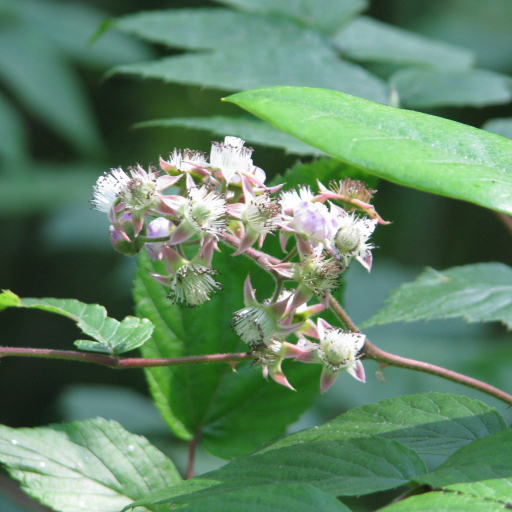
- 🌸 Summer Blooms: In late June or July, it produces small, inconspicuous saucer-shaped purple flowers, though they are often hidden by the dense foliage.
🏡 In Your Garden
- ✂️ Pruning for Color: The ghostly white color is brightest on young, first-year wood. To keep the "glow" intense, gardeners typically cut the entire plant back to ground level in early spring. This encourages vigorous new canes that will look spectacular the following winter.
- ☀️ Light and Space: It thrives best in full sun to partial shade. While it isn't picky about soil, it requires a lot of room to spread; its arching branches can reach up to 8 feet wide, creating a dramatic fountain-like silhouette.
⚠️ Safety & Toxicity
- ⚔️ Status: Non-toxic but physically defensive.
- 🧤 Details: While the plant is not poisonous to humans, cats, or dogs, it is heavily armed with sharp prickles along the stems. Thick gardening gloves and long sleeves are a must when pruning to avoid painful scratches. The small black fruits are technically edible but are generally considered dry and flavorless.
✨ Fun Fact
The ghostly white coating on the stems is actually a layer of epicuticular wax. This isn't just for decoration; the wax acts as a protective "sunscreen" and a waterproof barrier, helping the plant survive harsh mountain winters in its native Chinese habitat.

Detailed Care Instructions
To grow a Rubus cockburnianus plant, also known as white-stemmed bramble or ghost bramble, you can follow these steps:
- Choose the right planting location: Rubus cockburnianus prefers full sun to partial shade and well-draining soil. It is adaptable to various soil types but prefers slightly acidic to neutral soil.
- Prepare the soil: Before planting, loosen the soil and amend it with organic matter such as compost or well-rotted manure to improve drainage and fertility.
- Propagation: Rubus cockburnianus can be propagated from seeds, cuttings, or layering. Propagation from seeds may take longer, so it is recommended to use stem cuttings or layering methods to speed up the process.
- Planting from cuttings: Take 6-8 inch long stem cuttings in early spring or late summer. Remove any lower leaves, dip the cut end in a rooting hormone, and plant the cutting in a pot filled with a well-draining potting mix. Keep the soil consistently moist and provide some shade to the cutting until it establishes roots.
- Layering: Bend a long, flexible stem to the ground, making sure a node is touching the soil. Secure it in place using a U-shaped metal pin or a small stone. Cover the node with soil, leaving the tip of the stem exposed. Keep the soil moist and wait for the stem to root. Once rooted, cut it from the parent plant and transplant it to its final growing location.
- Care and maintenance: Water the plant regularly, especially during dry periods, to keep the soil moist but not waterlogged. Apply a layer of mulch around the base of the plant to retain moisture and control weeds. Prune out any dead or damaged stems in late winter or early spring. Rubus cockburnianus can spread quickly, so you may need to control its growth by pruning or by creating barriers.
- Protection from pests and diseases: While relatively pest and disease resistant, Rubus cockburnianus can be susceptible to common bramble diseases such as powdery mildew and crown gall. Monitor the plant for any signs of pests or diseases and take appropriate action using organic methods or consult with a local garden center for suitable remedies.
- Harvesting: Rubus cockburnianus produces edible blackberries, which can be harvested when they turn glossy black and easily detach from the plant. They are usually ready for harvest in late summer or early fall.
By following these steps, you can successfully grow a Rubus cockburnianus plant and enjoy its beautiful white stems and edible berries.

Place in a bright room that is sun drenched almost all day. Or directly in a south-facing window.

The watering needs for this plant should be carefully monitored and controlled. It is important to ensure that the soil is moist but not waterlogged. Watering frequency will depend on the environment and the growth stage of the plant.
During the summer months, the plant may require more frequent watering due to increased evaporation and higher temperatures. In order to prevent the plant from drying out, it is recommended to water it thoroughly but only when the top inch of soil feels dry to the touch.
In contrast, during the winter months, the plant may enter a dormant phase and require less water. The soil should be kept slightly moist but not too wet, as excess water can lead to root rot and other fungal diseases.
When watering, it is important to water the soil directly rather than the foliage or flowers, as this can cause damage and promote the growth of diseases. Additionally, it is recommended to avoid using hard water or water that has been treated with chemicals, as this can negatively impact the plant's growth and health.
Overall, watering this plant requires careful attention and consideration of its specific needs in order to promote healthy growth and development.
To fertilize this plant, you should apply a balanced all-purpose fertilizer in early spring before new growth begins. Use a slow-release fertilizer or mix a granular fertilizer into the soil around the base of the plant. Water the fertilizer in thoroughly and avoid fertilizing during periods of drought or extreme heat.
The ideal soil for Rubus Cockburnianus should be well-draining and have a slightly acidic pH level, ranging from 5.5 to 6.5. It should also be rich in organic matter and have good moisture retention properties, as the plant requires consistent moisture. Avoid using heavy clay soils, as they can cause waterlogging and hinder root growth. Instead, opt for a sandy loam or loamy soil with good structure and aeration. It is recommended to incorporate a slow-release fertilizer or well-rotted compost into the soil before planting to ensure proper growth and health of the plant.
Propagation of this plant can be done through a variety of methods like stem cuttings, layering, and division. Cuttings can be taken from mature stems in the spring or fall and should be about 6-8 inches long with several nodes. Remove the lower leaves and dip the cut end in rooting hormone before planting it in a well-draining medium. Keep the cuttings moist and in a partly shaded area until roots form.
Layering is a technique in which a stem is bent to the ground and buried, allowing it to root and form a new plant. This is best done in the spring or fall as well. Simply choose a healthy stem that is low enough to reach the soil, remove the leaves from the portion to be buried, and bury it a few inches deep while keeping the tip of the stem above the soil. Water it regularly and wait for roots to form before cutting it free from the parent plant.
Division can be done when the plant becomes overcrowded or when you want to create new plants. The root ball is carefully dug up and divided into smaller sections, making sure each section has roots attached. These smaller sections can then be planted in new locations and watered regularly until established.








