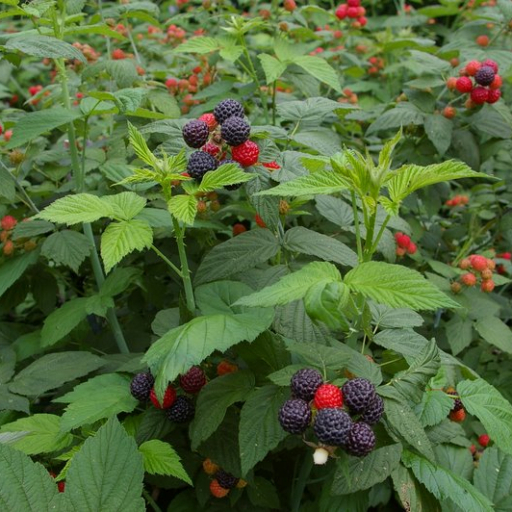
Plant Overview
Known as the Korean Black Raspberry or "Bokbunja," this hardy deciduous shrub is a staple in East Asian traditional medicine and culinary history. It is most famous for its deep purple, almost black berries that carry a complex, tart-sweet flavor profile. Beyond its fruit, the plant is admired for its "ghostly" appearance, thanks to a powdery white coating that covers its arching canes during the winter months.
🔍 How to Identify
- 🌿 The Foliage: Leaves are pinnately compound, usually featuring 5 to 7 ovate leaflets with sharply serrated edges and a vibrant green hue.
- ❄️ The Canes: Young stems (canes) are remarkably distinct; they are covered in a glaucous, waxy white bloom that makes the plant look like it has been dusted with flour or frost.
- 🍇 The Fruit: Unlike common raspberries that stay red, these berries transition from green to red and finally to a deep, glossy purplish-black when fully ripe.
🏡 In Your Garden
- 🏹 Growth Habit: This is a vigorous, arching shrub that loves to "wander." It uses its long canes to touch the ground and take root, so it requires regular pruning or a sturdy trellis system to keep it from becoming an unruly thicket.
- 💧 Drainage Nuance: While it is a tough survivor, Rubus coreanus is highly susceptible to root rot if left in standing water. It prefers "cool" roots protected by mulch but demands sharp-draining soil to thrive.
⚠️ Safety & Toxicity
- ✅ Status: Edible and Non-Toxic. The berries are widely consumed in wines, juices, and desserts.
- 🌵 Details: While the fruit is safe, the plant is armed with small, sharp prickles along the stems. These can cause minor skin irritation or scratches, so wearing thick gardening gloves is highly recommended during harvest.
✨ Fun Fact
The Korean name "Bokbunja" has a hilarious literal translation: "overturning the urinal." According to ancient folklore, the berries were so effective at boosting "vitality" that those who ate them would flip over their ceramic chamber pots while urinating the next morning!

Detailed Care Instructions
To grow Rubus coreanus plant, also known as Korean black raspberry, follow these steps:
- Climate and soil requirements: Select a suitable location that receives full sun or partial shade. Rubus coreanus prefers well-draining soil rich in organic matter. It can tolerate a wide range of soil types but performs best in slightly acidic to neutral soil pH (around 6.0-7.0).
- Propagation: There are two main methods for propagation - from seeds or cuttings. However, it is generally easier and more reliable to propagate Rubus coreanus from cuttings.
- Cuttings: Take softwood cuttings from healthy, disease-free plants during the spring or early summer. Dip the cut end in a rooting hormone to enhance root formation. Plant the cuttings in a mixture of perlite and peat moss or a well-draining potting mix. Keep the soil moist but not waterlogged. Rooting should occur within a few weeks.
- Planting in containers or in the ground: If planting in containers, choose a pot that is at least 12-18 inches deep and wide, with drainage holes. Fill the container with well-draining potting mix. If planting in the ground, prepare the soil by loosening it and adding organic matter.
- Plant the rooted cuttings or seedlings in the prepared soil at the same depth they were previously growing. Space them about 2-3 feet apart to allow air circulation and proper growth.
- Watering: Keep the soil consistently moist, especially during the first year of growth. Avoid overwatering to prevent root rot. Established plants generally require 1-2 inches of water per week, depending on the weather conditions.
- Fertilizing: Apply a balanced slow-release fertilizer during the spring and again in mid-summer. Follow the package instructions for proper dosage. Alternatively, you can use organic fertilizers like compost or well-rotted manure.
- Pruning: In late winter or early spring, remove any dead, damaged, or weak branches. Rubus coreanus bears fruit on second-year canes, so pruning is essential to maintain a healthy plant and promote fruit production. Remove any excessive canes to allow proper air circulation and sunlight penetration.
- Mulching: Apply a layer of organic mulch, such as straw or wood chips, around the base of the plant to conserve moisture, suppress weeds, and maintain a more consistent soil temperature.
- Pest and disease control: Monitor your plants regularly for pests like aphids, spider mites, or raspberry crown borers. If detected, take appropriate measures like using organic insecticidal soap or neem oil to control the pests. Also, watch out for common diseases like root rot or powdery mildew. Proper watering, good drainage, and maintaining adequate spacing can help prevent these issues.
- Harvesting: Rubus coreanus generally produces fruit from late summer to early fall. The berries should be fully ripe and easily detach from the plant when lightly pulled. Harvest them gently to avoid damaging the plant or other immature fruit. Enjoy the delicious berries fresh, use them in jams, or freeze them for later use.

Place in a bright room that is sun drenched almost all day. Or directly in a south-facing window.

Rubus Coreanus plant requires regular watering to keep its soil moist. However, it is important not to overwater the plant as it can lead to root rot. To water the plant, you should first check the soil moisture level by touching the soil surface with your fingertips. If it feels dry to the touch, you should water the plant.
You can water the plant by pouring water at the base of the plant or using a watering can, making sure to avoid getting water on the leaves or stems. You should also try to water the plant in the morning or late afternoon to avoid evaporation during the hottest part of the day.
During the winter months, you should reduce the frequency of watering the plant as it goes into a dormant phase. However, make sure not to let the soil dry out completely.
Overall, the key to watering Rubus Coreanus plant is to ensure a consistent level of moisture in the soil without overwatering.
The fertilization instructions for Rubus Coreanus plants are as follows:
- Select a balanced, slow-release fertilizer that is suitable for acid-loving plants.
- In the spring, before new growth begins, apply the fertilizer according to the package instructions. Take care not to over-fertilize, as this may harm the plant.
- Spread the fertilizer evenly around the base of the plant, avoiding direct contact with the stems or leaves.
- Gently work the fertilizer into the topsoil using a hand rake or garden fork, ensuring it is well incorporated into the soil.
- Water the plant deeply immediately after fertilizing to help the nutrients penetrate the root zone.
- Throughout the growing season, monitor the plant's health and growth. If necessary, apply additional light applications of fertilizer as the plant requires.
- Be mindful of the specific nutrient requirements of the Rubus Coreanus plant and adjust the fertilizer formulation accordingly. Consult a local gardening expert or refer to specialized fertilizers designed for berry-producing plants if needed.
- Regularly observe any changes or symptoms of nutrient deficiencies or excesses, such as yellowing leaves or stunted growth. Adjust the fertilization program as necessary to support the plant's overall health and productivity.
The ideal type of soil for Rubus Coreanus plants is a well-draining soil that is loamy and slightly acidic. It should have good water retention properties, with a pH level of about 5.0-6.5. Organic matter such as compost or peat moss should be added to the soil to improve its fertility and nutrient content. The soil should also be rich in minerals such as nitrogen, phosphorus, and potassium, as these are essential for proper growth and development. It is important to avoid using soil that is too heavy or compacted, as this can restrict root growth and lead to poor plant health. Additionally, it is recommended to maintain a consistent moisture level in the soil, without allowing it to become waterlogged or too dry.
To propagate Rubus Coreanus plants, you can follow these steps:
- Select a healthy, mature Rubus Coreanus plant from which you want to take cuttings.
- Using sterilized pruning shears, cut a 6 to 8-inch long stem from the plant. Make sure to choose a stem that is firm and disease-free.
- Remove any leaves from the lower one-third of the cutting as these will be buried in the growing medium.
- Dip the cut end of the stem in a rooting hormone powder. This will promote root development.
- Prepare a pot or container with a well-draining soil mix. You can use a combination of perlite, vermiculite, and peat moss.
- Create holes in the growing medium using a pencil or your finger. Space them about 2 inches apart to accommodate the cuttings.
- Insert the cuttings into the prepared holes, burying the leafless portion of the stem into the soil mix. Gently firm the soil around the stem to secure it in place.
- Water the cuttings thoroughly, ensuring that the soil is moist but not overly saturated.
- Place the pot or container in a warm and bright location while protecting it from direct sunlight. Keep the cuttings in a humid environment to enhance root development. You can achieve this by covering the pot with a plastic bag or using a propagating tray with a clear plastic lid.
- Mist the cuttings regularly to maintain humidity and prevent them from drying out.
- After a few weeks, carefully check for the presence of roots. Gently tug on the stem; if it resists, it indicates root growth.
- Once the roots have developed, gradually acclimate the Rubus Coreanus plant to the outdoor conditions by exposing it to increasing amounts of sunlight and reducing humidity.
- After acclimation, transplant the rooted cuttings into individual pots or directly into the garden, ensuring adequate spacing between plants.
Remember that Rubus Coreanus plants may have specific requirements that may differ from other plant species, so it's important to research their specific needs for the best chances of success in propagation.








