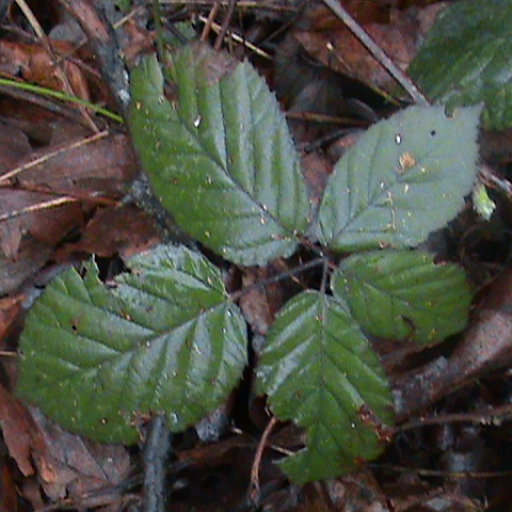
Plant Overview
Often called the Himalayan Blackberry, this plant is a classic "frenemy" of the gardening world. While it provides heavy baskets of juicy, sun-ripened fruit in late summer, it is also one of the most aggressive and resilient invaders in the botanical kingdom. Introduced to North America by the legendary botanist Luther Burbank in the late 19th century, it has since "escaped" to claim entire hillsides and riverbanks as its own.
🔍 How to Identify
- 💪 The Canes: Unlike many smaller berries, these stems are thick, robust, and often five-sided (pentagonal). They are armed with formidable, curved thorns that act like biological barbed wire.
- 🍃 The Leaves: Typically arranged in clusters of five leaflets (sometimes three). They are dark green and smooth on the top, but have a distinct silvery-white, fuzzy underside.
- 🌸 The Blooms: Showy clusters of white to pale pink flowers with five petals appear in mid-summer, serving as a magnet for bees and butterflies before the berries form.
🏡 In Your Garden
- 🚜 The Takeover: If this plant appears in your yard, know that it is a "pioneer species." It doesn't just grow; it colonizes. It spreads through underground runners and "tip-rooting," where the end of a long cane touches the soil and instantly sprouts a new root system.
- ✂️ Persistent Management: This plant is notoriously difficult to eradicate because of its massive, woody taproot. Simple mowing often encourages it to grow back thicker. If you choose to keep a patch for the fruit, it requires aggressive annual pruning to keep it from swallowing your fence or shed.
⚠️ Safety & Toxicity
- 🍓 Safe Edibles: The fruit is non-toxic and highly nutritious, packed with antioxidants. It is safe for humans, dogs, and wildlife to consume once ripe (deep black and slightly soft).
- ⚔️ Mechanical Injury: The primary danger is physical. The hooked thorns can cause deep scratches and easily snag clothing. Thick gloves and eye protection are essential when moving through a blackberry thicket to avoid "thorn-in-eye" injuries or skin infections from scratches.
✨ Fun Fact
- 🌍 Despite the common name "Himalayan Blackberry," the plant is actually native to Armenia and Northern Iran. It was mislabeled during its commercial debut in the 1880s, and the geographical mix-up has persisted in common language for over 140 years!

Detailed Care Instructions
To grow Rubus Discolor plant, also known as Himalayan raspberries or thimbleberries, you can follow these steps:
- Choose a suitable location: Rubus Discolor plants prefer full sun to partial shade. Ensure that the chosen location has well-draining soil, preferably slightly acidic with a pH level of 5.6 to 6.5.
- Prepare the soil: Before planting, prepare the soil by removing weeds, rocks, and debris. Mix organic matter like compost or well-rotted manure into the soil to improve its fertility and drainage.
- Planting: Dig a hole that is slightly larger than the rootball of the Rubus Discolor plant. Place the plant in the hole, ensuring that the top of the rootball is level with or slightly above the soil surface. Backfill the hole with soil, gently firming it around the plant.
- Watering: Water thoroughly after planting to settle the soil around the roots. Thereafter, provide regular watering, especially during dry periods, ensuring that the soil remains consistently moist but not waterlogged.
- Mulching: Apply a layer of organic mulch, such as wood chips or straw, around the base of the plant. This helps retain moisture, suppress weeds, and regulate soil temperature.
- Fertilization: Rubus Discolor plants generally do not require heavy fertilization. However, you can apply a balanced organic fertilizer in early spring or late winter before new growth emerges.
- Pruning: Prune the plant to remove dead, damaged, or weak canes in late winter or early spring. This helps maintain vigour and promotes better fruit production. Rubus Discolor bears fruit on second-year canes, so be careful not to remove all the canes during pruning.
- Supporting the plant: Since Rubus Discolor canes may grow quite tall, it's advisable to provide support in the form of stakes or trellises. This helps keep the plant upright and makes harvesting easier.
- Pests and diseases: Monitor the plant regularly for any signs of pests, such as aphids or spider mites, and diseases like powdery mildew. Take appropriate steps to control or treat these issues if necessary.
- Harvesting: Rubus Discolor plants typically produce fruit in late summer to early fall. Harvest the ripe fruit by gently picking it from the plant. Thimbleberries are delicate, so handle the fruit with care to avoid bruising.
Following these steps should help you successfully grow Rubus Discolor plants and enjoy their tasty fruits.

Place in a bright room that is sun drenched almost all day. Or directly in a south-facing window.

Rubus Discolor is a plant that requires regular watering. It is important to water the plant deeply at least once a week to ensure that the roots receive adequate moisture. However, the frequency of watering may also depend on factors like humidity, temperature, and soil type.
To water the Rubus Discolor plant, you need to take care not to overwater it as this can lead to root rot. The best time to water the plant is in the morning or evening when the sun is not too hot.
Before watering, make sure that the soil around the plant is dry to touch. Use a watering can or garden hose with a gentle stream of water to soak the soil around the base of the plant. Avoid getting water on the leaves, as this can cause fungal diseases and damage to the plant.
Always water the Rubus Discolor plant slowly and deeply to allow the water to penetrate the soil. This will encourage the roots to grow deeper and ensure that the plant is well-hydrated. It is also a good idea to mulch around the base of the plant to help retain moisture in the soil.
Overall, proper watering is essential for the health and growth of Rubus Discolor plant. Ensure that the plant receives adequate water, but avoid overwatering as it can lead to damage or death of the plant.
To fertilize Rubus Discolor plant, use a balanced fertilizer with equal amounts of nitrogen, phosphorus, and potassium. Apply the fertilizer in the early spring before new growth appears and then again in mid-summer. Use a granular slow-release fertilizer and apply at the rate recommended on the package. Avoid over-fertilizing as this can lead to excessive growth and reduced fruit production. Water the plant before and after fertilizing to prevent fertilizer burn.
When growing plants of the genus Rubus Discolor, it is important to choose a soil that is well-draining and nutrient-rich. The soil should have a pH level between 5.5 and 6.5. The ideal soil mix should be rich in organic matter, such as compost, and should have good aeration and drainage properties to prevent waterlogging. Avoid using heavy clay soils, as these can cause waterlogging and root rot. Sand can be added to improve drainage. It is also important to ensure that the soil is not contaminated with chemicals or toxins. Prior to planting, it is recommended to test the soil to ensure optimal growing conditions. Maintaining consistent soil moisture is important to ensure healthy growth and fruit production.
Rubus discolor is a woody perennial plant that belongs to the rose family Rosaceae. It is native to North America and can be propagated through several methods such as seeds, cuttings, and layering.
- Propagation by seeds:
Seeds can be collected from ripe fruits in the fall season. Clean the seeds by removing any fleshy material and then stratify them in a refrigerator for 3-4 months. This will encourage germination. After stratification, plant the seeds in well-draining soil and keep them moist but not waterlogged.
- Propagation by cuttings:
Take cuttings of about 4-6 inches from the current season’s growth during late summer or early fall. Remove the lower leaves and dip the cut end into rooting hormone powder, then plant the cuttings in a well-draining soil mix. Water them regularly and keep them in a shaded area with some humidity until they root.
- Propagation by layering:
In this method, a low hanging branch is selected and partially buried in the soil for a period of several months. This encourages the branch to form roots and can be separated from the parent plant at the beginning of the next growing season.
Keep in mind that Rubus discolor prefers well-draining soil and partial shade to full sun. It is also important to keep the soil moist but not waterlogged to ensure successful propagation.








