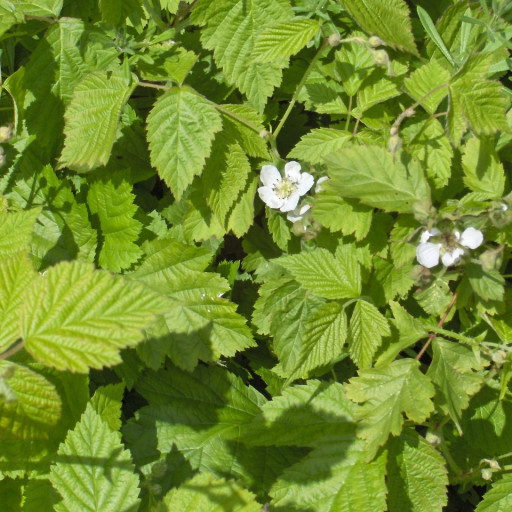
Plant Overview
Known as the Common Blackberry or Bramble, this plant is the quintessential symbol of late summer harvests and wild hedgerows. Often found scrambling over fences and through woodland clearings, it has been a staple in European folklore and kitchens for centuries. While it can be a stubborn, prickly guest in a manicured lawn, its sweet, dark fruits make it a favorite for foragers, birds, and pollinators alike.
🔍 How to Identify
- 🌿 The Canes: Look for long, arching stems (canes) that are heavily armed with sharp, curved thorns. These stems can range in color from a vibrant lime green to a deep, moody purple-red.
- 🍃 Leaf Structure: The leaves are compound, typically featuring three or five oval, tooth-edged leaflets. They are dark green on the surface and often have a paler, fuzzy underside with tiny prickles along the midrib.
- 🌸 Summer Blooms: In late spring and early summer, the plant produces clusters of delicate, five-petaled flowers. They range from snowy white to a soft, shell-pink and are a major draw for honeybees.
- 🍇 The Fruit: The signature berries are "aggregate fruits" made of tiny juice-filled baubles. They transition from hard green to bright red, finally turning a glossy, deep black when they are at their sweetest.
🏡 In Your Garden
- 🏃 A Vigorous Traveler: Blackberries are famous for their "tip-rooting" habit. When an arching branch touches the soil, it quickly sends down new roots, meaning the plant can "walk" across your garden if not kept in check.
- 🐝 Wildlife Powerhouse: If you have the space, a bramble patch is one of the best things you can provide for local ecology. It offers dense nesting cover for birds and a massive nectar source for butterflies and hoverflies.
- ✂️ The Pruning Logic: To keep your harvest manageable, remember that fruit usually grows on "floricanes" (stems in their second year). After a cane has finished fruiting, it should be cut to the ground to allow the fresh, green "primocanes" to take over for next year.
⚠️ Safety & Toxicity
- ✅ Fruit Status: The ripe black berries are safe, delicious, and packed with antioxidants for humans, dogs, and cats.
- 🌵 Mechanical Hazard: The primary danger is the thorns. They are designed to hook into fur and clothing, easily causing deep scratches or skin irritation. Always wear thick, leather-style gardening gloves when handling this plant.
- 🐾 Pet Safety: While the fruit is a healthy treat, the thorny thickets can pose a risk to curious pets who might suffer eye or paw injuries if they charge into a dense patch.
✨ Fun Fact
✨ In British folklore, it was traditionally warned that you should never pick blackberries after Old Michaelmas Day (October 11th). Legend says that this is when the Devil was kicked out of heaven; he landed in a bramble bush, and in his rage, he cursed the fruit, spitting on them and making them sour and inedible for the rest of the year!

Detailed Care Instructions
| Humidity | Normal |
| Lighting | Part Sun |
| Difficulty | Medium |
| Hibernation | Cold Period |
| Hardiness Zones | 5 - 9 |
To grow Rubus fruticosus, also known as blackberry plants, follow these steps:
- Select a proper location: Choose a spot that receives full sun for at least 6-8 hours a day. The soil should be well-draining and fertile.
- Prepare the soil: Before planting, prepare the soil by removing weeds, rocks, and other debris. Loosen the soil and amend it with organic matter such as compost or well-rotted manure.
- Planting: Dig a hole that is large enough to accommodate the plant's root system. Place the blackberry plant in the hole, ensuring that the crown (where the stems meet the roots) is level with the soil surface. Backfill the hole and gently firm the soil around the plant.
- Watering: After planting, water thoroughly to settle the soil and provide moisture to the roots. Keep the soil consistently moist but not waterlogged.
- Mulching: Apply a layer of organic mulch around the base of the plant, such as straw or wood chips. This helps retain moisture, suppress weeds, and regulate soil temperature.
- Pruning: Prune blackberry plants annually in late winter or early spring. Remove old, weak, or damaged canes, leaving only the healthy and productive ones. This promotes airflow and reduces disease.
- Fertilizing: Apply a balanced fertilizer in early spring, following the manufacturer's instructions. Additionally, a side dressing of compost or well-rotted manure can be beneficial during the growing season.
- Trellising: If growing thornless or semi-erect varieties, install a trellis or support system to help the canes grow upright and prevent them from sprawling on the ground.
- Pest and disease management: Regularly inspect your plants for pests such as aphids, spider mites, or Japanese beetles. Treat any infestations promptly. Blackberries can be susceptible to diseases like anthracnose or powdery mildew, so choose disease-resistant varieties and maintain good airflow around the plants.
- Harvesting: Blackberries are typically ready for harvest in late summer or early fall when they turn black and are easily detached from the plant. Pick them when fully ripe for optimal sweetness.
Remember to check with local gardening experts or agricultural extension services for specific cultivation advice tailored to your region and climate conditions.

Place in a window with dappled sun or a spot in the middle of a room. Or directly in a window facing west or east.

To water this plant, first assess the soil moisture level. Stick your finger into the soil about an inch deep – if it feels dry, it's time to water. Water the plant at the base, but be sure not to get water on the leaves as this can cause disease. Use a watering can or a hose with a gentle spray attachment to water the soil thoroughly. Allow the soil to drain excess water before placing the plant back in its original location. Water the plant once per week, adjusting for weather conditions – in hot, dry weather the plant may need more frequent watering, while in cooler, wet weather it may need less. Overwatering can be just as harmful as underwatering, so be sure to monitor soil moisture levels carefully.
To fertilize this plant, apply a balanced fertilizer with an NPK ratio of 10-10-10 during the growing season. Use approximately 1 pound of fertilizer per 100 square feet of soil. Apply the fertilizer evenly around the base of the plant and water thoroughly after application. Avoid over-fertilizing, which can lead to excessive growth and reduced fruit production. Additionally, consider incorporating organic matter such as compost or aged manure into the soil to improve fertility.
Rubus Fruticosus is a type of shrub that belongs to the Rosaceae family and requires a well-draining soil that is rich in organic matter. The soil pH should be between 5.5 and 6.5. A mixture of peat moss, perlite, and compost is suitable for growing this plant. The soil should be moist, but not waterlogged, and should be allowed to dry out slightly between watering. The plant prefers to grow in full sun, but can tolerate some shade. It is important to avoid overcrowding the plant as it can lead to competition for water and nutrients. Mulching around the base of the plant can help conserve moisture and suppress weed growth. Fertilizers should be applied sparingly, as Rubus Fruticosus is susceptible to over-fertilization.
Rubus Fruticosus, also known as a certain type of berry plant, can be propagated through various methods such as cutting, division, and layering.
Propagation by cutting involves taking a section of the stem from the parent plant and planting it in soil or a rooting hormone. The cutting should be taken from the previous year's growth and should have a few buds with leaves. The cutting should be approximately 6 inches long and the lower leaves should be removed. The cutting should be moistened and planted in a potting mix or soil.
Propagating by division involves digging up the parent plant and dividing it into sections, each containing a rooted and healthy section of the plant. Each section can be replanted in soil or in a new location in the garden.
Propagation by layering occurs by bending a flexible stem or cane down to the soil and covering a section of the stem with soil. The stem will eventually produce roots at the covered section. Once roots have formed, the stem can be cut from the parent plant and planted in a new location.
It is important to keep the newly propagated plants well-watered and protected from extreme temperatures until they become established.
Common pests of the blackberry include Aphids. Make a habit of checking your blackberry frequently for pests so that any infestations can be caught and managed early.








