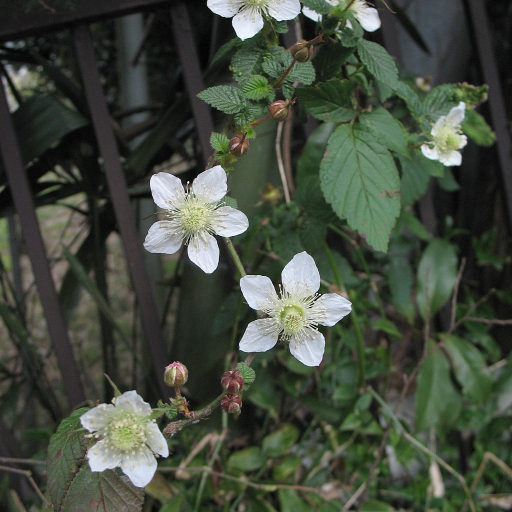
Plant Overview
Known as the Balloon Berry or Korean Raspberry, Rubus hirsutus is a charming, low-growing shrub that blankets the hillsides of East Asia with snowy white blossoms and ruby-red gems. While it may resemble a wild strawberry at first glance, this plant is a true raspberry relative that brings a touch of wild, edible beauty to temperate gardens. Its name "hirsutus" literally means "hairy," referring to the fuzzy texture that defines its stems and leaves.
🔍 How to Identify
- 🌿 Hairy Stems: True to its name, the stems and leaf stalks are covered in fine, soft hairs interspersed with small, sharp, hooked prickles that help it scramble over the ground.
- 🍃 Toothed Foliage: The leaves usually grow in groups of three (trifoliate), featuring deeply serrated, double-toothed edges and a soft, velvety underside.
- 🍓 Jewel-Like Fruit: The berries are glossy, bright red aggregate fruits. Unlike common raspberries which are hollow, these are firm and look like a cluster of tiny, translucent balloons.
🏡 In Your Garden
- 🌱 Groundcover Habit: Unlike upright raspberry canes, this species is relatively low-growing and spreads via underground runners (rhizomes). It is perfect for stabilizing banks or filling large gaps under light tree canopies.
- ☀️ The "Edge" Preference: In nature, it thrives at the edge of forests. In a garden setting, it performs best with "feet in the shade, head in the sun"—preferring moist, well-draining soil and a bit of protection from the scorching afternoon heat.
⚠️ Safety & Toxicity
- ✅ Safe & Edible: The fruits are non-toxic and delicious for humans, birds, and even curious dogs. They are often eaten fresh or used in jams.
- 🧤 Physical Hazard: While not chemically toxic, the small thorns are quite sharp. If you have curious toddlers or pets that like to run through the brush, plant this in a low-traffic area to avoid "prickly" encounters.
✨ Fun Fact
In its native Korea, these berries aren't just a snack; they are a staple in traditional folk medicine. They are frequently harvested from the wild to make Sanchun-deul, a soothing fruit tea believed to aid digestion and rejuvenate the skin.

Detailed Care Instructions

Place in a bright room that is sun drenched almost all day. Or directly in a south-facing window.

When the top few inches of soil dry out, water your plants. If the top few inches of soil are still moist, do not water your plant. Wait a few days, then poke your finger into the soil to see if anything has changed. Overwatering poses a disease risk, such as the development of fungal diseases in the roots. These plants have adaptations in there leaves that allow them to survive in low water supply.








