Plant Overview
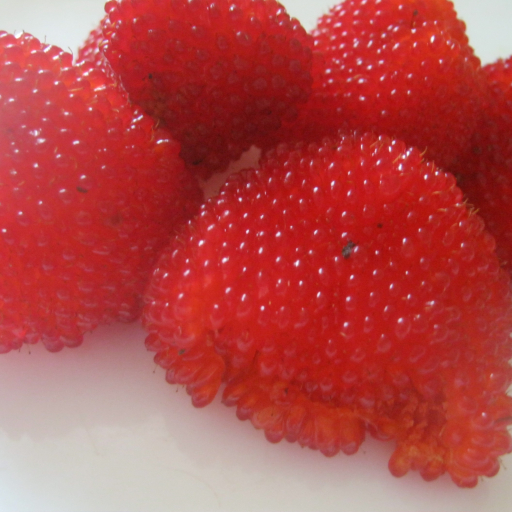
Often called the Balloon Berry or Strawberry Raspberry, this Japanese native is a botanical optical illusion. Despite its name and appearance, it isn't a hybrid between a strawberry and a raspberry, but a unique species of bramble. It’s a favorite for "edible landscaping" because of its snowy white flowers and oversized, glowing red fruits that look almost too perfect to be real.
🔍 How to Identify
- 🌿 Growth Habit: Unlike tall blackberry canes, this is a low-growing, mounding sub-shrub that stays tucked near the ground, rarely exceeding two feet in height.
- 🍓 The "Balloon" Fruit: Large, glossy, bright red berries that are hollow inside. They look like giant raspberries but have the pitted surface texture of a strawberry.
- 🌸 Showy Blooms: It produces unusually large, five-petaled white flowers that are much more decorative than those of a standard raspberry bush.
- ⚔️ Prickly Stems: The stems and even the midribs of the serrated, fern-like leaves are armed with small, sharp prickles that catch on clothing.
🏡 In Your Garden
- 🏃 The Wanderer: This plant spreads via underground runners (rhizomes). If you don't plant it in a large container or a contained garden bed, it will slowly "walk" across your yard and pop up in unexpected places.
- 🥧 Culinary Secret: If you eat the berry straight off the bush, you might be disappointed—it’s often mild or even bland. However, its flavor transforms when cooked; heat releases a sweet, tart "wild berry" essence perfect for jams and tarts.
- 🍂 Self-Pruning: One of the easiest features for hobbyists is that the canes often die back completely in the winter. You can simply mow or shear the dead tops off, and it will regrow fresh and green from the roots in spring.
⚠️ Safety & Toxicity
- ✅ Edible: The berries are non-toxic and safe for human consumption.
- 🐾 Pet Safety: The plant is generally considered non-toxic to cats and dogs. However, the tiny thorns can cause skin irritation or physical discomfort if a pet tries to push through a dense patch.
- 🧤 Hand Protection: Always wear gloves when harvesting or pruning, as the "hidden" prickles on the undersides of the leaves can cause many tiny, itchy scratches.
✨ Fun Fact
In the late 19th century, this plant was sold by many nurseries as a "miracle fruit" hybrid. While it didn't live up to the hype of being a "strawberry on a bush," it remains a beloved "curiosity plant" for gardeners who want something that looks like it belongs in a fairytale.

Detailed Care Instructions
To successfully grow Rubus illecebrosus, also known as the thimbleberry plant, you can follow these general guidelines:
- Climate and Soil Conditions: Thimbleberries generally thrive in cool, damp climates with well-draining soil. They prefer partially shaded areas but can tolerate full sun if the soil is consistently moist.
- Propagation: Thimbleberries can be propagated through seeds, cuttings, or division. Buying nursery-grown plants is also an option.
- Planting: Choose a suitable location with the right soil conditions. Dig a hole that is wide and deep enough for the plant's root system. Backfill the hole with a mixture of compost and well-draining soil. Space the plants about 2-3 feet apart.
- Watering: Thimbleberries need regular watering, especially during dry spells. The soil should be kept consistently moist, but avoid waterlogging.
- Mulching: Apply a layer of organic mulch around the plants to retain soil moisture, suppress weeds, and provide nutrients as it breaks down.
- Fertilization: Thimbleberries generally do not require heavy fertilization. However, you can apply a balanced organic fertilizer in spring or early summer to promote healthy growth.
- Pruning: Prune thimbleberry plants during the dormant season, typically in late winter or early spring. Remove old, damaged, or weak canes, and thin out the growth to improve airflow and sun exposure.
- Pest and Disease Management: While thimbleberries are generally resistant to pests and diseases, it's important to monitor for any issues. Treat any infestations promptly using organic measures if required.
- Harvesting: Thimbleberries produce sweet, tart, raspberry-like fruits that turn red when ripe. Harvest the berries when they easily detach from the plant, typically in late summer or fall. Enjoy them fresh or use them in various culinary preparations.
Remember that specific care instructions may vary depending on your specific climate and growing conditions. It's always a good idea to consult local gardening resources or nurseries for more tailored advice.

Place in a window with dappled sun or a spot in the middle of a room. Or directly in a window facing west or east.

Rubus Illecebrosus is a plant that requires adequate and consistent watering for proper growth and development. It is recommended to water the plant deeply and infrequently, allowing the soil to dry out slightly between watering sessions. Overwatering can lead to root rot and other fungal diseases.
When watering, it is important to avoid getting water on the foliage, as this can increase the likelihood of fungal growth. A drip irrigation system or watering directly at the base of the plant can be effective in avoiding wetting the foliage.
It is also important to consider the environmental conditions when determining the appropriate watering regimen. Hot and dry weather may require more frequent watering, while cool and damp weather may require less. Regularly monitoring the moisture level of the soil can also help to ensure the plant is receiving the appropriate amount of water.
To fertilize this plant, first make sure the soil is moist. Then, apply a balanced fertilizer with equal parts nitrogen, phosphorus, and potassium. Use a slow-release fertilizer during the growing season, applying every two months. Be sure to follow the manufacturer's instructions for application rates. Avoid applying too much fertilizer, as this can lead to excessive growth and poor fruit quality.
Rubus illecebrosus plant prefers well-draining soil that is high in organic matter. A sandy loam or loamy soil with a pH ranging from slightly acidic to slightly alkaline is ideal. It thrives in soils that are rich in minerals and nutrients and that retain moisture without getting waterlogged. The soil should be aerated and loose to encourage root growth and prevent waterlogging. Adding compost or organic matter to the soil will increase its fertility and structure. Avoid soils that are heavy in clay or compacted, as this can stunt the plant's growth and reduce yield. The plant prefers a soil that is slightly moist, but not soaking wet or dry. Regular mulching with organic materials can help to conserve moisture and regulate the soil temperature.
Rubus Illecebrosus can be propagated through various methods including seed propagation, division, and stem cuttings.
Seed propagation involves collecting mature seeds from the plant and sowing them in prepared soil. Division involves separating the plant's roots into smaller sections and planting them in separate pots or places in the garden.
However, stem cuttings are the most common and easy method to propagate Rubus Illecebrosus. Select a healthy stem with no flowers or fruits and cut it with a sharp, clean knife or a pair of pruning shears. The cutting should be about half a foot long, with a few leaves on the top.
Remove the bottom leaves of the cutting and make a shallow cut on the bottom of the stem. Dip it in rooting hormone powder and plant it in moist soil, covering the cut part with the soil. Water the cutting regularly and keep it in a warm, well-lit area.
After a few weeks, new roots will start to grow from the cut part of the stem. Once the cutting has developed a good root system, it can be planted in its permanent location.
Common pests of the strawberry raspberry include Aphids. Make a habit of checking your strawberry raspberry frequently for pests so that any infestations can be caught and managed early.








