Plant Overview
Often called the Maple-leaf Raspberry, this elegant shrub bridges the gap between a rugged wild bramble and a delicate ornamental plant. Native to the mountainous regions of East Asia, it gets its name from its strikingly shaped foliage that mimics a miniature maple tree. Whether it’s blooming with snowy white flowers in spring or dripping with translucent orange berries in early summer, it adds a touch of "wild woodland magic" to any landscape.
🔍 How to Identify
- 🍁 Leaf Shape: Distinctly "palmate" (hand-shaped) leaves typically featuring five deep lobes with serrated edges, giving them a look nearly identical to a Japanese Maple.
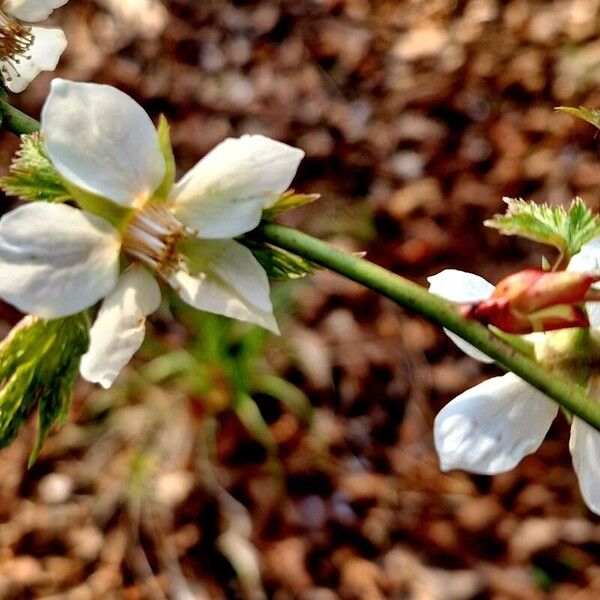
- 🌸 The Bloom: Large, pure white, five-petaled flowers that often hang slightly downward, appearing individually or in small, graceful clusters.
- 🟠 The Fruit: Round, aggregate berries that transition from green to a luminous, translucent yellow-orange when fully ripe, standing out sharply against the green leaves.
🏡 In Your Garden
- 🪵 The "Edge" Habit: In nature, this plant thrives where the forest meets the clearing. In your garden, it performs best in dappled sunlight and rich, slightly acidic soil that mimics a forest floor.
- 🦉 Wildlife Sanctuary: Because of its arching canes and dense growth, it serves as an excellent "habitat plant." It provides high-energy fruit for pollinators and a thorny, safe haven for small nesting birds.
- ✂️ Pruning Nuance: It produces fruit on "floricanes" (twos-year-old wood). To keep it productive, only prune the canes that have finished fruiting, leaving the new green canes to produce next year's harvest.
⚠️ Safety & Toxicity
- ✅ Status: Generally safe and non-toxic. The berries are edible and have a mild, sweet flavor enjoyed by humans and wildlife alike.
- 🧤 Prickle Warning: While the fruit is sweet, the plant "bites" back. The stems are lined with small, sharp prickles that can easily snag clothing or scratch skin. Always wear thick gardening gloves when handling or pruning.
- 🐾 Pet Safety: It is not known to be toxic to cats or dogs, though the thorns can cause minor physical injury if a pet tries to run through a thicket.
✨ Fun Fact
In Japan, this plant is known as Nagaba-momiji-ichigo. It is so deeply rooted in the culture that it frequently appears in traditional seasonal poetry (Haiku), symbolizing the arrival of early summer and the fleeting beauty of the mountains.

Detailed Care Instructions

Place in a window with dappled sun or a spot in the middle of a room. Or directly in a window facing west or east.

When the top few inches of soil dry out, water your plants. If the top few inches of soil are still moist, do not water your plant. Wait a few days, then poke your finger into the soil to see if anything has changed. Overwatering poses a disease risk, such as the development of fungal diseases in the roots. These plants have adaptations in there leaves that allow them to survive in low water supply.







