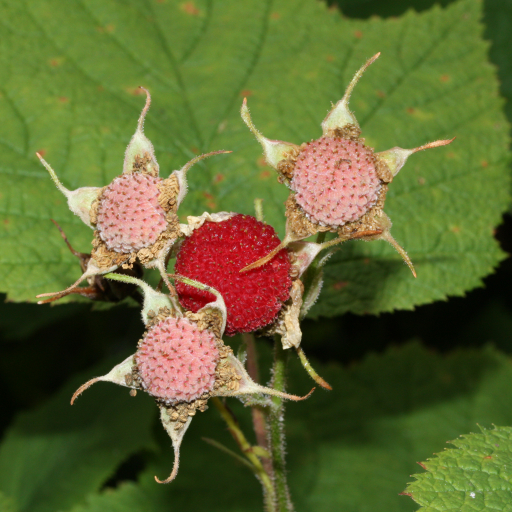
Plant Overview
The Thimbleberry is the gentle giant of the wild berry world. Often called "Nature's Toilet Paper" because of its incredibly soft, velvet-like leaves, this plant is a favorite among hikers in Western North America. Unlike its cousins, the blackberry and raspberry, the Thimbleberry is completely thornless, making it a friendly addition to any woodland garden or trailside.
🔍 How to Identify
- 🍃 The Leaves: Look for massive, bright green leaves that resemble maple leaves. They are palm-shaped with 3 to 5 lobes and feel soft and fuzzy to the touch on both sides.
- 🌸 The Flowers: Despite its Latin name parviflorus (meaning "small-flowered"), it actually produces some of the largest flowers in the Rubus genus. They are brilliant white with five crinkly petals that look like delicate tissue paper.
- 🍓 The Fruit: The berries are bright red, dome-shaped, and hollow like a thimble. They are much softer and flatter than a standard raspberry and lack the "core" found in blackberries.
🏡 In Your Garden
- 💧 Moisture Lovers: These plants thrive in cool, moist, and slightly shaded areas. In a garden setting, they are perfect for those "difficult" damp spots where other plants might struggle with root rot.
- 🏃 Thicket Formers: Be aware that Thimbleberries spread via underground rhizomes. While they don't have thorns to scratch you, they can quickly take over a space to form a lush, green thicket, which is excellent for bird nesting and privacy screening.
⚠️ Safety & Toxicity
- ✅ Safe & Edible: Thimbleberries are non-toxic and highly prized for their unique, tart-sweet flavor. They are safe for children and pets to be around.
- 🥣 Fragile Harvest: Because the berries are so soft, they often fall apart when picked. This is why you’ll never find them in a grocery store—they are a "pick and eat" treat meant to be enjoyed right off the bush.
✨ Fun Fact
The botanical name Rubus parviflorus is actually a historical mistake! The botanist who named it was looking at a stunted specimen with unusually small flowers. In reality, the Thimbleberry has the largest flowers of almost any wild berry in its family.

Detailed Care Instructions
To grow Rubus parviflorus plant, also known as thimbleberry, you can follow these steps:
- Planting: Choose a location with well-draining soil and partial shade, as the plant prefers cool, moist conditions. Dig a hole slightly larger than the root ball of the plant and place it in the hole, ensuring that the crown of the plant is level with the soil surface. Fill in the hole with soil and gently press it down to remove any air pockets.
- Watering: Thimbleberries thrive in moist soil, so water the plant regularly to keep the soil consistently moist but not waterlogged. Use a soaker hose or drip irrigation system to provide deep watering, ensuring the entire root system receives water.
- Mulching: Apply a layer of organic mulch, such as bark chips or compost, around the base of the plant. This helps retain moisture, suppress weeds, and provide insulation to the roots. Leave space around the stem to prevent excessive moisture accumulation.
- Fertilizing: Thimbleberries do not require excessive fertilization, as they are adapted to nutrient-poor soils. However, you can apply a balanced organic fertilizer once a year in the spring to provide necessary nutrients.
- Pruning: Prune thimbleberries in late winter or early spring to remove any dead, damaged, or weak canes. This will promote new growth and help maintain a compact, healthy plant.
- Support: Install a trellis or stakes if needed to support the thimbleberry canes, as they tend to grow tall and may need support to prevent them from falling over.
- Pest and disease management: Thimbleberries are generally resistant to pests and diseases. However, you should monitor for common issues such as aphids, spider mites, or powdery mildew. Treat any infestation or disease promptly using organic methods if necessary.
- Harvesting: Thimbleberries produce edible fruits that are similar to raspberries. Harvest the fruits when they are fully ripened, typically in late summer or early fall. Gently pluck the berries from the plant, taking care not to damage the surrounding canes.
By following these steps, you can successfully grow Rubus parviflorus plants and enjoy their delicious fruits.

Place in a bright room that is sun drenched almost all day. Or directly in a south-facing window.

To properly water this plant, it's important to first check the soil moisture level with your finger. If the soil feels dry to the touch, it's time to water. When watering, it's best to use a watering can or hose and direct the water at the base of the plant, rather than on the leaves or fruit. Avoid overwatering as this can lead to root rot and other problems. Depending on the climate and soil type, this plant may need to be watered anywhere from once a week to every few days. Additionally, if the plant is in a pot, be sure to allow excess water to drain out of the bottom to prevent waterlogging.
To fertilize this plant, begin by selecting a slow-release fertilizer with a balanced blend of nitrogen, phosphorus, and potassium. Apply the fertilizer during the plant's active growing season, typically in early spring. Spread the fertilizer evenly around the base of the plant, being careful not to let it come in direct contact with the stems or foliage. Water the plant immediately after fertilizing to help the nutrients soak into the soil. Repeat this process every 2-3 months throughout the growing season for optimal results.
It is recommended to use well-draining soil with a slightly acidic pH level for this plant. A soil mix with a good amount of organic matter such as compost or peat moss is also beneficial for the growth and development of this plant. It is important to avoid using heavy or clay soils that can retain too much water and cause root rot. Additionally, it is important to keep the soil consistently moist but not waterlogged. Regular application of fertilizer can also help maintain the health and vitality of this plant.
Rubus Parviflorus is a plant that can be propagated through several methods, such as root division, softwood cuttings, and layering.
Root division is done by separating the roots of an established plant into several smaller plants. Softwood cuttings involve taking a cutting from a young, tender stem, and rooting it in a soil mixture. Layering is a process where a low branch is bent down and covered with soil, allowing new roots to form before separating it from the main plant.
Once the new plants have established roots, they can be transplanted into their own pots or planted in a permanent location in the garden. It is important to keep the new plants moist and protected from harsh sunlight until they have become more established.
Common pests of the thimbleberry include Thrips, snails. Make a habit of checking your thimbleberry frequently for pests so that any infestations can be caught and managed early.








