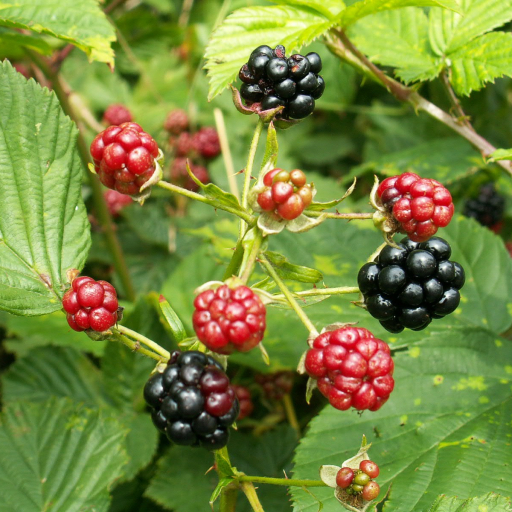
Plant Overview
Commonly known as the Plicate Blackberry, Rubus plicatus is a quintessential wild bramble often referred to as the "Forefather of Blackberries." This sturdy, arching shrub is one of the original species used to describe the complex world of wild berries in Europe. Whether it’s creating a protective thicket for birds or providing a late-summer feast for hikers, this plant is a cornerstone of the wild hedgerow.
🔍 How to Identify
- 🍃 Pleated Leaves: The name plicatus comes from the "folded" or pleated appearance of its leaflets, which have deeply impressed veins and a slightly crinkled texture.
- 🌸 Simple Blooms: In early summer, it produces clusters of delicate, five-petaled white flowers that stand out beautifully against its dark green foliage.
- 🍇 Glossy Fruit: The berries start as hard green clusters, turn a brilliant red, and finally mature into deep, glossy black drupelets that are heavy with juice.
- 🌵 Armed Stems: The canes are reddish-purple and armored with sharp, broad-based prickles that curve slightly to help the plant "climb" over neighbors.
🏡 In Your Garden
- 🐝 Pollinator Powerhouse: If you have the space for a wild corner, this plant is a magnet for bumblebees and butterflies, offering high-quality nectar during the warmest months.
- 🧤 Growth Habit: It has a vigorous "arching" habit; when the tips of the long canes touch the ground, they can take root and start a new plant. This makes it excellent for natural fencing but requires firm boundaries in a small garden.
- 🍂 Soil Nuance: Unlike many garden plants, Rubus plicatus specifically prefers acidic, sandy, or peaty soils and is often found on the edges of moors or in light woodland clearings.
⚠️ Safety & Toxicity
- 😋 Edibility: The fruit is entirely edible and rich in antioxidants. It is often tarter and more complex in flavor than store-bought blackberries.
- 🌵 Physical Hazard: The primary danger is mechanical. The sharp prickles can cause deep scratches or snag clothing, so thick leather gloves are a must when handling the canes.
- 🐾 Pet Safety: The plant is generally non-toxic to cats and dogs, though the thorns can cause injury to paws or mouths if a pet tries to run through or chew on the stems.
✨ Fun Fact
- 📜 In ancient European folklore, the Blackberry was associated with protection; it was believed that a thicket of brambles growing around a home would keep "evil spirits" (and more likely, unwanted intruders) at bay due to its impenetrable thorns.

Detailed Care Instructions
To grow Rubus plicatus, also known as Himalayan blackberry or Japanese wineberry, follow these steps:
- Climate and Soil: Choose a planting location that receives full sun, as this plant thrives in sunny spots. The soil should be well-draining and rich in organic matter. If your soil is heavy or clayey, consider adding compost or sand to improve drainage.
- Planting: Dig a hole that is slightly larger than the root ball of the plant. Place the plant in the hole, ensuring that the crown is level with the soil surface. Backfill the hole with soil and firm it gently around the roots. Water thoroughly after planting.
- Watering: Keep the soil around the plant evenly moist but not waterlogged. Irrigate regularly, especially during hot and dry periods. Avoid overhead watering to prevent diseases.
- Mulching: Apply a layer of organic mulch, such as wood chips or straw, around the base of the plant. Mulch helps conserve moisture, suppresses weeds, and regulates soil temperature.
- Fertilizing: Rubus plicatus generally grows well in fertile soil without requiring much additional fertilization. However, you can apply a balanced, slow-release fertilizer in the spring to promote healthy growth. Follow the manufacturer's instructions for application rates.
- Pruning: Prune your plant in late winter or early spring before new growth begins. Remove any dead, damaged, or weak canes at ground level. Thin out overcrowded canes to improve airflow and light penetration. Rubus plicatus produces fruits on second-year canes, so be careful not to prune those.
- Training and Support: Rubus plicatus can be trained on a trellis or supported by stakes and wire. This helps keep the plant upright, improves air circulation, and makes harvesting easier.
- Pest and Disease Control: Keep an eye out for common pests like aphids, spider mites, and Japanese beetles. If infestations occur, treat them with organic insecticides or insecticidal soaps. Diseases like cane blight and anthracnose can occasionally affect the plant, so ensure good air circulation, avoid overhead watering, and promptly remove any infected canes.
- Harvesting: Rubus plicatus produces juicy, dark red berries that are ready for harvest in the summer. Harvest them when they are fully ripe, which is indicated by their color and ease of removal from the plant.
By following these steps, you can successfully grow Rubus plicatus and enjoy its delicious fruits.

Place in a bright room that is sun drenched almost all day. Or directly in a south-facing window.

Watering requirements for this plant species vary depending on a range of external factors including the weather, humidity levels, soil quality, and temperature. However, in general, the plant prefers to be grown in well-draining soil that is kept consistently moist but not waterlogged.
When watering, it's important not to pour the water directly onto the leaves or stem of the plant as this can lead to fungal diseases. Instead, aim to water the soil around the base of the plant, giving it a thorough soaking without overwatering.
As with many plants, it's better to give this species a deep watering less frequently rather than light, frequent watering. A good rule of thumb is to water the plant when the top inch of soil feels dry to the touch, but not bone dry.
In the warmer months, when the plant is actively growing, it may require more frequent watering, while in the winter months, when growth slows down, it can be watered less frequently. It's also important to be mindful of humidity levels, as this plant thrives in a moderate to high humidity environment.
Overall, the key to watering this plant successfully is to strike a balance between keeping the soil moist while not overwatering, and being attuned to the plant's changing water needs throughout the year.
To fertilize this plant, first, choose a balanced fertilizer with equal amounts of nitrogen, phosphorus, and potassium. Next, apply the fertilizer in the early spring when new growth begins and then again in the early summer. Do not over-fertilize as this can lead to excessive growth and weaken the plant. Water the plant thoroughly after fertilizing to help the nutrients reach the roots. Finally, avoid fertilizing in the fall as this can interfere with the plant's natural dormancy process.
Rubus plicatus plant prefers a well-draining soil that is moderately fertile and acidic in nature. The soil should have a pH level of 5.5 to 6.5. It is important to use soil that is free of rocks, gravel, and debris, as these can impede the plant's growth and development. Adding organic matter to the soil such as compost, leaf mold, or well-rotted manure can help improve soil structure and fertility. Mulching around the plant can also assist in retaining moisture and suppressing weeds. It is essential to avoid soil that is waterlogged or too dry, as this can cause root damage and poor growth.
To propagate this plant, you will need to begin with taking cuttings from the parent plant. Choose healthy stems that are approximately six inches long and have several leaves. Make a clean cut at a 45-degree angle just below a node. Remove the bottom leaves of the cutting and dip the cut end in rooting hormone.
Prepare the potting soil by mixing equal parts of peat moss and perlite. Moisten the soil and fill a small pot with it. Create a hole in the center of the soil with a finger or a pencil.
Insert the cutting into the hole, pressing the soil around it to ensure good contact. Water the soil thoroughly, and cover the pot with a clear plastic bag to form a mini greenhouse. Place the pot in a warm, bright location out of direct sunlight.
Check the cutting regularly and remove any dead leaves. Additionally, monitor the soil moisture and water as needed to keep the soil moist but not waterlogged. After a few weeks, the cutting should develop roots, and small new leaves will start to grow.
Once the plant has rooted and grown enough, transplant it into a larger pot or directly into the garden soil. With proper care, your newly propagated plant should grow vigorously and flourish in its new home.








