Plant Overview
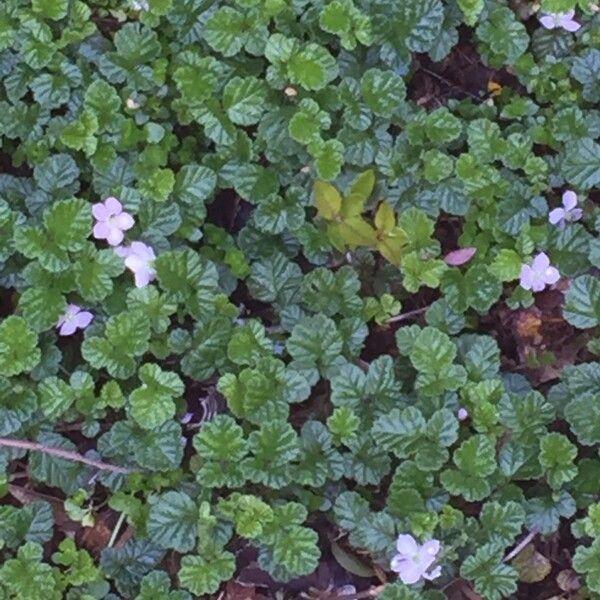
Often called the Creeping Bramble or the Rooting Raspberry, Rubus radicans is the humble, ground-hugging cousin of the upright blackberry bushes we usually encounter. Unlike its tall, thorny relatives, this plant prefers to stay low to the earth, creating a delicate green carpet in damp, shaded woodlands. It is a master of "traveling" through the undergrowth, quietly rooting itself as it goes.
🔍 How to Identify
- 🌿 The Leaves: Usually features three distinct leaflets (trifoliate) with sharply toothed edges. They have a bright, fresh green color and a slightly quilted texture.
- 🌸 The Flowers: Produces small, dainty flowers that are typically white or pale pink. They sit on short stalks, peeking out from the foliage rather than standing tall.
- 🏃 Growth Habit: This is its most defining trait; the stems (runners) trail along the ground and strike new roots wherever they touch moist soil, allowing it to "walk" across the garden floor.
- 🍓 The Fruit: It produces tiny, aggregate red fruits that look like miniature raspberries, though they are often sparse and tucked away under the leaves.
🏡 In Your Garden
- 💧 Moisture Lover: Unlike some hardy blackberries that survive in dry ditches, Rubus radicans craves consistent moisture. It thrives in "boggy" or damp areas where other ground covers might rot.
- 🌑 Shade Specialist: This plant is an excellent choice for those tricky, dark corners of the garden. It mimics its natural habitat of forest floors, providing a lush green layer under the canopy of larger shrubs or trees.
- 🌱 Naturalizing: Because of its rooting stems, it is excellent for erosion control on gentle, shady slopes. It isn't as aggressive as some invasive vines, making it a more polite guest in a woodland-style garden.
⚠️ Safety & Toxicity
- ✅ Status: Generally non-toxic and safe.
- 🐾 Pet & Child Safety: The berries are technically edible and the plant lacks the vicious, skin-tearing thorns found on many other Rubus species. However, as with any wild-type berry, ensure it hasn't been treated with garden chemicals before letting pets or children forage.
- 🐜 Hitchhikers: Because it grows so close to the ground, the foliage can often hide ticks or slugs. Always wear gloves when thinning it out.
✨ Fun Fact
The specific epithet radicans comes from the Latin word for "rooting." It was named specifically for its behavior of growing roots directly from its stems—a survival strategy that allows it to clone itself indefinitely as it explores the forest floor!

Detailed Care Instructions








