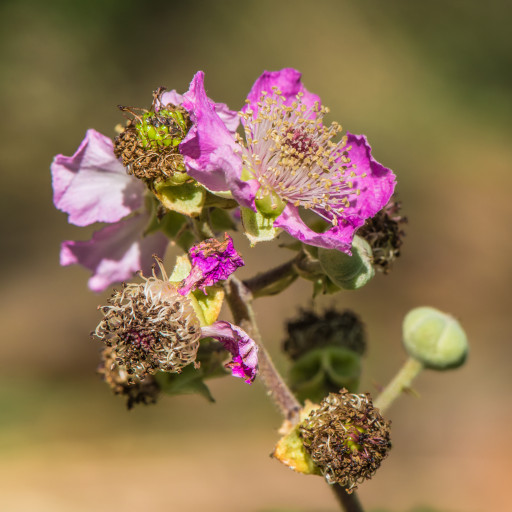
Plant Overview
Often called the Elm-leaf Blackberry or the Holy Bramble, Rubus ulmifolius is a vigorous, sun-loving shrub native to the Mediterranean. It is famous for its arching, wine-colored stems and its uncanny ability to thrive in almost any soil. While many see it as a wild wanderer, it has been cherished for centuries as a source of sweet summer fruit and a natural, impenetrable "living fence."
🔍 How to Identify
- 🍃 The Foliage: Unlike many blackberries, its leaves look remarkably like those of an Elm tree—oval, deeply veined, and sharply serrated along the edges. The underside often has a soft, whitish fuzz.
- 🍇 The Fruit: It produces clusters of small, juicy "drupelets" that transition from green to a deep, glossy black when ripe. They are typically smaller and more intensely flavored than commercial varieties.
- 🏹 The Stems: The canes are robust and often have a distinctive purplish or bluish "bloom" on the surface, armed with curved, hooked prickles that help it scramble over other plants.
🏡 In Your Garden
- 🧱 Natural Boundary: Due to its thorny, arching stems, this plant is excellent for "security hedging." It creates a dense thicket that provides a safe haven for nesting birds while deterring unwanted visitors.
- ✂️ Vigorous Growth: It is a "pioneer" plant, meaning it grows fast and far. In a garden setting, it requires regular pruning to keep it from taking over; it has a habit of "tip-rooting," where the end of a branch touches the ground and starts a brand-new plant.
⚠️ Safety & Toxicity
- ✅ Status: Generally safe and edible.
- 🩹 Physical Hazard: The primary danger is the thorns. They are hooked and can easily tear skin or clothing. Always wear thick gardening gloves when pruning or harvesting.
- 🐾 Pet Safety: The berries are non-toxic to dogs and cats, but the prickly canes can cause scratches to paws or noses if they try to run through a thicket.
✨ Fun Fact
The Rubus ulmifolius is one of the primary ancestors of many modern garden berries. Specifically, it is a "parent" of the famous Loganberry and the Marionberry, contributing its hardy nature and deep color to these popular hybrids!

Detailed Care Instructions
| Humidity | Normal |
| Lighting | Part Sun |
| Difficulty | Medium |
| Hibernation | Cold Period |
| Hardiness Zones | 6 - 9 |
To grow Rubus ulmifolius (Elmleaf blackberry) plants, follow these steps:
- Choosing the right location: Select a spot that receives full sun to partial shade. Ensure the soil is well-draining and rich in organic matter.
- Propagation: Rubus ulmifolius can be propagated through both seeds and cuttings. Seeds can be sown in spring after stratification, while cuttings can be taken in early spring or fall, rooted in moist soil, and kept in a greenhouse or covered with plastic to maintain humidity until they root.
- Soil preparation: Prepare the soil by removing any weeds or grass. Amend the soil with organic matter, such as compost or well-rotted manure, to improve fertility and drainage.
- Planting: Dig a hole that is wider and deeper than the root ball of the plant. Place the plant in the hole, making sure the crown is level with the surface of the soil. Backfill with soil, firm it gently, and water thoroughly.
- Watering: Regularly water newly planted Rubus ulmifolius plants to keep the soil evenly moist. Once established, they are moderately drought-tolerant but benefit from deep watering during dry periods.
- Mulching: Apply a layer of organic mulch around the plants to conserve moisture, suppress weed growth, and provide nutrients as it decomposes.
- Pruning and training: Rubus ulmifolius plants can become invasive if left unchecked. Regularly prune back long, trailing canes and remove any dead or diseased branches. Consider training the canes on a trellis or support system to make harvesting easier.
- Fertilizing: Apply a balanced fertilizer in spring, following the package instructions. Avoid excessive use of nitrogen-rich fertilizers, as they may promote excessive vegetative growth at the expense of fruit production.
- Pests and diseases: Monitor the plants regularly for pests, such as aphids or spider mites, and treat them promptly if detected. Also, watch out for diseases like cane blight or powdery mildew, and take appropriate preventive measures, such as providing good air circulation and avoiding excessive watering.
- Harvesting: Rubus ulmifolius plants typically produce fruit in late summer to early fall. Harvest the berries when they are fully ripe and easily detach from the plant. Use them fresh or freeze them for later use.
Remember to check your local regulations before growing Rubus ulmifolius, as it can be considered invasive in some regions.

Place in a bright room that is sun drenched almost all day. Or directly in a south-facing window.

1. Determine the water requirements: Research the plant's water requirements to understand how much water it needs and how often it needs to be watered.
2. Check the soil moisture: Before watering, check the soil's moisture level to avoid overwatering or underwatering. Insert a finger about an inch into the soil to feel if it is dry or moist.
3. Water deeply: When watering, make sure to water deeply. The water should penetrate the root zone, which is typically 6-8 inches deep. Watering deeply encourages healthy growth and helps the plant become more drought-resistant.
4. Water in the morning: It is best to water in the morning so that the plant has enough time to dry before nightfall. This reduces the risk of fungal diseases.
5. Use a watering can or a hose: Use a watering can or a hose to water the plant. Avoid using sprinklers as this can lead to fungal diseases.
6. Keep the leaves dry: Avoid getting the leaves wet when watering, as this can increase the risk of fungal diseases.
7. Don't underwater or overwater: Avoid underwatering or overwatering the plant as this can cause stress and damage to the plant.
8. Mulch: Mulch the soil around the plant to help retain moisture and reduce the frequency of watering.
To fertilize this plant, first ensure that the soil is already moist. Use a balanced slow-release fertilizer and apply it evenly over the soil surrounding the plant's base. Avoid putting the fertilizer directly onto the plant's stem or leaves. Water the plant thoroughly after fertilizing, and repeat once every four to six weeks during the growing season.
The best type of soil to use for Rubus Ulmifolius plants is a well-draining and fertile soil. The soil should have a pH level between 5.5 and 7.0, and be rich in organic matter. It is recommended to mix the soil with compost or aged manure to increase its fertility. Additionally, the soil should have good water retention capacity, but not remain waterlogged as it can cause root rot. It is important to avoid using heavy clay soils for this type of plant and to ensure it is grown in an area with adequate sunlight and air circulation.
Rubus Ulmifolius is a flowering plant that belongs to the Rosaceae family. It is a woody perennial shrub that is native to Europe and western Asia. Propagating this plant can be done in a few different ways.
One method of propagation is through stem cuttings. First, select a healthy stem from the plant that is at least 6 inches long and has no flowers or buds. Cut the stem at an angle just below a node, which is where the leaves attach to the stem. Remove the leaves from the lower half of the stem, leaving just a few at the top. Dip the cut end of the stem into rooting hormone powder and plant it in a pot filled with moist potting soil. Cover the pot with a clear plastic bag to create a humid environment. Place the pot in a warm, bright area, but out of direct sunlight. After a few weeks, roots should start to form and new growth will appear. The new plant can then be transplanted into a larger pot or the ground.
Another method of propagation is through division. In the spring or fall, dig up an established Rubus Ulmifolius plant and separate the roots into smaller sections. Each section should have a few stems and roots attached. Replant the sections in a new location, making sure to keep the soil moist. The new plants should start to grow quickly.
Lastly, Rubus Ulmifolius can also be propagated through layering. Bend a low-hanging stem to the ground and make a small cut on the underside of the stem where it touches the soil. Cover the cut area with a small amount of soil and secure it in place with a rock or stake. Keep the soil moist and after several weeks, roots will form at the cut area. Once new growth appears, the new plant can be separated from the parent plant and transplanted.
Common pests of the elmleaf blackberry include Aphids. Make a habit of checking your elmleaf blackberry frequently for pests so that any infestations can be caught and managed early.








