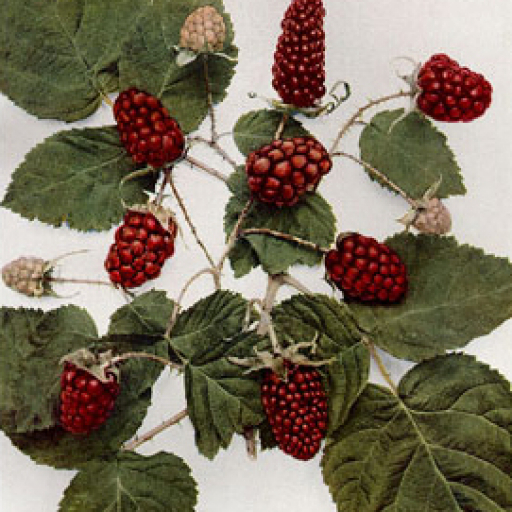
Plant Overview
Often called the Loganberry, this plant is a legendary "happy accident" born in a California garden in 1881. A hybrid cross between a wild Pacific blackberry and a red raspberry, it offers the best of both worlds: the robust size of a blackberry and the vibrant color of a raspberry. It is a favorite among home gardeners for its high yields and deeply tart, wine-like flavor.
🔍 How to Identify
- 🍇 The Fruit: Look for elongated, conical berries that turn a deep, dusty red when ripe. Unlike a raspberry, the white core (receptacle) stays inside the fruit when you pick it.
- 🌿 The Foliage: The leaves are usually composed of three to five leaflets with jagged, serrated edges and a slightly silvery underside.
- 🏹 The Canes: These are trailing vines rather than upright bushes. They can grow quite long, often reaching 6 to 10 feet, and are typically covered in small, sharp prickles.
🏡 In Your Garden
- 🏗️ Support Systems: Because Loganberries have a trailing growth habit, they cannot support themselves. You will need a sturdy trellis or wire system to keep the heavy fruit off the soil and allow for proper airflow.
- 💧 Moisture Management: These plants have a relatively shallow root system. They require consistent watering, especially during the hot summer months, to ensure the berries stay plump and juicy rather than shriveling on the vine.
- ✂️ The Pruning Cycle: Loganberries are "biennial" producers. This means the canes grow the first year, fruit the second year, and then die. You must prune out the old, woody canes every winter to make space for the fresh, green "primocanes."
⚠️ Safety & Toxicity
- ✅ Safe & Edible: The berries are non-toxic and highly nutritious for humans, containing high levels of Vitamin C and antioxidants.
- 🧤 Physical Hazard: The primary danger is the thorns. They are small but very sharp and can easily snag skin or clothing. Always wear thick gloves when pruning or harvesting.
- 🐾 Pet Safety: While the fruit is generally safe for dogs and cats in small amounts, the thorny canes can cause scratches to a pet's nose or paws if they try to wander through the brambles.
✨ Fun Fact
The Loganberry was discovered by Judge James Harvey Logan, who wasn't actually trying to create a new species! He was an amateur horticulturist who planted several varieties of berries close together, allowing a freak accident of cross-pollination to create one of the most popular hybrid berries in history.

Detailed Care Instructions
To grow a Rubus X Loganobaccus plant, also known as a Loganberry plant, you can follow these steps:
- Select a suitable location: Loganberry plants require full sun to thrive, so choose a spot in your garden that receives at least 6-8 hours of direct sunlight per day. The soil should be well-draining and rich in organic matter.
- Prepare the soil: Before planting, prepare the soil by removing any weeds or grass. Till the soil to a depth of about 12-18 inches and add organic compost or well-rotted manure to improve its fertility and water drainage.
- Obtain the Loganberry plant: Purchase a Loganberry plant or obtain rootstock from a reputable nursery or garden center. Alternatively, you can propagate Loganberries from cuttings or by layering.
- Planting: Dig a hole that is slightly larger than the root ball of the Loganberry plant. Place the plant in the hole with the crown at soil level or slightly higher. Gently spread out the roots and backfill the hole with soil, firming it down around the plant. Water thoroughly after planting.
- Support: Loganberry plants tend to grow as sprawling canes, so it's important to provide support for them to grow on. Install a trellis, fence, or wires between posts to support the canes. Train the canes along the support structure as they grow.
- Watering: Water the Loganberry plant regularly, especially during dry spells or prolonged periods of drought. Keep the soil evenly moist but not waterlogged. Mulching around the base of the plant can help retain moisture and prevent weed growth.
- Fertilizing: Apply a balanced fertilizer in early spring before new growth begins. Follow the recommended dosage instructions on the fertilizer package. Additionally, top-dress the plant with compost or well-rotted manure each spring.
- Pruning: Prune Loganberry plants in late winter or early spring while they are still dormant. Remove any dead, damaged, or weak canes. Maintain a framework of healthy canes, removing excessive growth, and ensuring good air circulation within the plant for disease prevention.
- Harvesting: Loganberries are typically ready for harvesting from mid-summer to early autumn, depending on your location. Pick the ripe berries when they are fully colored and easily come off the plant with a gentle tug. Avoid leaving overripe or rotting fruit on the plant as it can attract pests or diseases.
By following these steps and providing adequate care, you can successfully grow Rubus X Loganobaccus plants in your garden and enjoy their delicious berries.

Place in a bright room that is sun drenched almost all day. Or directly in a south-facing window.

The plant that you are referring to, Rubus X Loganobaccus, should be watered regularly during the growing season. It is recommended to water deeply and slowly, making sure that the soil is well-drained and not waterlogged. Additionally, you should avoid wetting the leaves or foliage, as this can promote the growth of fungal diseases. It is important to keep the soil evenly moist, but not excessively wet or dry. During the winter months, you should reduce the amount of watering, as the plant will be in a dormant state and will require less water. When watering, you should avoid using hard water or water that has fluoride in it, as this can cause damage to the leaves and roots of the plant. It is also important to fertilize the plant regularly with a balanced fertilizer to help promote healthy growth.
For optimal growth and fruit production, apply a balanced fertilizer with equal amounts of nitrogen, phosphorus, and potassium in early spring before new growth appears. Use about 1/4 to 1/2 cup of fertilizer per plant and sprinkle it evenly around the plants. Water thoroughly after fertilizing to help the nutrients reach the roots. Avoid fertilizing during the growing season when the plants are setting fruit as this can cause excessive vegetative growth at the expense of fruit production.
The Rubus X Loganobaccus plant prefers well-drained soil that is rich in organic matter. The soil should be slightly acidic with a pH range of 5.5 to 6.5. A sandy loam soil with good drainage is ideal. Avoid heavy clay soils as these tend to hold onto water and can lead to root rot. The plant also requires soil with good nutrient availability, particularly nitrogen, phosphorus, and potassium. Adding compost or well-aged manure to the soil before planting can help to improve soil fertility. It is important to ensure that the soil stays moist but not waterlogged, as the Rubus X Loganobaccus plant does not tolerate waterlogged soils well. Regular watering and mulching can help to maintain soil moisture levels.
To propagate this plant, you will need to take stem cuttings from a mature plant during the dormant season (winter). The cuttings should be about 6-8 inches long and should include several nodes. Remove the leaves from the bottom half of the cutting and dip the cut end into rooting hormone. Plant the cutting in a well-draining potting mix and water thoroughly. Cover the pot with a plastic bag to create a greenhouse effect and keep the cutting in a warm, bright location. Monitor the soil moisture and mist the cutting regularly to keep it hydrated. After several weeks, roots should begin to develop and new growth should emerge from the tip of the cutting. Once the cutting has established a strong root system and new growth, it can be transplanted into a larger container or planted in the ground in a location with full sun and well-draining soil.
Common pests of the loganberry include Aphids. Make a habit of checking your loganberry frequently for pests so that any infestations can be caught and managed early.








