Plant Overview
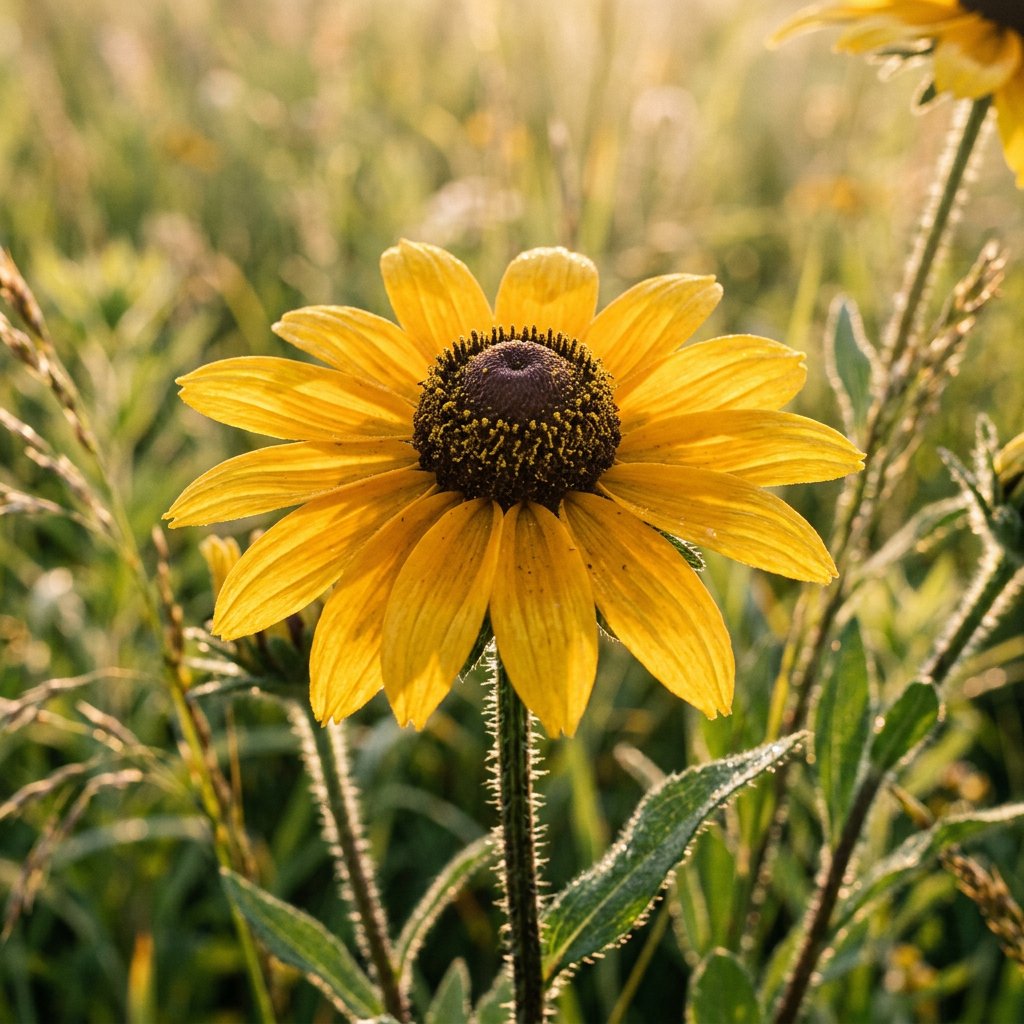
Often called the "Black-eyed Susan," Rudbeckia hirta is a quintessential piece of the North American prairie. With its bright golden petals surrounding a dark, chocolate-colored center, it looks like a miniature sun radiating warmth. These cheerful blooms are a favorite for bringing a "wildflower meadow" feel to any backyard and are beloved for their rugged, "plant it and forget it" nature.
🔍 How to Identify
- 🌼 The "Eye": A prominent, cone-shaped central disk that is dark chocolate-brown to nearly black, which remains long after the petals fall.
- 🌻 Ray Florets: Usually 8 to 20 brilliant yellow petals that grow in a single layer, though some cultivars feature splashes of burnt orange or deep red.
- 🌿 Rough Texture: The stems and lance-shaped leaves are covered in stiff, bristly hairs that feel sand-paper-like to the touch.
🏡 In Your Garden
- ☀️ Solar Powered: These plants are sun-worshippers. In shaded spots, they often become "leggy" and may flop over as they stretch to find more light.
- 🦋 Pollinator Runway: The flat, open-faced shape of the flower makes it an ideal landing pad for butterflies and honeybees, making it a staple for any conservation garden.
- 🌱 Naturalizing Habit: While individual plants are often short-lived (biennial), they are masters of self-seeding. If you don't deadhead the spent blooms, they will happily replant themselves for next season.
⚠️ Safety & Toxicity
- 🐾 Pet Safety: Generally considered non-toxic to dogs, cats, and horses. However, if a pet grazes on a large amount, it may lead to minor digestive upset.
- 🧤 Skin Irritation: The coarse hairs on the stems can cause "contact dermatitis" (an itchy red rash) for those with sensitive skin, so wearing gloves while pruning is recommended.
✨ Fun Fact
The Black-eyed Susan has been the official state flower of Maryland since 1918, and its colors (black and gold) match the family crest of Lord Baltimore, which is featured on the Maryland state flag!

Detailed Care Instructions
Black-eyed Susans and other Rudbeckia plants work well as a complement to blue and purple flowers, like Russian sage and Veronica, or mixed in with other jewel tones, such as sedum 'Autumn Joy', purple coneflower, and New England asters.
How do you winterize black-eyed Susan?
Black-eyed Susans are winter-hardy up to USDA zone 3 so they do not have to be winterized but the plants benefit from cutting back the stalks in the fall and covering them with thick layer of mulch.
Are black-eyed Susans deer-resistant?
Tender young growth may get nibbled. Once they mature and their leaves become coarse and hairy, they are deer-resistant.
| Color | Yellow |
| Soil Ph | 6.8 |
| Invasive | Weed |
| Lighting | Full Sun |
| Soil Type | Moist To Dry, Well-Drained |
| Bloom Time | Summer |
| Plant Type | Herbaceous Perennial |
| Mature Size | 2 To 3 Feet Tall And 1 To 2 Feet Wide |
| Native Area | Central U.s. |
| Sun Exposure | Full Sun |
| Hardiness Zones | 3-7 |
To grow Rudbeckia hirta, commonly known as Black-Eyed Susan, follow these steps:
- Choose a suitable location: Rudbeckia hirta requires full sun or partial shade to thrive. Select a spot in your garden that receives at least 6 hours of direct sunlight per day.
- Prepare the soil: The soil should be well-draining and rich in organic matter. Amend the soil with compost or organic matter before planting to improve drainage and fertility.
- Planting: Sow the Rudbeckia hirta seeds directly in the garden after the last frost date in spring or start the seeds indoors 6-8 weeks before the last frost date and transplant the seedlings outside after the danger of frost has passed. Alternatively, you can also purchase young plants from nurseries and transplant them into the garden.
- Spacing: Leave about 18-24 inches (45-61 cm) between each plant as Rudbeckia hirta can spread and needs room to grow.
- Watering: Keep the soil moist but not waterlogged during the germination period. Once established, Rudbeckia hirta is relatively drought-tolerant and only needs watering during prolonged dry spells.
- Mulching: Apply a layer of mulch around the plants to retain moisture, suppress weeds, and regulate soil temperature.
- Fertilizing: Rudbeckia hirta doesn't require much fertilization. If needed, you can apply a balanced, slow-release fertilizer once in early spring.
- Deadheading: Regularly remove faded flowers by deadheading to encourage prolonged blooming and prevent self-seeding. It also helps maintain a neat appearance.
- Controlling pests and diseases: Keep an eye out for common pests like aphids, leafhoppers, and Japanese beetles. Use natural or organic pest control methods like handpicking or spraying with insecticidal soap if necessary. Fungal diseases such as powdery mildew or leaf spots can be prevented by providing good air circulation, avoiding overhead watering, and keeping the foliage dry.
- Dividing and propagating: Every 3-4 years, Rudbeckia hirta benefits from dividing the clumps to maintain healthy growth. Dig up the clumps in early spring or fall, separate them into smaller sections, and replant them in well-prepared soil.
With proper care and maintenance, Rudbeckia hirta plants should grow vigorously and produce beautiful, daisy-like, yellow flowers with dark centers throughout the summer and early fall.

Place in a bright room that is sun drenched almost all day. Or directly in a south-facing window.

To water this plant, it is important to keep the soil consistently moist but not waterlogged. Water deeply once or twice a week, depending on the weather and soil conditions. It is best to water in the morning or evening to avoid the sun evaporating the water too quickly. Avoid getting water on the leaves, as this can promote fungal growth.
To fertilize this plant, use a balanced, slow-release fertilizer with a 10-10-10 or 20-20-20 NPK ratio. Apply the fertilizer in the spring before new growth appears and again in mid-summer. Follow the package instructions for the correct application rate. Water the plant well after fertilizing to help distribute the nutrients evenly. Avoid fertilizing late in the growing season, as this can stimulate new growth that may not have time to harden off before winter.
Rudbeckia Hirta plant grows best in well-drained soils. The soil should be rich in nutrients and organic matter, which can be achieved by incorporating compost and other organic materials into the soil before planting. The plant prefers a neutral to slightly acidic soil pH of 6.0-7.0 and requires good drainage to prevent the roots from rotting. The soil should be moist but not waterlogged as it can cause root rot and other diseases. Clay soils should be amended with sand and organic matter to improve drainage. It is also important to avoid using heavy fertilizers as it can harm the plant; instead, use a slow-release, balanced fertilizer for best results.
To propagate this plant, you can take stem cuttings in the spring or early summer from healthy parent plants. Choose strong, healthy stems with several leaves on them. Cut the stem just below a leaf node, then strip the leaves from the bottom two-thirds of the stem. Dip the cut end of the stem in rooting hormone, then plant it in a pot filled with moist, well-draining soil. Keep the cutting in a warm, bright location (but out of direct sunlight) and keep the soil consistently moist. Within a few weeks, roots should start to form and new growth will appear. After a few more weeks, the new plant should be ready to transplant into a larger container or into the garden.
Common pests of the blackeyed susan include Aphids, thrips. Make a habit of checking your blackeyed susan frequently for pests so that any infestations can be caught and managed early.








