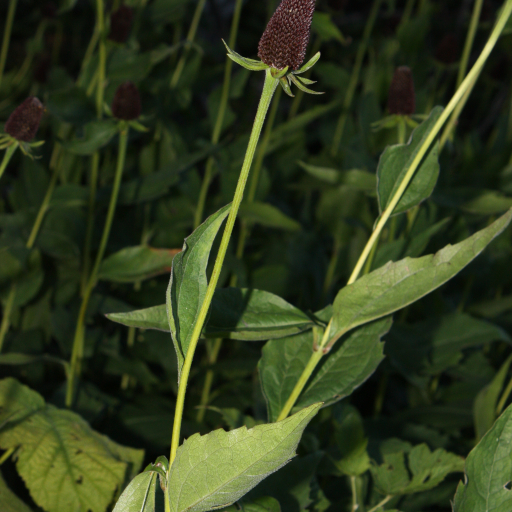
Plant Overview
Often called the "Green Wizard" or "Western Coneflower," this striking perennial is the goth cousin of the traditional Black-Eyed Susan. Unlike its flashy relatives, it has completely abandoned showy petals in favor of a dramatic, obsidian-colored cone ringed by bright green sepals. Originating from the mountain meadows of the Western United States, it adds a bold, architectural edge to any landscape.
🔍 How to Identify
- 🎩 The Cone: A prominent, elongated central disc that turns from deep brownish-purple to nearly jet black as it matures.
- 🌿 The "Collar": A ring of star-shaped, leafy green bracts (sepals) that sit directly beneath the cone, mimicking the look of petals.
- 🍃 The Foliage: Large, ovate, and slightly fuzzy leaves with a coarse texture that can grow up to 10 inches long.
🏡 In Your Garden
- 💧 Moisture Lover: Unlike many drought-tolerant Rudbeckias, the Western Coneflower thrives in moist, boggy soil. It is the perfect candidate for rain gardens or those "soggy spots" where other plants struggle.
- 🏗️ Architectural Height: This plant is a vertical powerhouse, often reaching 4 to 6 feet. Its sturdy stems mean it rarely needs staking, even when buffeted by mountain winds.
- 🦋 Pollinator Magnet: Don't let the lack of petals fool you; bees and butterflies are obsessed with the pollen-rich cones, and songbirds will visit frequently in the fall to feast on the dried seeds.
⚠️ Safety & Toxicity
- ✅ Status: Generally non-toxic and safe for home gardens.
- 🐕 Details: It is considered safe around cats, dogs, and horses. However, the leaves have a rough, sandpaper-like texture that may cause mild skin irritation for sensitive gardeners, so gloves are recommended during pruning.
✨ Fun Fact
The Western Coneflower is a favorite in the high-end floral industry. Florists often strip the leaves away to use the "naked" black cones in avant-garde bouquets, where they are prized for their alien, minimalist appearance and incredible vase life.

Detailed Care Instructions
To grow Rudbeckia Occidentalis (Western Coneflower), follow these steps:
- Choose a suitable location: Rudbeckia Occidentalis prefers full sun but can tolerate partial shade. Ensure the soil is well-draining and rich in organic matter.
- Prepare the soil: Before planting, amend the soil with compost or aged manure to improve its fertility and drainage. Remove any weeds or grass from the planting area.
- Plant the seeds or seedlings: You can either sow seeds directly into the soil in the spring or start them indoors around 6-8 weeks before the last frost date. If using seedlings, plant them at the same depth they were growing in their containers.
- Watering: Keep the soil evenly moist but not waterlogged until the plants are established. Once established, Rudbeckia Occidentalis is somewhat drought-tolerant, but regular watering during prolonged dry spells will help them thrive.
- Mulching: Apply a layer of organic mulch around the plants to help retain moisture, suppress weeds, and provide insulation during colder months.
- Fertilizing: Rudbeckia Occidentalis plants generally do not require excessive fertilization. A balanced, slow-release organic fertilizer applied in early spring can help promote healthy growth.
- Deadheading and pruning: To encourage continuous blooming, remove faded or spent flowers regularly. This process, known as deadheading, stimulates further flowering. Additionally, cutting the plants back by half in mid-summer will help prevent legginess and promote compact growth.
- Pests and diseases: Rudbeckia Occidentalis is relatively resistant to pests and diseases, but keep an eye out for common issues such as aphids, slugs, and powdery mildew. Promptly address any problems with appropriate organic controls.
- Propagation: If you want to propagate more Rudbeckia Occidentalis plants, you can divide mature clumps in early spring, once the plants have become well-established. Dig up the clump and carefully separate it into smaller sections, ensuring each section has a good amount of roots and shoots.
- Enjoy the blooms: Rudbeckia Occidentalis typically produces large, black-centered, yellow flowers in late summer to early fall. Enjoy their beauty and use them as cut flowers to brighten up your home.
Remember to give the plants sufficient space to grow as they can reach heights between 2-5 feet (60-150 cm) and have a spread of 1-2 feet (30-60 cm). With proper care and maintenance, your Rudbeckia Occidentalis plants should flourish and provide beautiful blooms for years to come.

Place in a bright room that is sun drenched almost all day. Or directly in a south-facing window.

To water the plant, observe its soil moisture level first. If the top 2 inches of soil feel dry to the touch, it indicates that the plant needs watering. Softly water the soil around the plant's base until the water begins to pool on top of the soil. Let the soil soak in the water for several minutes, then drain the excess water by tipping the pot. Avoid watering the plant's leaves as this can cause fungal growth. Also, water the plant early in the morning and avoid watering it late in the evening.
To fertilize this plant, apply a balanced fertilizer (such as 10-10-10) at a rate of one pound per 100 square feet of planting area during the spring or early summer. Water the area thoroughly after applying the fertilizer. Repeat the application in the late summer or early fall if desired. Avoid over-fertilizing as this can lead to excessive foliage growth and reduced flowering. Instead, focus on providing the plant with adequate water, sunlight, and good soil drainage.
The ideal soil for this specific plant should be well-draining and fertile. It should have a pH range of 5.5 to 7.5, which is slightly acidic to slightly alkaline. The soil texture should be light and loamy with a good amount of organic matter. Avoid using heavy clay soils, as they can hold too much water and lead to root rot. It is also important to ensure that the soil is aerated and does not become compacted. Adding a layer of mulch around the base of the plant can help maintain moisture and suppress weeds.
Rudbeckia Occidentalis plant can be propagated through several methods such as seed propagation, division, and stem cuttings. Seed propagation is the most common method and can be done in the fall or early spring. Collect ripe seeds from the plant and sow them directly into the soil. Cover the seeds lightly with soil and keep the soil moist until germination.
Division is another method that can be done in the fall or early spring. Dig up the plant and separate the roots into smaller sections. Replant the sections in well-draining soil and water the plant.
Stem cuttings can also be rooted to propagate the plant. Take a 4-6 inch cutting from the plant and remove the lower leaves. Dip the cut end of the stem in rooting hormone and plant it in well-draining soil. Keep the soil moist and provide bright, indirect light until the cutting roots and begins to grow.
Overall, Rudbeckia Occidentalis plant can be propagated easily through several different methods, allowing growers to expand their plant collection or share plants with others.








