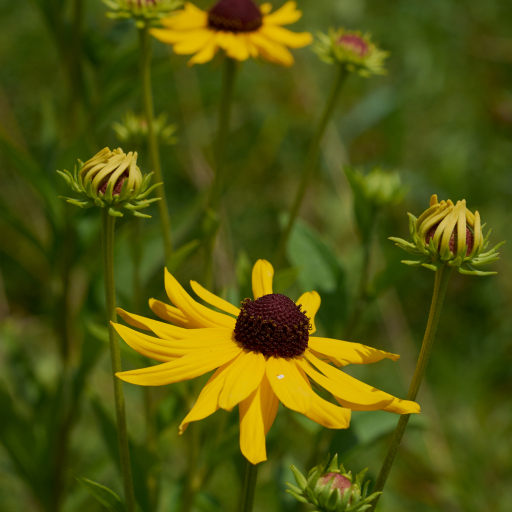
Plant Overview
Known as the "Sweet Coneflower," Rudbeckia subtomentosa is the fragrant darling of the North American prairie. While it looks similar to the common Black-eyed Susan, this perennial is prized for the subtle, sweet scent of vanilla or anise that its flowers release on hot summer afternoons. It is a tall, stately presence in any landscape, acting as a glowing golden beacon for pollinators from mid-summer through the first frosts of autumn.
🔍 How to Identify
- 🌼 The Golden Rays: It features bright yellow ray florets (petals) that surround a prominent, dark brownish-purple central cone that stays attractive even after the petals fall.
- 🍂 Velvety Texture: The stems and undersides of the leaves are covered in fine, soft hairs, giving the plant a distinct "subtomentose" or fuzzy feel when touched.
- 🍃 Three-Lobed Leaves: Unlike many of its cousins, the lower leaves are often deeply divided into three distinct lobes, with sharply toothed edges that give the foliage a refined, architectural look.
🏡 In Your Garden
- 🦋 A Butterfly Buffet: Because the flower heads are flat and sturdy, they serve as the perfect "landing pads" for heavy butterflies like Monarchs and Swallowtails, who can rest easily while sipping nectar.
- 💧 The Moisture Balance: While many prairie plants demand bone-dry soil, the Sweet Coneflower actually prefers consistent moisture. It is a fantastic choice for "rain gardens" or heavy clay soils where other plants might struggle with drainage issues.
⚠️ Safety & Toxicity
- ✅ Generally Safe: This plant is considered non-toxic to humans and is not known to be a significant threat to livestock or pets.
- 🐾 Garden Manners: While safe to touch, the fuzzy hairs on the stems can occasionally cause very mild skin irritation for people with highly sensitive skin. It is always best to wear gloves when pruning large amounts.
✨ Fun Fact
The specific epithet subtomentosa literally means "slightly hairy." If you dry the flower heads and keep them in a jar, the vanilla-like scent intensifies, making them a historical favorite for natural potpourri mixtures among early settlers.

Detailed Care Instructions
To grow Rudbeckia subtomentosa, also known as sweet coneflower or sweet black-eyed Susan, follow these steps:
- Choose a suitable location: Rudbeckia subtomentosa thrives in full sunlight, so select a spot in your garden that receives at least 6 hours of direct sunlight daily. The soil should be well-draining, fertile, and slightly acidic.
- Prepare the soil: Amend the soil by adding organic matter like compost or well-rotted manure to improve its fertility and drainage. Mix it well into the existing soil.
- Propagation: You can start Rudbeckia subtomentosa from seeds or purchase young plants from a nursery. Sow the seeds directly in the garden after the last frost date or start them indoors about 6-8 weeks before the last frost. If starting indoors, provide them with sufficient light and maintain a temperature around 70°F (21°C).
- Planting: Whether you're planting seeds or young plants, make sure to space them 12-18 inches apart. Dig a hole slightly larger than the root ball and place the plant so that the crown is level with or slightly above the soil surface. Backfill the hole with soil, firming it gently around the roots.
- Watering: Keep the soil evenly moist but not waterlogged. While Rudbeckia subtomentosa can tolerate some drought once established, consistent moisture helps promote healthy growth and blooming. Water the plants deeply whenever the top inch of soil feels dry.
- Mulching: Apply a layer of organic mulch around the plants to help retain moisture, suppress weeds, and regulate soil temperature.
- Fertilization: Feed the plants with a balanced, slow-release fertilizer in spring, according to the package instructions. Avoid excessive fertilization, as it can lead to leggy growth and fewer blooms.
- Deadheading: To encourage continuous blooming and tidy appearance, remove faded flowers or seed heads. This prevents self-seeding and redirects the plant's energy towards new blooms.
- Supporting the plants: Tall varieties of Rudbeckia subtomentosa may require staking to support the flower stalks. Place a stake or plant a support structure nearby and tie the stems to it gently using garden twine.
- Pest and disease control: Rudbeckia subtomentosa is generally resistant to most pests and diseases. However, keep an eye out for common garden pests like aphids or slugs and treat them accordingly, if necessary.
By following these care instructions, your Rudbeckia subtomentosa should thrive and provide a beautiful display of bright yellow flowers from late summer through fall.

Place in a bright room that is sun drenched almost all day. Or directly in a south-facing window.

To water this particular plant, it is important to thoroughly moisten the soil around the base of the plant, but not overwater it. The frequency of watering depends on the surrounding environment and weather conditions, as well as the type of soil that the plant is growing in. It is always best to avoid watering the leaves and instead focus on directing the water at the roots to prevent any damage or disease. Additionally, it is recommended to allow the soil to dry slightly before watering again to avoid overhydration, which can lead to root rot.
To fertilize this plant, apply a balanced fertilizer (such as 10-10-10) to the soil around the plant in early spring and again mid-summer. Be careful not to over-fertilize or apply too close to the roots, as this can burn the plant. Water deeply after applying the fertilizer to help it soak into the soil. Avoid fertilizing during times of drought, as the plant may not be able to absorb the nutrients effectively.
Rudbeckia Subtomentosa is a type of flowering plant that prefers to grow in moist, well-drained soil that is rich in organic matter. It can tolerate a variety of soil types, including clay, loam, and sandy soils. It is recommended to plant this species in soil that has a pH level between 5.5 and 7.5. To improve soil quality, it is advisable to add compost or fertilizer to the soil before planting. This plant does not tolerate drought well, so it is important to water it regularly during dry spells. Overall, a fertile and well-draining soil is the best choice for growing Rudbeckia Subtomentosa.
To propagate this plant, you will need to first identify a healthy and mature plant to take cuttings from. Use a sharp, clean pair of scissors or pruning shears to cut a stem that is about 4-6 inches long. Make sure the stem is healthy and has several leaves on it.
Next, remove the lower leaves from the stem. This will allow you to bury the stem deep enough to promote rooting.
Fill a small container or pot with moist soil. Make a small hole in the center of the soil and gently insert the stem into the soil. Make sure the stem is buried deep enough to cover where the lower leaves were removed.
Water the soil so that it is moist but not waterlogged. Place the container in a warm, sunny spot. Do not let the soil dry out completely, but also avoid over-watering.
Within a few weeks, you should see new growth sprouting from the stem. This indicates that your cutting has successfully rooted and is now a new plant. Once the roots have established, you can transfer the new plant to a larger pot or directly into the garden.








