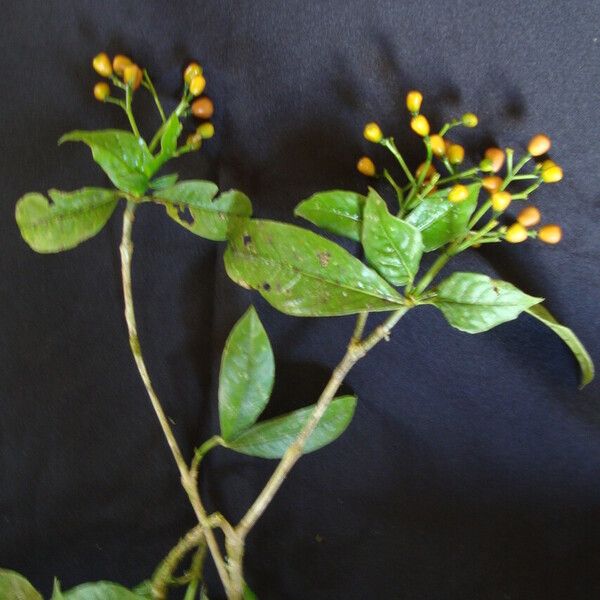
Plant Overview
Known as the "Jasmine-like Rudgea" or simply Cachimbo in its native Brazil, this elegant evergreen shrub is a hidden gem of the Atlantic Forest. While its name and intoxicating fragrance might lead you to believe it is a true jasmine, it actually belongs to the Rubiaceae family—making it a close relative of the coffee plant. It is highly prized by tropical plant collectors for its waxy, porcelain-white blooms that stand out brilliantly against its deep, emerald foliage.
🔍 How to Identify
- 🌿 The Foliage: The leaves are large, leathery, and remarkably glossy. They grow in opposite pairs and have a distinct, slightly quilted texture with prominent veins.
- 🤍 The Blooms: It produces dense clusters of tubular, star-shaped flowers. Each petal has a thick, waxy substance that looks almost like hand-carved ivory or plastic.
- 👃 The Scent: Unlike many tropical shrubs, its fragrance is heavy and sweet, intensifying in the evening to attract nocturnal pollinators.
🏡 In Your Garden
- ☁️ Humidity is Key: Coming from the Brazilian rainforest, this plant breathes through its leaves. It thrives in high-humidity environments and will protest with brown leaf edges if the air becomes too dry or drafty.
- 🌱 Root Sensitivity: Rudgea jasminoides is known for having a sensitive root system. It hates being moved once established and prefers acidic, well-draining soil that mimics the rich leaf mold of a forest floor.
- ⛅ Light Preferences: It performs best in "dappled light." Direct midday sun can scorch the beautiful glossy leaves, while deep shade will result in fewer of those iconic white flowers.
⚠️ Safety & Toxicity
- 🟢 Status: Low toxicity, but caution is advised.
- 🐾 Details: While not officially listed as a high-risk poisonous plant, it belongs to a family that often contains alkaloids. To be safe, keep it out of reach of curious cats, dogs, and toddlers, as ingesting the leaves or berries may cause mild stomach upset or nausea.
✨ Fun Fact
Because it belongs to the Rubiaceae family, Rudgea jasminoides is a botanical cousin to both the Coffee plant (Coffea arabica) and the Gardenia. You can see the family resemblance in its waxy flower petals and its love for acidic soil!

Detailed Care Instructions








