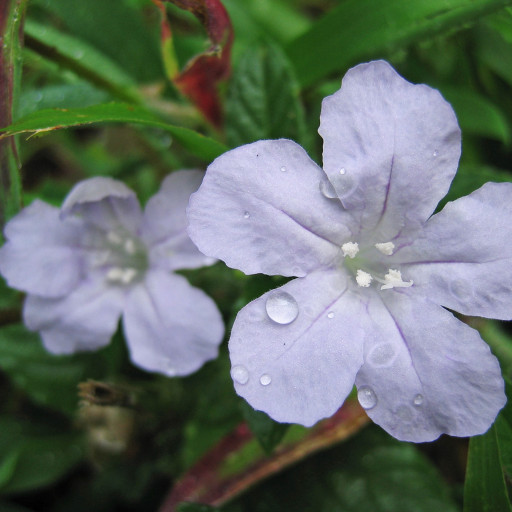
Plant Overview
Often called the Carolina Wild Petunia, this charming native perennial brings a touch of wild elegance to woodland edges and meadows across the Southeastern United States. Despite its name, it isn't a true petunia (which belongs to the Nightshade family), but its trumpet-shaped blossoms are a dead ringer for their garden cousins. It is a resilient survivor, often appearing as a delightful surprise in lawns and forest borders where it provides a vital nectar source for long-tongued bees and butterflies.
🔍 How to Identify
- 🌸 The Bloom: Showy, five-lobed flowers that range from pale lavender to deep violet. They have a distinct trumpet shape and typically only last for a single day.
- 🍃 The Foliage: Leaves are oval-shaped, arranged oppositely along the stem, and are notably hairy or "pubescent" to the touch, giving them a soft, matte appearance.
- 📏 The Stem: The stems are sturdy, often square-shaped, and covered in fine white hairs. The plant generally stays low to the ground, reaching about 1 to 2 feet in height.
- 🌰 The "Hidden" Flowers: Look closely at the base; the plant also produces tiny, green flowers that never open (cleistogamous), which self-pollinate to ensure the plant's survival even if no bees are around.
🏡 In Your Garden
- 🌱 Root Resilience: This plant develops a strong taproot, which makes it incredibly drought-tolerant once established. However, this means it hates being moved; choose its "forever home" carefully to avoid transplant shock.
- 🦋 Pollinator Magnet: If you want to support local ecology, this is a top-tier choice. It is the primary host plant for the Malachite and Common Buckeye butterfly caterpillars, making it a "must-have" for a living landscape.
- 💧 Adaptable Nature: While it prefers moist, well-drained soil and partial shade, it is surprisingly "unfussy" and can handle a variety of light conditions from dappled forest light to fuller sun.
⚠️ Safety & Toxicity
- ✅ Safe Status: Ruellia caroliniensis is considered non-toxic to humans and common household pets.
- 🐾 Pet Friendly: It is a safe addition to gardens where dogs and cats roam. Unlike true Petunias, which are also safe, or some other "wild" look-alikes, this plant poses no known chemical threat to your furry friends.
✨ Fun Fact
The Carolina Wild Petunia uses "ballistic" seed dispersal! When the seed pods dry out, they become pressurized. A single drop of rain or a gust of wind can cause the pod to explode, launching seeds several feet away from the parent plant to start a new colony.

Detailed Care Instructions
To grow Ruellia caroliniensis, also known as Carolina wild petunia, follow these steps:
- Select a suitable location: Ruellia caroliniensis prefers full sun to partial shade. Choose a spot that receives at least 6 hours of sunlight per day. The soil should be well-draining and fertile.
- Prepare the soil: Before planting, clear the area of any weeds or debris. Loosen the soil and amend it with organic matter, such as compost, to improve drainage and fertility.
- Plant the seeds or seedlings: You can sow seeds directly in the garden or start with young seedlings from a nursery. Plant the seeds at a depth of around ¼ inch and space them about 12-18 inches apart. Gently press the soil around the seeds to ensure good soil-to-seed contact. If using seedlings, dig a hole slightly larger than the root ball and place the plant in it, backfilling with soil.
- Watering: Keep the soil consistently moist but not waterlogged. Water the plants regularly, especially during hot and dry periods. However, avoid overwatering, as it can lead to root rot.
- Mulching: Apply a layer of organic mulch around the plants to retain moisture, suppress weeds, and regulate soil temperature. Keep the mulch away from the base of the plants to prevent rotting.
- Fertilization: Ruellia caroliniensis generally does not require heavy fertilization. However, you can apply a balanced, slow-release fertilizer in early spring to promote healthy growth. Follow the instructions on the fertilizer packaging for appropriate dosage.
- Pruning: To maintain a compact and tidy appearance, prune the plants regularly. Remove any dead or diseased foliage and trim back excessive growth. Pruning can also help encourage blooming.
- Pests and diseases: Carolina wild petunia is relatively resistant to pests and diseases. However, keep an eye out for aphids, snails, or slugs. Use appropriate organic pest control methods if necessary.
- Propagation: Ruellia caroliniensis can self-seed, so if you want to propagate more plants, you can collect the seeds from mature seed pods. Sow the seeds in a similar way as mentioned earlier or store them for future use.
By following these steps, you should be able to successfully grow and enjoy your Ruellia caroliniensis plants.

Place in a window with dappled sun or a spot in the middle of a room. Or directly in a window facing west or east.

To water this plant, fill a watering can with room temperature water and pour it gently over the soil surrounding the plant, taking care not to splash the leaves or flowers. Water the plant deeply, allowing the water to soak into the soil until it begins to drain out of the bottom of the pot. Water the plant only when the top inch of soil feels dry to the touch, as overwatering can lead to root rot. This plant prefers consistent moisture, but not waterlogged soil. Avoid using hard water or water that has been treated with chemicals, as this can cause damage to the plant. Instead, use filtered or distilled water if available.
To fertilize Ruellia Caroliniensis (without mentioning the common names), follow these instructions:
- Choose a balanced water-soluble fertilizer with an N-P-K ratio of 10-10-10 or 20-20-20.
- Dilute the fertilizer according to the manufacturer's instructions.
- Apply the solution around the base of the plant, staying a few inches away from the stem to avoid direct contact.
- Use a watering can or a hose with a gentle spray attachment to evenly distribute the fertilizer.
- Water the plant thoroughly after fertilizing to help nutrients reach the root zone.
- Repeat this fertilization process every 4-6 weeks during the growing season, usually from spring to fall.
- Monitor the plant for any signs of nutrient deficiencies or excesses and adjust the fertilization regime accordingly.
- Be cautious not to over-fertilize, as it can lead to nutrient imbalances or burn the plant's roots.
- Always fertilize when the soil is moist to avoid causing stress to the plant.
- Follow a regular watering routine and maintain proper sunlight exposure to ensure proper growth and health of the Ruellia Caroliniensis plant.
The ideal soil for this species of plant is a well-draining, loamy soil that is slightly acidic to neutral in pH. It should also be rich in organic matter and nutrients. It is recommended to mix in compost or other organic matter into the soil before planting to improve fertility and moisture retention. Additionally, the plant prefers a location that receives full to partial sun exposure and regular watering during its growing season. Tolerant of a wide range of soil types, it is important to ensure that the soil is not compacted and has good drainage to prevent waterlogging, which can lead to root rot.
Ruellia caroliniensis can be propagated through several methods, including seed collection, division, and stem cuttings. Here's how to propagate the plant using each of these techniques:
- Seed Collection:
- Allow the plant's flowers to bloom and eventually produce seed pods.
- Once the seed pods mature and turn brown, carefully remove them from the plant.
- Place the seed pods in a paper bag or shallow container and allow them to dry completely.
- Once dry, gently shake the pods to release the seeds.
- Store the seeds in a cool, dry place until you are ready to plant them.
- Division:
- Choose a mature Ruellia caroliniensis plant with well-established root systems.
- Dig around the base of the plant, taking care not to damage the roots, and remove the entire clump of the plant from the ground.
- Use a clean, sharp garden knife or shovel to divide the clump into smaller sections, ensuring each section has a portion of the stem and roots.
- Replant the divided sections into prepared soil or individual pots, making sure to provide adequate spacing between them.
- Water the newly divided plants thoroughly, and continue to care for them as you would with established Ruellia caroliniensis.
- Stem Cuttings:
- Select a healthy, non-flowering stem from an existing Ruellia caroliniensis plant.
- Using sterilized pruning shears, make a clean cut just below a leaf or node on the stem.
- Remove any leaves from the lower portion of the cutting, leaving only a few leaves at the top.
- Optional: Using rooting hormone can increase the chances of successful rooting.
- Prepare a container with a well-draining soil mixture or use a propagation tray filled with appropriate rooting medium.
- Make a small hole or several holes in the soil or medium and insert the stem cuttings, ensuring that at least one node is buried.
- Moisten the soil or medium, and keep it consistently damp but not soggy throughout the rooting period.
- Place the container or propagation tray in a location with bright, indirect light and maintain a temperature of around 70-80°F (21-27°C).
- Mist the cuttings regularly to maintain adequate humidity. You can cover the tray or container with a plastic bag or create a mini-greenhouse effect to help retain moisture.
- After a few weeks, gently tug on the cuttings to check for resistance, indicating they have developed roots.
- Once rooted, carefully transplant each cutting into its own pot or desired location, ensuring the proper soil and light conditions for Ruellia caroliniensis.
Remember to monitor and provide proper care for newly propagated Ruellia caroliniensis plants, including regular watering, fertilizing, and protection from extreme temperatures or environmental stressors.








