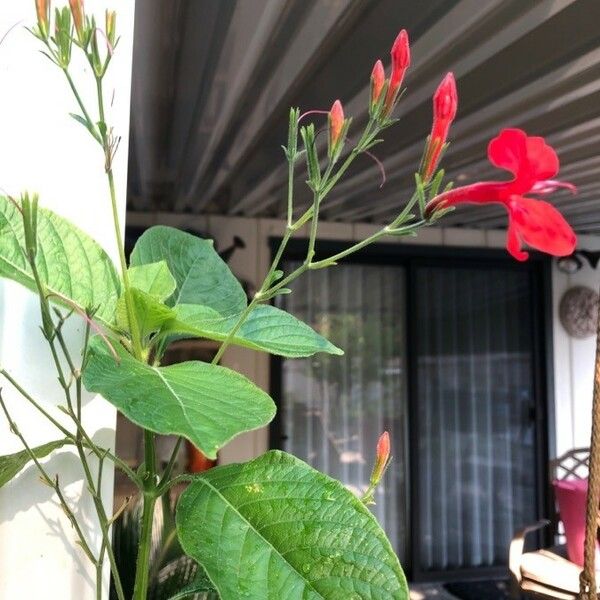
Plant Overview
The Ruellia Elegans, affectionately known as the Brazilian Petunia or Elegant Ruellia, is a showstopper that brings a "fiery carpet" effect to any landscape. Native to the lush regions of Brazil, this plant is famous for its trumpet-shaped, scarlet-red flowers that look like tiny torches illuminating the garden floor. While it shares a name with the common petunia, it belongs to the Acanthus family and is far hardier than its delicate namesake.
🔍 How to Identify
- 🌺 Crimson Blooms: Produces vibrant, five-lobed tubular flowers that are a deep, saturated red, often appearing in clusters.
- 🍃 Textured Foliage: The leaves are lance-shaped (pointed), dark green, and have a slightly fuzzy or velvety texture that contrasts beautifully with the bright flowers.
- 🌱 Mounding Habit: It grows in a low, spreading mound, typically reaching about 12 to 24 inches in height, making it an excellent groundcover or container filler.
🏡 In Your Garden
- ☀️ Sun-Seeker: Unlike many tropicals that wilt in the heat, this Ruellia thrives in full sun to partial shade. The more sun it gets, the more intense its floral display will be.
- 🦋 Wildlife Magnet: It is a high-octane fuel station for hummingbirds and butterflies. If you plant this near a window, expect a constant parade of winged visitors drawn to the nectar-rich tubes.
- 💧 Moisture Balance: While it enjoys consistent moisture to stay lush, it is surprisingly resilient. It prefers well-draining soil to prevent "wet feet," which can lead to root issues during colder months.
⚠️ Safety & Toxicity
- ✅ Pet & Child Safe: The Ruellia elegans is generally considered non-toxic to dogs, cats, and humans.
- ✋ Mild Caution: While safe, the textured leaves can sometimes cause very mild skin irritation for sensitive individuals if handled excessively. As with any ornamental plant, it’s best kept as eye candy rather than a snack for curious toddlers or pets.
✨ Fun Fact
The Brazilian Petunia has a "ballistic" way of spreading its legacy! When its seed pods dry out, they become pressurized. At the first touch of a raindrop or a passing animal, the pods explode, launching seeds several feet away from the mother plant to start a new colony.

Detailed Care Instructions
To grow Ruellia elegans, also known as the red ruellia or red waterleaf, you can follow these steps:
- Choose a suitable location: These plants prefer full sun to partial shade.
- Prepare the soil: Red ruellia thrives in moist, well-draining soil. If your soil is heavy clay, you can improve its drainage by adding organic matter like compost or peat moss.
- Propagation: You can grow ruellia elegans from seeds or by division. If using seeds, sow them in early spring or autumn. If propagating by division, separate the rooted portions of the plant in early spring or late winter.
- Planting: Dig a hole that is slightly larger than the root ball of the plant. Place the plant in the hole and backfill it with soil, gently firming it down.
- Watering: Initially, water the plant regularly to help establish its roots. Once established, water when the soil feels dry to the touch.
- Mulching: Apply a layer of organic mulch around the plant to help retain soil moisture and suppress weed growth.
- Fertilizing: Apply a balanced, slow-release fertilizer in the spring and again in late summer to promote healthy growth. Follow the package instructions for the correct application rates.
- Pruning: Regularly remove any dead or damaged foliage to keep the plant looking neat. You can also trim back the plant in early spring to encourage bushier growth.
- Pests and diseases: Red ruellia is usually not prone to significant pest or disease issues. However, watch out for aphids or spider mites, which can be treated with insecticidal soap or neem oil if necessary.
- Overwintering: Red ruellia is not frost-tolerant, so it may need to be protected or brought indoors in colder climates. In warm climates, it is a perennial and will usually come back each year.
By following these steps and providing your Ruellia elegans with the right conditions, you should be able to successfully grow and enjoy this beautiful plant.

Place in a window with dappled sun or a spot in the middle of a room. Or directly in a window facing west or east.

Ruellia Elegans is a tropical plant that requires a consistent amount of water to thrive. When watering this plant, it is important to ensure that the soil is evenly moist, but not waterlogged. The best approach is to water deeply, allowing the water to saturate the soil to the depth of the plant's root system. After watering, allow the soil to partially dry out before watering again, as over-watering can lead to root rot.
To determine when to water, stick your finger into the soil. If the soil feels dry at a depth of about an inch, it is time to water. Avoid watering the leaves or flowers of the plant directly, as this can lead to fungal diseases. Instead, water the soil around the base of the plant.
During hot, dry weather, Ruellia Elegans may require more frequent watering to prevent the soil from becoming too dry. In contrast, during cooler, less sunny weather, the plant may need less water to prevent over-watering. In general, watering once or twice a week should be sufficient for this plant.
In addition to regular watering, it is also important to provide adequate drainage for Ruellia Elegans. This plant prefers well-draining soil that does not retain water for long periods of time. If the soil is heavy and clay-like, it may be necessary to amend it with sand or other materials to improve drainage.
To keep your plant healthy and promote growth, it is recommended to fertilize it with a balanced fertilizer every two weeks during the growing season. You can also add a slow-release fertilizer to the soil when planting. Be sure not to over-fertilize, as this can damage the plant. Water the plant thoroughly after fertilizing to help distribute the nutrients evenly in the soil.
The soil that is best suited for the plant with the scientific name Ruellia Elegans has a loamy texture and is well-draining. It should have organic matter incorporated into it to provide the necessary nutrients and moisture retention. The pH level of the soil should be slightly acidic to neutral. It is important to ensure that the soil is not compacted as this can lead to problems with drainage and oxygen availability. The plant prefers a sunny to partially shaded location and should be watered regularly, but not overwatered. Fertilizing every few weeks with a balanced fertilizer can help the plant to thrive.
Propagation of this plant can be done by taking stem cuttings or division of mature plants. For stem cuttings, choose a healthy stem with at least two leaves and remove the lower pair of leaves. Dip the end in rooting hormone and plant in a soil mixture of peat and perlite or sand. Keep the soil moist and the cutting in a warm and bright location but out of direct sunlight. The cutting should root in a few weeks and can be transplanted into a larger pot or into the garden.
To propagate by division, gently loosen the plant from the soil and carefully divide into smaller sections. Each section should have several stems and a good amount of roots. Plant each section in its own pot or into the ground in a location that receives partial shade and well-draining soil. Keep the soil moist until the plants establish themselves.








