Plant Overview
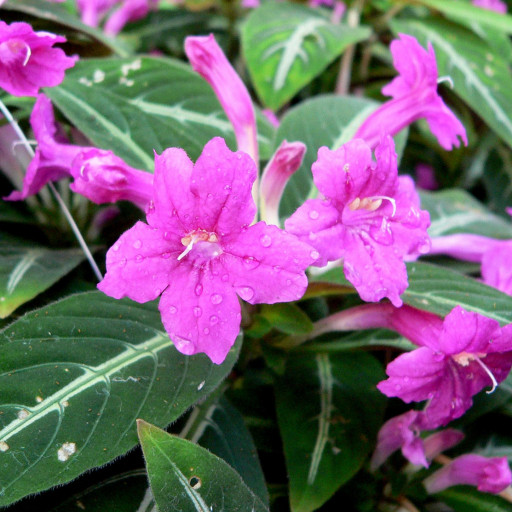
Commonly known as the Monkey Plant or the Trailing Velvet Plant, Ruellia makoyana is a show-stopping Brazilian native that looks like it belongs in a Victorian conservatory. Its velvety, deep-green leaves are accented by striking silvery veins, creating a dramatic contrast that captures the eye even when it isn’t in bloom. This low-growing beauty is a favorite for indoor gardeners who want the lush look of a tropical rainforest on their bookshelves.
🔍 How to Identify
- 🌿 Velvety Foliage: The leaves are soft to the touch, featuring a dark olive-green to forest-green surface with prominent, luminous white or silver veins.
- 🌸 Trumpet Blooms: It produces vibrant, funnel-shaped flowers that range from deep rose-pink to bright magenta, appearing primarily in late fall or winter.
- 🎨 Purple Undersides: If you flip a leaf over, you’ll find a rich, solid burgundy or purplish-maroon underside, adding a hidden splash of color to its trailing stems.
🏡 In Your Garden
- 💧 The Humidity Factor: Because it hails from the humid floors of Brazilian forests, this plant struggles in dry indoor air. It thrives when grouped with other plants or placed near a humidifier to keep its velvet leaves from crisping at the edges.
- ☀️ Light Sensitivity: Unlike some of its sun-loving cousins, the Monkey Plant prefers "dappled" or bright indirect light. Direct afternoon sun acts like a spotlight that can bleach its beautiful silver veins and scorch the delicate foliage.
- ✂️ Bushy Growth: It has a natural tendency to become "leggy" or stretched out. Pinching back the growing tips regularly encourages the plant to branch out, resulting in a much fuller, more compact appearance.
⚠️ Safety & Toxicity
- 🟢 Pet Friendly: Good news for animal lovers! Ruellia makoyana is generally considered non-toxic to cats and dogs, making it a "worry-free" addition to a pet-filled home.
- 👶 Child Safety: While not poisonous, the velvet texture can occasionally trap dust or pollen, which might irritate very sensitive skin or curious toddlers who try to nibble on the leaves.
✨ Fun Fact
The Ruellia genus is famous for its "explosive" seed pods. When the seed pods of many species in this family dry out and are touched by a drop of rain (or a watering can), they can pop open with enough force to catapult seeds several feet away from the parent plant!

Detailed Care Instructions
| Lighting | Part Sun |
| Hardiness Zones | 10A - 11 |
To grow Ruellia Makoyana (also known as the Velvet Plant or the Trailing Fuchsia), you can follow these steps:
- Select a suitable location: Ruellia Makoyana prefers bright, indirect light. Choose a spot that receives bright but filtered sunlight throughout the day. It can also tolerate partial shade.
- Choose a container: Use a container with good drainage holes to prevent waterlogging. A hanging basket or a pot with trailing properties is ideal to show off the plant's cascading foliage.
- Soil requirements: Use well-draining and organic-rich potting soil to ensure optimal growth. You can mix regular potting soil with perlite or sand to improve drainage.
- Watering: Ruellia Makoyana likes evenly moist soil. Water thoroughly whenever the top inch of soil feels dry, ensuring the excess water drains out completely.
- Humidity: This plant prefers higher humidity levels. Placing a saucer filled with water near the plant or using a humidifier can help achieve the desired humidity levels.
- Temperature: Ruellia Makoyana thrives in average room temperatures between 60-75°F (15-24°C). Avoid exposing the plant to extreme temperature fluctuations or drafts.
- Fertilization: Use a balanced, water-soluble houseplant fertilizer during the growing season (spring and summer) every 4-6 weeks. Make sure to follow the package instructions for dosage.
- Pruning: Regular pruning helps in maintaining a healthy shape and controlling the size of the plant. Pinch off the tips to encourage branching and fuller growth.
- Propagation: Ruellia Makoyana can be propagated through stem cuttings in water or moist soil. Take 4-6 inches (10-15 cm) cuttings from healthy stems, remove the lower leaves, and place them in water or moist soil until roots develop.
- Pests and diseases: Monitor the plant for pests such as spider mites, aphids, or mealybugs. Treat any infestations promptly with organic or chemical insecticides. Ensure good air circulation to prevent fungal diseases.
Remember to rotate the plant periodically to encourage even growth and prevent it from leaning towards the light source. With proper care, your Ruellia Makoyana should grow beautifully and provide an elegant display of its velvety leaves.

Place in a window with dappled sun or a spot in the middle of a room. Or directly in a window facing west or east.

To water this plant, you should thoroughly water the soil until the excess water drains out of the bottom of the pot. Allow the soil to dry out slightly between waterings, but do not let it completely dry out. It is important to ensure proper drainage to prevent the roots from becoming waterlogged. Additionally, avoid getting water on the leaves as this can cause damage or disease.
To fertilize this plant, use a balanced fertilizer with an N-P-K ratio of 10-10-10. Apply the fertilizer once every month during the growing season, which is generally from spring to fall. Follow the instructions on the fertilizer package for the correct amount to apply. Be sure to water the plant thoroughly before and after fertilizing to avoid burning the roots.
Ruellia Makoyana plant prefers a well-draining soil that is rich in organic matter. The pH of the soil should be slightly acidic to neutral (between 5.5 and 7.5). A soil mix that is formulated specifically for indoor plants or tropical plants would work well for this plant. It should be loose and aerated to promote healthy root growth. Adding perlite, peat moss or sand to the soil mix would increase its drainage capacity. It is also important to ensure that the soil remains moist, but not waterlogged, to prevent root rot.
To propagate this plant, take stem cuttings that are at least 4 inches long. Remove the bottom leaves and dip the cut end into rooting hormone powder. Plant the cutting in a pot filled with well-draining soil. Water the cutting and keep it in a warm, humid location with indirect sunlight. Keep the soil moist but not waterlogged. After a few weeks, roots should begin to grow from the cutting. Once the cutting has established roots and new growth, it can be transplanted into a larger container or into the garden.
Common pests of the monkey plant include Mealybugs, spider mites. Make a habit of checking your monkey plant frequently for pests so that any infestations can be caught and managed early.








