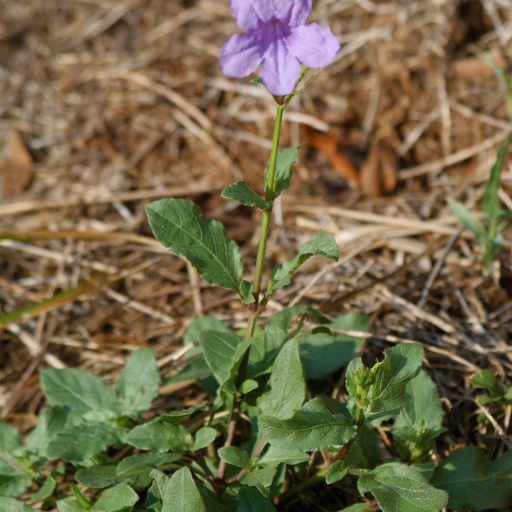
Plant Overview
Often called the Violet Wild Petunia, Ruellia nudiflora is a resilient beauty that brings a splash of deep purple to roadsides and wild gardens alike. While it looks delicate, this plant is a survival specialist, often thriving in the heat of Texas and Mexico where other flowers might wilt. It is famous among gardeners for its "secret" secondary flowers that never actually open but still produce plenty of seeds!
🔍 How to Identify
- 💜 The Bloom: Funnel-shaped, five-lobed flowers that are typically a vibrant violet or lavender. They usually open in the morning and may drop by the afternoon in intense heat.
- 🌿 The Foliage: Leaves are ovate to elliptic, arranged oppositely along the stem. They often have a slightly wavy margin and a fine coating of velvety hairs.
- 📏 The Growth: It typically grows in a low, mounding habit, reaching about 1 to 2 feet in height, with stems that can appear slightly purple or reddish.
🏡 In Your Garden
- 🌱 Dual-Flowering Strategy: This plant is fascinating because it produces two types of flowers. The showy purple ones attract pollinators, while small, bud-like flowers (cleistogamous) near the base self-pollinate without ever opening, ensuring the plant spreads even in poor conditions.
- 🦋 Pollinator Magnet: It is a vital host plant for the Common Buckeye butterfly. If you see tiny caterpillars munching on the leaves, don’t reach for the pesticide—you’re hosting a future butterfly!
- ☀️ Tough as Nails: It prefers full sun to partial shade and is incredibly drought-tolerant once established. However, be mindful that it can be a "prolific" self-seeder; it may pop up in spots where you didn't plant it.
⚠️ Safety & Toxicity
- ✅ Status: Generally non-toxic.
- 🐾 Details: Ruellia nudiflora is not considered toxic to dogs, cats, or horses. It is a safe choice for wilder, pet-friendly landscapes, though it’s always best to discourage pets from heavy grazing on any garden plant to avoid stomach upset.
✨ Fun Fact
The seed pods of the Violet Wild Petunia are like tiny biological landmines! When the pods dry out or get hit by a drop of rain, they explode with a distinct "pop," launching seeds several feet away from the mother plant to colonize new territory.

Detailed Care Instructions
To grow Ruellia Nudiflora (also known as wild petunia), you can follow these steps:
- Purchase seeds or young plants from a reputable nursery or online supplier. Alternatively, you can collect seeds from mature plants in the wild if permitted.
- Choose a suitable planting location that receives full to partial sun. Ruellia Nudiflora can tolerate a variety of soil types but prefers well-draining soil.
- Prepare the soil by removing any weeds or debris and loosening it with a garden fork or tiller. Add compost or organic matter to improve soil fertility and drainage.
- Sow seeds directly in the prepared soil, spacing them according to the packet instructions or a few inches apart if transplanting young plants. If using young plants, dig a hole that is slightly larger than the root ball and gently place the plant in the hole, covering the roots with soil.
- Water the seeds or young plants thoroughly immediately after planting. Afterward, water regularly, keeping the soil evenly moist but not waterlogged. As the plants establish, they may become more tolerant of drier conditions.
- Mulch the soil around the plants with a layer of organic mulch, such as wood chips or straw. Mulch helps retain moisture, suppress weeds, and regulate soil temperature.
- Monitor the plants for pests and diseases. If any issues arise, consult with a local garden center or do some research on organic methods to control common pests, such as aphids or snails.
- As the plants grow, consider pinching back the tips to encourage bushier growth. This can be done by using clean, sharp pruning shears to snip off the top few inches of the stems.
- Ruellia Nudiflora typically blooms from summer to fall. Enjoy the beautiful purple or blue trumpet-shaped flowers that attract pollinators such as bees and butterflies.
- To promote healthy growth, you may apply a balanced organic fertilizer once or twice during the growing season, following the product instructions.
With proper care and maintenance, your Ruellia Nudiflora plants should continue to grow and thrive, providing you with vibrant blooms and lush foliage.

Place in a window with dappled sun or a spot in the middle of a room. Or directly in a window facing west or east.

To properly water this plant, it is important to first consider the environment in which it is situated. Ruellia Nudiflora typically grows in moist, shaded areas, so replicating those conditions is crucial for the plant's health.
When watering, it is important to avoid overwatering as it can lead to root rot and other issues. Instead, aim to keep the soil consistently moist but not soggy. It is recommended to water the plant deeply, allowing the water to reach the roots, rather than shallowly where it will evaporate quickly.
One way to ensure proper watering is to regularly check the soil moisture level with a moisture meter or by digging a small hole in the soil and feeling the moisture level with your finger. If the top inch of soil feels dry, then it is time to water.
Another important consideration is the type of water used. Ruellia Nudiflora prefers water that is free of chlorine and other chemicals, so it may be beneficial to collect rainwater or use filtered water.
Overall, watering Ruellia Nudiflora requires consistent attention to the soil moisture level and the provision of a suitable water source.
To fertilize this plant, apply a balanced, slow-release fertilizer in early spring, just before new growth emerges. If the plant is growing in poor soil, give it a second feeding in mid-summer. Avoid over-fertilizing, as this can lead to excessive foliage growth and reduced flowering. Water the plant well after fertilizing to help distribute the nutrients throughout the soil.
The Ruellia Nudiflora plant prefers well-draining soils with good airflow to promote root growth and prevent waterlogging. The soil should be slightly acidic, with a pH range of 6.0 to 7.0.
The ideal soil for this plant is a sandy loam texture, consisting of equal parts of sand, silt, and clay. It should be rich in organic matter, such as compost, leaf mold, or well-rotted manure, to provide nutrients and improve soil structure.
The plant requires regular watering, so the soil should be able to hold moisture without becoming waterlogged. Adding perlite or vermiculite to the soil mix can improve drainage and aeration.
Avoid using heavy clay soils or soils with a lot of clay content as they retain water and may suffocate the plant roots. Additionally, using soil mixes with high levels of peat moss or coco coir may cause the soil to become too acidic and may affect the growth of the plant.
To propagate this plant, first choose a healthy and mature specimen. Next, cut a stem or branch from the parent plant using sterilized pruning shears. Ensure that the cutting is at least 4 inches long and has at least 2-3 leaves on it.
Strip the leaves from the lower half of the cutting and dip the cut end into rooting hormone powder. This will help encourage the cutting to grow roots.
Fill a small pot or container with well-draining potting soil and create a hole in the center. Insert the cutting into the hole and gently press the soil around it.
Water the cutting thoroughly and cover the container with a clear plastic bag or plastic wrap to create a humid environment. Place the pot in a bright but shaded location and keep the soil moist but not waterlogged.
After a few weeks, check for root growth by gently tugging on the cutting. If you feel resistance, the cutting has rooted and can be moved to a larger pot or planted in the ground.








