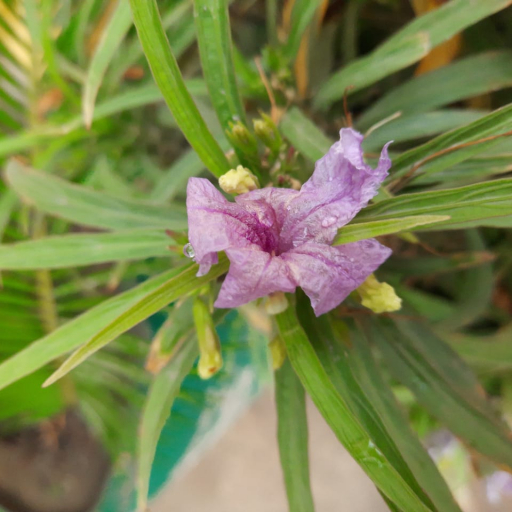
Plant Overview
Meet the Ruellia tuberosa, a tropical charmer famously known as the "Popping Pod" or "Minnie Root." While it might look like a delicate wildflower, this plant is a resilient traveler that has spread from Central America to gardens across the globe. It is beloved by children and nature enthusiasts alike for its interactive seed pods that "explode" with a sharp crack when they come into contact with water.
🔍 How to Identify
- 🌸 The Bloom: Features elegant, funnel-shaped flowers that are typically a vibrant violet or lavender, though rare white varieties exist. Each flower usually lasts only a day, but the plant produces them in constant succession.
- 🍃 The Foliage: The leaves are dark green, elliptical, and grow in opposite pairs along a reddish-purple stem. They have a slightly glossy texture that helps them stand out in low-growing brush.
- 🥜 The Root System: True to its name (tuberosa), the plant develops thick, finger-like tuberous roots underground. These allow it to survive droughts and bounce back quickly after being cut or stepped on.
🏡 In Your Garden
- 💧 The "Popping" Phenomenon: The most iconic feature is the cigar-shaped seed pod. When these pods turn dark brown and dry, any drop of rain (or a splash from a watering can) causes them to burst open instantly, launching seeds several feet away.
- ☀️ Sun & Soil: It is a sun-lover that thrives in disturbed soils, roadside ditches, and garden borders. Because of its deep tubers, it is incredibly difficult to eradicate once established—it doesn't mind poor soil and can even handle temporary flooding.
- 🦋 Pollinator Magnet: If you want to bring life to your yard, this is a top-tier choice for attracting honeybees and various butterfly species, who find the deep nectar wells of the funnel flowers irresistible.
⚠️ Safety & Toxicity
- ✅ Status: Non-toxic and generally safe.
- 🐾 Details: There are no known toxic effects for cats, dogs, or horses. While it has been used in traditional folk medicine as a diuretic or for treating fevers, it is not considered a culinary herb and should not be ingested by humans without expert guidance.
✨ Fun Fact
The Ruellia tuberosa is a master of "hydrochory"—a scientific term for seed dispersal via water. If you find a dry, brown pod, drop it into a cup of water; within seconds, you’ll hear a loud pop as the pod splits in two, perfectly demonstrating how the plant uses tropical rainstorms to colonize new territory!

Detailed Care Instructions
To grow Ruellia Tuberosa, also known as the Minnieroot, follow these steps:
- Determine the right season and location: Ruellia Tuberosa grows best in warm climates, ideally in USDA hardiness zones 9-11. Choose a spot in your garden that receives full sun to partial shade.
- Prepare the soil: The soil should be well-draining and rich in organic matter. If necessary, amend the soil with compost or well-rotted manure to improve its fertility and drainage.
- Plant the tubers: Ruellia Tuberosa grows from tubers, which resemble small bulbs or rhizomes. Plant the tubers about 2-3 inches deep in the soil. Space them about 12-18 inches apart to provide adequate room for growth.
- Watering: Water the newly planted tubers thoroughly to provide them with enough moisture. Once established, the plant is fairly drought-tolerant, but it will benefit from regular watering during dry spells.
- Fertilizing: Apply a balanced slow-release fertilizer during the growing season to promote healthy growth and flowering. Follow the manufacturer's instructions for the appropriate dosage and timing.
- Mulching: Apply a layer of organic mulch, such as straw or wood chips, around the base of the plant to retain moisture, suppress weed growth, and regulate soil temperature.
- Pruning: As the plant grows, it may become leggy or develop dead or diseased branches. Prune these branches back to promote denser growth, flower production, and overall plant health.
- Controlling pests and diseases: Ruellia Tuberosa is generally not prone to major pest or disease issues. However, keeping the plant well-maintained and avoiding overwatering can help prevent any potential problems.
- Propagation: Ruellia Tuberosa can be propagated by dividing the tubers. Dig up the tubers in early spring or fall, gently separate them, and replant them in desired locations.
- Enjoy the flowers: Ruellia Tuberosa produces beautiful purple or white flowers that attract pollinators like butterflies and bees. Regular deadheading, the removal of spent flowers, will encourage more flower production.
Remember to consult local gardening guides or experts for specific recommendations based on your region's climate and local conditions.

Place in a bright room that is sun drenched almost all day. Or directly in a south-facing window.

To properly water this plant, you should first check the soil moisture level by sticking your finger about 1 inch deep into the soil. If it feels dry, it's time to water. Use a watering can or a hose with a gentle spray to moisten the top layer of soil until water drips out of the drainage holes at the bottom of the pot or planting area. It's important not to overwater, as this can lead to root rot. Allow the soil to partially dry out before watering again. In periods of prolonged drought or extreme heat, the plant may require more frequent watering.
To fertilize this particular plant, you may use a balanced, water-soluble fertilizer. Choose a fertilizer that has an equal proportion of nitrogen, phosphorus, and potassium. Dilute the fertilizer in water according to the package instructions and apply it to the soil once a month during the growing season. Make sure to water the plant thoroughly after fertilizing to avoid fertilizer burn.
The recommended type of soil for Ruellia Tuberosa should be well-draining soil that is rich in organic matter. It should have a pH level between 6.0 to 7.5. The soil should be moist but not waterlogged. A mixture of sand, loam, and peat moss can be used to provide the ideal soil conditions. Additionally, adding compost to the soil before planting can further enrich the soil with nutrients to support healthy growth.
To propagate this plant, you will need to take stem cuttings from a mature plant. Choose healthy stems that are several inches long and have at least two sets of leaves. Using a sharp, clean pair of pruning shears, make a clean cut just below a node (where a leaf meets the stem).
Once you have your cuttings, remove the lower set of leaves and dip the cut end in rooting hormone powder. Place the cuttings in a container filled with moist potting soil or a mixture of peat moss and sand. Cover the container with a plastic bag to create a humid environment for the cuttings.
Place the container in a warm, bright location, but out of direct sunlight. Check the cuttings regularly to ensure the soil stays moist and mist them with water if needed.
After a few weeks, new growth should appear on the cuttings, signaling that they have rooted successfully. At this point, you can transplant the new plants into individual pots and gradually acclimate them to brighter light and less humidity.








