Plant Overview
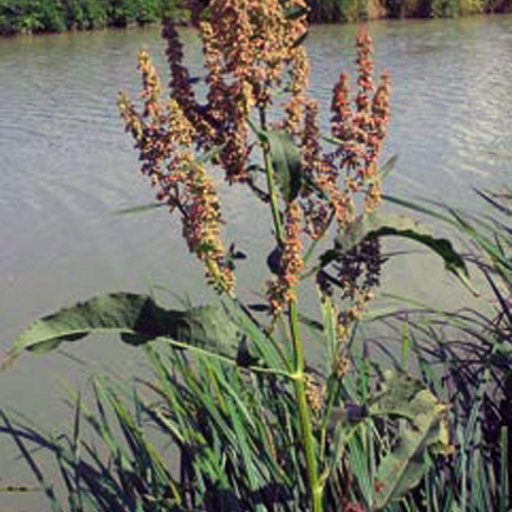
Often called the Great Water Dock, this plant is a true titan of the marshes and riverbanks. In some regions, its massive leaves earned it the nickname "Elephant Ears" due to their sheer scale. It is a majestic, architectural perennial that acts as a cornerstone for wetland biodiversity, providing both structure and sustenance to rare wildlife.
🔍 How to Identify
- 🍃 Colossal Foliage: The leaves are the largest of any dock species, often reaching nearly 3 feet (1 meter) in length. They are lance-shaped, sharply pointed, and feature slightly wavy margins.
- 🗼 Towering Spires: In midsummer, the plant sends up a thick, sturdy flower stalk that can soar over 6 feet high, topped with dense, branched clusters of tiny greenish flowers.
- 🍂 Rusty Hue: As the seeds ripen in late summer and autumn, the entire flower spike transforms into a striking reddish-brown or deep chocolate color that persists into winter.
🌊 Habitat & Ecology
- 💧 The "Wet Feet" Rule: Unlike its common garden cousins, the Great Water Dock specifically requires permanent moisture. It thrives in shallow water up to 20cm deep or in the saturated mud of fens and dykes.
- 🦋 A Butterfly’s Lifeline: This plant is the primary food source for the larvae of the rare Large Copper butterfly. Without these specific large leaves, the butterfly cannot complete its life cycle.
⚠️ Safety & Toxicity
- 🐾 Oxalic Acid Alert: The plant contains high levels of oxalic acid. While not considered deadly, it can cause digestive upset and mouth irritation if eaten raw by humans or pets.
- 🐎 Livestock Caution: While wild birds relish the seeds, the plant can be problematic for grazing livestock like horses or cattle if consumed in large quantities, as it can interfere with calcium absorption.
✨ Fun Fact
In historical folk medicine, the roots of the Great Water Dock were dried and ground into a "tooth powder." Its intense astringent properties were believed to tighten the gums and cure scurvy!

Detailed Care Instructions
To grow Rumex Hydrolapathum, also known as water dock or water-loving sorrel, you can follow these steps:
- Choose a suitable location: Rumex Hydrolapathum plants thrive in moist, well-drained soil that is rich in organic matter. They prefer full to partial sun and can tolerate partially shady areas. Ensure the chosen location receives adequate moisture.
- Prepare the soil: Dig the soil to a depth of about 6-8 inches and remove any weeds or debris. Incorporate compost or well-rotted manure to improve the soil fertility and moisture retention.
- Planting: Sow the Rumex Hydrolapathum seeds in late winter or early spring, either directly in the ground or in pots if you plan to transplant them later. Space the seeds or seedlings about 8-12 inches apart.
- Watering: Keep the soil consistently moist but not waterlogged. Water regularly, especially during dry spells, to mimic their natural water-loving habitat.
- Mulching: Apply a layer of organic mulch, such as straw or wood chips, around the plants to help retain moisture and suppress weed growth.
- Fertilization: Rumex Hydrolapathum plants generally do not require much fertilization. However, you can apply a balanced organic fertilizer once or twice during the growing season to promote healthy growth.
- Maintenance: Remove any weeds or unwanted plants around the Rumex Hydrolapathum to prevent competition for resources. Regularly monitor for pests or diseases and take necessary measures to control them.
- Harvesting: You can start harvesting the leaves when they reach a desirable size, usually around 60-70 days after planting. Cut the leaves close to the base. Be mindful not to remove all the leaves from a plant, as they need some foliage to continue growing.
By following these steps, you should be able to grow healthy Rumex Hydrolapathum plants in your garden or in containers.

Place in a bright room that is sun drenched almost all day. Or directly in a south-facing window.

Rumex Hydrolapathum plant should be given a regular supply of water during its growing season. The soil around the plant should be kept moist, but not waterlogged, to avoid any root rot or fungal diseases. A good rule of thumb is to water deeply once a week, allowing the water to penetrate the soil to a depth of a few inches. During hot and dry periods, it may be necessary to water more frequently, but always be sure to let the topsoil dry out slightly before watering again. It is important to avoid getting water on the leaves of the plant, as this can encourage fungal growth. Instead, water directly into the soil around the base of the plant using a watering can or hose with a gentle spray nozzle.
To fertilize this plant, mix a slow-release fertilizer into the soil before planting or apply an all-purpose fertilizer every two weeks during the growing season. Ensure the soil is moist before applying fertilizer to prevent root burn. Avoid over-fertilizing as it can damage the plant.
When selecting soil for this particular plant, it is important to consider its native habitat and growing conditions. Rumex Hydrolapathum typically grows in wetland areas, indicating a need for soil that is moisture-retentive and well-draining to prevent waterlogging.
The ideal soil for this plant is a mixture of sandy loam, clay, and organic matter, with a slightly acidic pH level ranging between 5.5 to 7.0. The soil should have good nutrient content and aeration, with a high content of humus and organic matter to promote healthy root growth and enhance soil fertility.
When planting Rumex Hydrolapathum, it is recommended to amend the soil with compost or aged manure to increase organic matter content and improve soil structure. Water the plant regularly, but avoid over-watering as this can lead to root rot and other fungal infections. Finally, be sure to choose a location that receives adequate sunlight and is protected against strong winds.
To propagate this plant, first make sure that you have a healthy parent plant that is mature enough to produce new offspring. Take a stem cutting from the parent plant that is about 4-6 inches in length and make sure that it has at least 2-3 nodes on it. Remove the lower leaves from the stem cutting so that there are no leaves touching the soil.
Prepare a container of well-draining soil mix and make a hole in the soil with a dibber. Dip the bottom end of the stem cutting in rooting hormone powder before planting it in the hole. Firmly pack the soil around the cutting and water the soil well. Place the container in a spot with bright, indirect light and keep the soil evenly moist.
Alternatively, you can also propagate this plant by division. Carefully remove the parent plant from its pot or garden bed and shake off any excess soil. Gently pull the plant apart into smaller sections, making sure that each section has a healthy root system. Plant each section into its own container or garden bed, just as you would with a stem cutting.








