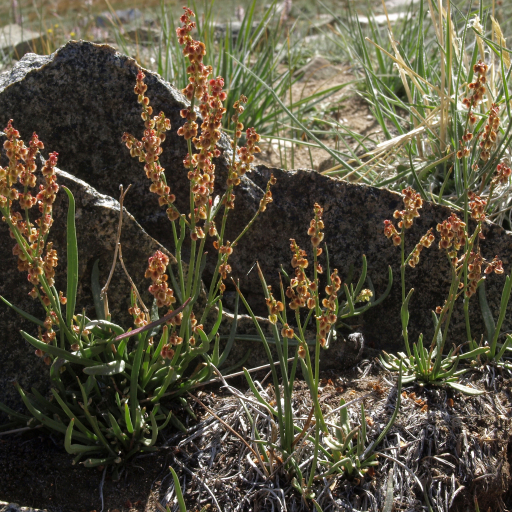
Plant Overview
Known affectionately as the Alpine Sheep Sorrel, this hardy mountaineer is a master of survival in the high-altitude meadows of Western North America. While many plants shiver at the thought of thin air and rocky slopes, Rumex paucifolius thrives, painting subalpine landscapes with delicate splashes of rusty red and earthy green. It is a diminutive relative of the common garden dock, specifically adapted for the "blink-and-you-miss-it" summers of the mountains.
🔍 How to Identify
- 🍃 Arrow-Shaped Leaves: Most of the foliage is clustered at the base. The leaves are smooth, slightly fleshy, and often shaped like narrow arrowheads or "ears" (hastate).
- 🗼 Slender Flower Spikes: It sends up thin, leafless stems that hold clusters of tiny, petal-less flowers. These stems often take on a striking reddish-maroon hue as they mature.
- ⚧️ Two Houses: This species is "dioecious," meaning individual plants are either male or female. You might notice slight color variations between neighbors depending on their "gender."
🏡 In Your Garden
- 🏔️ Alpine Specialist: In a home setting, this plant is perfect for rock gardens or "alpine troughs" that mimic high-mountain scree slopes. It requires exceptionally well-draining soil to prevent root rot.
- ❄️ Cold Lover: Unlike many garden favorites, this plant actually prefers a cold winter dormancy. It is not a fan of sweltering, humid lowland summers and may go dormant early if it gets too hot.
⚠️ Safety & Toxicity
- 👅 The Sour Trap: Like its cousins, it contains oxalic acid, which gives the leaves a sharp, lemony tang. While humans sometimes nibble it in small amounts, it should never be consumed in large quantities.
- 🐾 Pet & Livestock Warning: High levels of oxalates can be toxic to cats, dogs, and especially grazing livestock (like sheep or horses), potentially leading to kidney issues if eaten in bulk.
- 🤚 Skin Sensitivity: Some gardeners find the sap slightly irritating to sensitive skin; wearing gloves during maintenance is a smart move.
✨ Fun Fact
Because Rumex paucifolius is dioecious, it has been used by scientists to study "sex ratios" in the wild. Researchers have found that in harsher, drier environments, female plants are often rarer because they require more energy to produce seeds than males do to produce pollen!

Detailed Care Instructions

Place in a bright room that is sun drenched almost all day. Or directly in a south-facing window.

Some plants require more regular watering than others, which should be done every few days. It's critical to maintain the soil moist all of the time. The water requirements of the same plant placed in pots with varying sizes will differ. Because the water in the smaller pot evaporates faster than the water in the larger pot, it will require more watering. Regardless of pot size, the surface should constantly be maintained moist.








