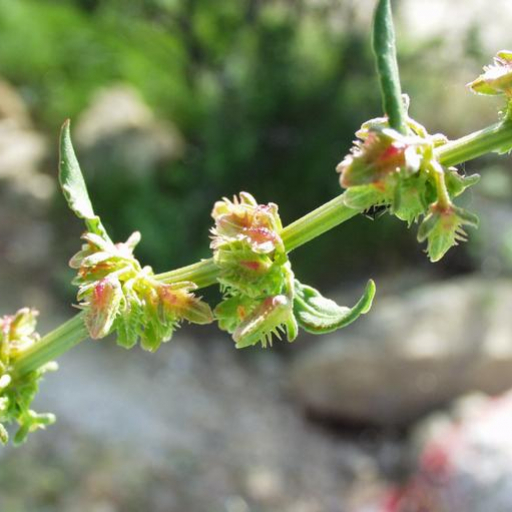
Plant Overview
Often called the Fiddle Dock or Mediterranean Dock, this hardy perennial is a master of adaptation and geometry. Named for its uniquely "waisted" lower leaves that resemble the body of a violin, it has traveled far from its Mediterranean roots to become a familiar face in meadows and roadsides globally. While many gardeners consider it a stubborn weed, it is a fascinating example of botanical architecture that thrives where other plants falter.
🔍 How to Identify
- 🎻 The "Fiddle" Leaves: The most distinct feature is the shape of the lower (basal) leaves, which are oblong with a noticeable "pinch" or constriction in the middle, just like a fiddle.
- 🔀 Zig-Zag Stems: Unlike many upright docks, the flower stems of Rumex pulcher are "divaricate," meaning they branch out at wide, stiff angles, often creating a tangled or zig-zagging appearance.
- 🦷 Toothed Seeds: As the plant matures, it produces clusters of tiny fruits. Each seed is encased in three "valves" that have distinct, spiny teeth along the edges, helping them hitchhike on animal fur.
🏡 In Your Garden
- 🌱 The Deep Taproot: If you find this in your garden, know that it is a survivor. It possesses a thick, deep taproot that acts as a nutrient anchor, making it incredibly difficult to pull out by hand once established.
- 🌾 Soil Indicator: Fiddle Dock loves heavy, damp, or compacted soils. Its presence often suggests that the ground is a bit "tired" or has been disturbed by construction or heavy foot traffic.
- ✂️ Managing Spread: It is a prolific self-seeder. To prevent it from taking over your lawn, it is best to cut the flower stalks before they turn from green to reddish-brown and release their "toothed" seeds.
⚠️ Safety & Toxicity
- 👅 Oxalic Acid: Like its relatives (Sorrel and Rhubarb), Fiddle Dock contains oxalic acid. While humans sometimes eat young leaves in small amounts, large quantities can cause stomach upset or contribute to kidney stones.
- 🐾 Pet Warning: It is generally considered toxic to livestock, dogs, and cats if consumed in significant amounts. The high oxalate content can cause drooling, tremors, or kidney stress in curious pets.
- 🧤 Skin Sensitivity: While not as aggressive as Stinging Nettles, the coarse texture and sap can occasionally irritate sensitive skin during weeding.
✨ Fun Fact
The "teeth" on the Fiddle Dock's seeds aren't just for show; they are a clever evolutionary hack. While many Rumex species rely on wind or water, the Fiddle Dock's hooked seeds are specifically designed to catch on the wool of sheep and the fur of passing wildlife to travel miles away from the parent plant!

Detailed Care Instructions
To grow Rumex pulcher, also known as red-veined dock or bright dock, follow these steps:
- Choose a suitable planting site: Rumex pulcher prefers full sun to partial shade. Select a location with well-draining soil.
- Prepare the soil: Loosen the soil to improve aeration and drainage. Remove any weeds and rocks from the area.
- Planting: Sow the seeds directly in the prepared soil during spring or fall, as these are the optimum times for germination. Alternatively, you can start the seeds indoors and transplant the seedlings outdoors when they are a few inches tall.
- Sow the seeds: Scatter the seeds over the soil surface and cover them lightly with a thin layer of soil. Keep the soil moist until germination occurs.
- Watering: Keep the soil consistently moist, but avoid overwatering. Ensure that the plants receive about 1 inch of water per week, either through rainfall or irrigation.
- Thin the seedlings: Once the seedlings reach a few inches tall, thin them to provide sufficient space for growth. This can be done by removing some of the weaker or overcrowded plants.
- Fertilization: Apply a balanced, all-purpose fertilizer according to the manufacturer's instructions. This can help promote healthy growth.
- Mulching: Apply a layer of organic mulch around the plants to retain moisture, suppress weed growth, and regulate soil temperature.
- Pruning: Trim any damaged or dead leaves to maintain plant health and appearance.
- Pest and disease control: Rumex pulcher is generally resistant to pests and diseases. However, keep an eye out for common garden pests such as aphids or slugs. If necessary, use appropriate organic pest control methods or consult a local gardening expert for advice.
- Harvesting: The leaves of Rumex pulcher can be harvested throughout the growing season. Snip off the outer leaves just above the base when they reach a desired size. This will encourage new growth and ensure a continuous supply of fresh leaves.
By following these steps, you should be able to successfully grow Rumex pulcher and enjoy its attractive foliage in your garden.

Place in a bright room that is sun drenched almost all day. Or directly in a south-facing window.

To water this plant, first ensure that it is planted in well-draining soil. Allow the soil to dry out slightly before watering, then water thoroughly until water drains out of the bottom of the pot or container. Avoid letting the plant sit in standing water. Water less frequently during the winter months, but do not completely let the soil dry out. Pay attention to signs of over-watering, such as yellowing leaves, and adjust watering frequency as needed.
To fertilize this plant, it is recommended to use a balanced fertilizer with equal amounts of nitrogen, phosphorus, and potassium. A slow-release fertilizer is best as it will provide nutrients to the plant over a longer period of time and prevent excessive growth. Apply the fertilizer according to the instructions on the packaging, usually every 4-6 weeks during the growing season. Avoid over-fertilizing as this can cause damage to the roots and foliage. Water the plant thoroughly after fertilizing to help distribute the nutrients throughout the soil.
The ideal soil for Rumex Pulcher plant should be loose, well-drained, and slightly acidic to neutral in pH. It should also be rich in organic matter, such as compost or aged manure, to provide essential nutrients for healthy growth. A sandy loam or loamy soil type is recommended for this plant, as it promotes good drainage without excessively drying out the soil. Moreover, avoid using heavy clay soil, which can hold excess moisture and cause the plant's roots to rot.
To propagate the plant of the Rumex Pulcher species, you will need to take a stem cutting from a mature, healthy plant. Using a sterilized pair of garden shears, cut a stem that is approximately 4-6 inches long with several nodes on it. Remove the lower leaves of the stem and dip the cut end into rooting hormone powder to encourage root growth.
Next, plant the stem cutting in a pot filled with a well-draining potting mix. Water the soil well and cover the pot with a clear plastic bag to create a humid environment. Place the pot in a bright but indirect location and keep the soil moist.
After a few weeks, check for signs of new growth and root development. Once the plant has established a strong root system and is producing new growth, it can be transplanted into a larger pot or planted in the ground in a suitable location.








