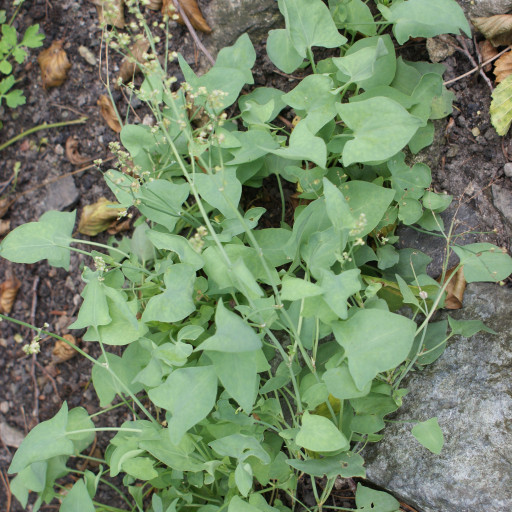
Plant Overview
Known affectionately as "French Sorrel" or "Shield-leaf Sorrel," this leafy perennial is a culinary treasure often found tucked away in gourmet herb gardens. Unlike its wilder cousins, it offers a milder, more refined citrus zing that has made it a staple in classic French cream sauces for centuries. It is a hardy survivor, often being the very first green to peek through the soil in early spring to signal the end of winter.
🔍 How to Identify
- 🛡️ The Shield Leaf: Its most striking feature is the leaf shape—small, succulent, and shaped like a rounded shield or arrowhead, often with a subtle silvery-green tint.
- 🌱 Growth Habit: It grows in low, dense clumps that sprawl outward, rarely reaching more than 12 inches in height, making it look more like a lush groundcover than a typical tall weed.
- 🌸 Summer Bloom: In late spring or summer, it sends up slender, branched stalks carrying tiny, inconspicuous reddish-green flowers that eventually turn into papery, winged seeds.
🏡 In Your Garden
- 🥗 The "Gourmet" Sorrel: This species is preferred by chefs over Common Sorrel (Rumex acetosa) because it has a lower acid content and a more delicate, lemony flavor that doesn't overwhelm the palate.
- ☀️ Heat Tolerance: While most sorrels bolt and turn bitter the moment the sun gets hot, Rumex scutatus is remarkably drought-tolerant and maintains its flavor much longer into the summer.
- ⛰️ Soil Preference: In the wild, it loves rocky crevices and scree slopes; in your garden, this means it requires excellent drainage and hates "wet feet" or soggy roots.
⚠️ Safety & Toxicity
- 🍽️ Edible Status: Perfectly safe and highly nutritious for humans! It is rich in Vitamin C, though it should be eaten in moderation.
- 🐶 Pet Safety: Warning. Like all members of the Rumex family, it contains calcium oxalates. If ingested in large quantities by dogs or cats, it can cause salivation, tremors, or even kidney issues.
- 🧂 Health Note: Humans with a history of kidney stones or gout should limit their intake, as the oxalic acid can interfere with calcium absorption.
✨ Fun Fact
- 🛡️ Roman Roots: The botanical name scutatus comes from the Latin word scutum, which refers to the large, rectangular shields carried by Roman legionaries, perfectly describing the protective shape of the leaves.

Detailed Care Instructions
| Humidity | Normal |
| Lighting | Full Sun |
| Difficulty | Easy |
| Hibernation | Cold Period |
| Hardiness Zones | 5 - 7 |
To grow Rumex scutatus plants, also known as buckler sorrel or shield-leaf sorrel, follow these steps:
- Choose a suitable location: Buckler sorrel prefers full to partial sun, so select a spot in your garden that receives at least 6 hours of direct sunlight each day. The soil should be well-draining and rich in organic matter.
- Prepare the soil: Before planting, remove any weeds or debris from the area. Loosen the soil using a garden fork or tiller, breaking up any clumps and removing rocks. Add compost or organic matter to improve the soil's fertility and drainage.
- Start from seeds: You can start Rumex scutatus plants from seeds, which can be obtained from a local nursery or online. Directly sow the seeds into the prepared soil, following the package instructions for spacing and depth. Gently press the seeds into the soil and lightly cover them with a thin layer of soil.
- Watering: Keep the soil consistently moist, but not waterlogged. Water the plants regularly, ensuring the soil doesn't dry out completely between waterings.
- Thinning: Once the seedlings have emerged and are a few inches tall, thin them to provide enough space for each plant to grow. Maintain a distance of several inches between each seedling.
- Mulching: Apply a layer of organic mulch, such as straw or wood chips, around the plants. This helps to retain moisture in the soil, suppresses weed growth, and maintains a more even soil temperature.
- Fertilizing: Buckler sorrel plants generally don't require heavy fertilization. However, you can apply a balanced granular fertilizer once or twice during the growing season to ensure healthy growth. Follow the instructions on the fertilizer packaging for application rates.
- Harvesting: Rumex scutatus leaves can be harvested as soon as the plants are large enough. Pinch or cut off the outer leaves, leaving the center ones to continue growing. Regular harvesting promotes further leaf production.
- Pest and disease control: Buckler sorrel is usually not affected by major pests or diseases. However, keep an eye out for slugs, snails, and leaf miners. Use organic pest control methods, such as handpicking the pests or applying natural repellents if necessary.
With proper care and maintenance, your buckler sorrel plants should grow well and provide you with a continuous supply of edible leaves. Enjoy the tangy, lemony flavor of Rumex scutatus in your culinary creations!

Place in a window with dappled sun or a spot in the middle of a room. Or directly in a window facing west or east.

To water this plant, it is important to ensure that the soil is evenly moist at all times. This can be achieved by thoroughly watering the plant until water seeps out of the drainage holes in the bottom of the pot. It is important to allow the soil to partially dry out before watering again, as the plant cannot tolerate waterlogged soil. Check the soil regularly and adjust watering frequency as necessary based on the plant's needs and environmental conditions. Try to water the plant early in the day to avoid water sitting on the leaves and potentially leading to fungal diseases.
To fertilize the Rumex Scutatus plant, apply a balanced, slow-release fertilizer in early spring. Use a granular fertilizer with a 10-10-10 or 20-20-20 NPK ratio. Apply the fertilizer evenly around the base of the plant and gently work it into the soil. Water the plant thoroughly after fertilizing. Avoid over-fertilizing as it can lead to excessive growth and weaken the plant.
Rumex scutatus plant prefers a well-draining soil mixture that is rich in organic matter. It can grow in a variety of soil types, including sandy, loamy, or clay soils. The soil pH should be slightly acidic to neutral, with a range of 6.0 to 7.5. The soil should be kept moist but not waterlogged since this plant can tolerate occasional droughts. It is recommended to add compost or a slow-release fertilizer to the soil when planting to provide the necessary nutrients for healthy growth. When choosing a soil mixture, it is best to opt for a high-quality potting mix that is specifically designed for herbaceous plants.
Propagating this plant can be done by either taking cuttings or by dividing its root system. For cuttings, identify a healthy stem section and cut it close to its base using a sterilized sharp knife. Remove all leaves except for the top two sets. Dip the bottom of the stem into rooting hormone powder, if desired, and place the cutting in moist soil. Water regularly and keep in a warm and bright location. For division, carefully dig up the plant and gently separate the root system into smaller sections, ensuring that each section has at least one healthy stem and root system. Replant each section into a new pot or location in the garden with well-draining soil. Water regularly until the new plants establish roots.
Common pests of the buckler's sorrel include Larvae, snails. Make a habit of checking your buckler's sorrel frequently for pests so that any infestations can be caught and managed early.








