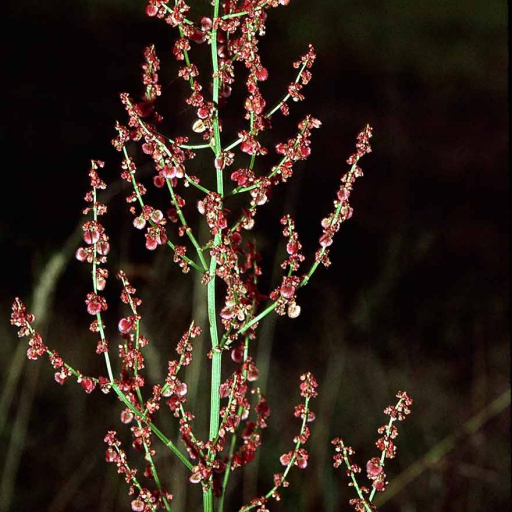
Plant Overview
Often nicknamed the Thyrse-flowered Sorrel, this plant is a tall, slender cousin of the common garden sorrel. While it might look like a simple wild weed to the untrained eye, its architectural flower spikes and arrow-shaped leaves make it a striking inhabitant of meadows and riverbanks across Europe and Asia. It is frequently sought after by foragers for its tart flavor, though it carries a sharp punch that requires moderation.
🔍 How to Identify
- 🍃 Arrow-Shaped Foliage: The leaves are narrow and pointed, featuring distinct lobes at the base that hug the stem, looking much like the fletching of an ancient arrow.
- 🗼 The "Thyrse" Spike: Its most defining feature is the flower cluster; unlike other docks, it is very dense and branched, forming a compact, pyramidal shape known as a "thyrse."
- 🔴 Color Transitions: The tiny, delicate flowers often start as a pale green but transition into a deep, rusty red or copper tone as the seeds begin to mature.
🏡 In Your Garden
- ⛏️ Deep Anchor: It possesses a powerful, persistent taproot. This allows it to thrive in dry, sandy, or disturbed soils where other plants might wither, but it also makes it very difficult to move once established.
- 🌱 Pioneer Spirit: In a garden setting, it behaves as a "pioneer species." It is often the first to colonize bare ground and will spread rapidly via wind-dispersed seeds if the flower heads are not trimmed back after blooming.
⚠️ Safety & Toxicity
- 🧪 Oxalic Acid: The plant contains high levels of oxalic acid, which gives it a sour, lemony taste. While edible in small amounts for humans (similar to spinach), it should be avoided by those with kidney stones.
- 🐾 Pet Warning: It is considered mildly toxic to cats, dogs, and horses if consumed in large quantities. The oxalates can cause digestive upset or, in extreme cases, kidney issues for smaller animals.
✨ Fun Fact
The specific epithet thyrsiflorus is a tribute to ancient Greek mythology. The shape of the flower cluster resembles a "thyrsus"—the giant, fennel-like staff tipped with a pine cone that was carried by Dionysus, the god of wine and revelry!

Detailed Care Instructions
To grow Rumex thyrsiflorus, also known as ornamental rhubarb or buckler-leaved dock, you can follow these steps:
- Choose a suitable location: Select a spot with full to partial sun exposure, depending on your climate. The plant thrives in well-drained soil, but it can tolerate various soil types.
- Prepare the soil: Loosen the soil, remove any weeds or grass, and dig in some organic matter like compost or well-rotted manure to improve the soil's fertility.
- Planting: Sow the Rumex thyrsiflorus seeds directly into the prepared soil, sowing them at a depth of about 1/4 inch (0.6 cm). Alternatively, you can start the seeds indoors in pots and transplant them into the garden after they have developed a few true leaves.
- Watering: Keep the soil consistently moist, but avoid overwatering. Regular watering is particularly important during dry periods or when the plant is establishing its root system.
- Mulching: Apply a layer of organic mulch around the base of the plant to help retain moisture, suppress weeds, and regulate soil temperature.
- Fertilizing: Rumex thyrsiflorus usually doesn't require much fertilization, as it can obtain nutrients from the soil. However, you can provide a light application of balanced organic fertilizer once or twice during the growing season to support its growth.
- Pruning: Remove any dead or damaged leaves regularly to maintain the plant's appearance and encourage new growth.
- Pests and diseases: While generally resistant to pests and diseases, keep an eye out for common issues like aphids or gastropods. Remove insects by hand or treat with organic insecticidal soap if necessary.
- Harvesting: When the plant reaches maturity, you can harvest the leaves as needed for culinary use or ornamental purposes. Harvest older leaves from the outer part of the plant, leaving the inner leaves to continue growing.
By following these steps, you can successfully grow Rumex thyrsiflorus and enjoy its attractive foliage in your garden.

Place in a bright room that is sun drenched almost all day. Or directly in a south-facing window.

To water this plant, it is important to keep the soil evenly moist, but not waterlogged. It is recommended to allow the top inch of soil to dry out before watering again. When watering, use room temperature water and water at the base of the plant, avoiding getting water on the leaves. This plant prefers well-draining soil, so make sure excess water can drain out of the pot or planting area. When in doubt, it is better to underwater than overwater this plant.
To promote healthy growth and fruit production, fertilize this plant with a balanced, slow-release fertilizer in the spring before new growth begins. Apply the fertilizer according to the manufacturer's instructions, and then water thoroughly. Repeat the fertilization process every six weeks during the growing season. Avoid over-fertilizing, as it can lead to excess foliage growth at the expense of fruit production.
The best soil to use for growing this plant is a well-draining soil that is rich in organic matter, such as compost or peat moss. The pH level of the soil should be slightly acidic to neutral, with a range of 6.0 to 7.0. Additionally, the soil should be moist but not waterlogged, as this plant prefers a consistently moist environment. It is recommended to plant this species in a location with partial sun to full shade, and to ensure that the soil is always kept moist through regular watering and the addition of mulch.
- Preparation: Choose a mature plant with healthy leaves and roots. Prepare a clean and sharp knife or scissors.
- Stem cutting: Take a stem cutting from the plant that is at least 4-6 inches long. Cut the stem at an angle, just below a leaf node.
- Remove lower leaves: Strip off any lower leaves or flowers from the cutting. This helps to avoid any water loss.
- Rooting hormone: Dip the cut end of the stem in rooting hormone powder. This stimulates root growth.
- Planting: Plant the stem cutting into a pot filled with moist and well-draining soil. Make sure the soil is not too compacted.
- Placement: Place the pot in a location with bright and indirect sunlight. Avoid direct sunlight as it can damage the cutting.
- Watering: Water the cutting regularly but avoid over-watering. Keep the soil moist but not waterlogged.
- Transplanting: After a few months, the cutting will start to root and grow. Once it has developed a strong root system, it can be transplanted into a larger pot or outside in the ground.
- Maintenance: Continue to care for the propagate plant by watering it regularly, providing sufficient sunlight, and fertilizing when necessary.








