Plant Overview
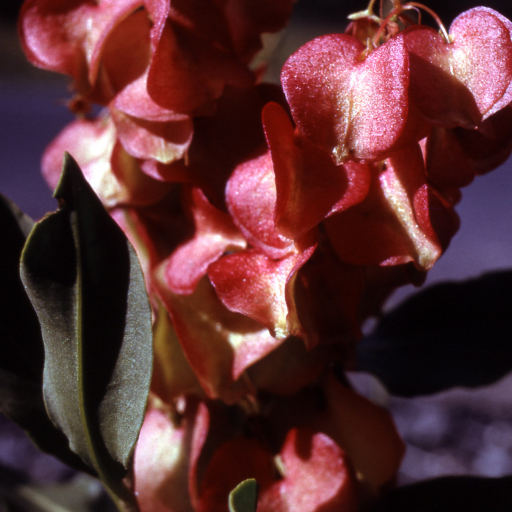
Known as the "Wild Begonia" or "Veiny Dock," Rumex venosus is a striking native of North American sandy plains. Despite its delicate, blossom-like appearance, it is a tough-as-nails pioneer species that transforms dusty roadsides and dunes into vibrant splashes of rose and orange. It is often mistaken for a desert flower, but its true beauty lies in its unique fruit structures.
🔍 How to Identify
- 🌸 Showy "Wings": The most striking feature isn't a petal, but the three papery, heart-shaped bracts (valves) that encase the seed. These turn from pale cream to brilliant shades of pink, red, or deep orange as they mature.
- 🍃 Leathery Foliage: The leaves are thick, smooth, and somewhat bluish-green. They are shaped like long ovals or lances and feel slightly waxy to the touch, which helps the plant retain moisture.
- 🌱 Low Profile: Unlike its taller dock cousins, this plant stays relatively low to the ground, forming dense, sprawling clumps that can span several feet across.
🏡 In Your Garden
- 🏜️ Sand Specialist: This plant thrives in poor, sandy, or disturbed soils where other plants struggle. It’s an excellent choice for "wild" corners of the garden or for stabilizing loose soil and preventing erosion in arid landscapes.
- ⚓ Deep Taproot: It develops a massive, deep taproot that makes it incredibly drought-resistant. However, this "anchor" means it hates being moved; choose its location wisely, as transplanting an established plant is rarely successful.
- 🌬️ Wind Dispersal: Those colorful wings are designed to catch the breeze. Once dry, the seed pods break off and tumble across the ground like miniature sails, allowing the plant to colonize new areas easily.
⚠️ Safety & Toxicity
- 🐾 Oxalate Warning: Like many members of the Dock family, the leaves contain oxalic acid. While the bitter taste usually deters animals, it can be toxic to pets and livestock if consumed in large quantities, potentially leading to kidney issues.
- 🧤 Skin Sensitivity: The sap can be a mild irritant to those with sensitive skin. It is best to wear gloves if you are weeding or pruning large patches of Veiny Dock.
✨ Fun Fact
Indigenous peoples across the Great Plains once used the deep red roots of the Veiny Dock to create permanent yellow, bronze, or red dyes for coloring animal hides and woven baskets.

Detailed Care Instructions
To grow Rumex Venosus (Veined Dock) plants, you can follow these steps:
- Obtain seeds: Purchase Rumex Venosus seeds from a reputable nursery or online seed supplier. Make sure to choose viable, fresh seeds.
- Choose the planting location: Veined Dock plants prefer full sun to partial shade. Select a location in your garden that receives at least 6-8 hours of sunlight per day.
- Prepare the soil: Veined Dock plants prefer moist, well-draining soil. Prepare the soil by removing any weeds or rocks and improve drainage if necessary. You can incorporate organic matter like compost or well-rotted manure to enrich the soil.
- Sow the seeds: Spring or early fall is the best time to sow Veined Dock seeds. Sow the seeds about 1/4 inch deep in the prepared soil. Space the seeds at least 6-12 inches apart to provide enough room for the plants to grow.
- Water the seeds: After sowing the seeds, water the area gently to keep the soil consistently moist. Avoid overwatering, as it can lead to rotting of the seeds. Water regularly to ensure the soil remains moist, especially during dry spells.
- Maintain moisture: Veined Dock plants prefer consistently moist soil, so make sure to water them regularly. However, ensure the soil has good drainage to prevent waterlogging.
- Weed control: Remove any weeds that compete with the Veined Dock plants for nutrients and water. Regularly inspect the area and manually remove any weeds that appear.
- Fertilization: Although not typically necessary for Veined Dock plants, you can apply a balanced, slow-release fertilizer according to the package instructions if you notice poor growth or nutrient deficiencies.
- Pest and disease control: Veined Dock plants are generally resistant to pests and diseases. However, keep an eye out for common garden pests like aphids or snails. If necessary, control them using organic or chemical measures.
- Harvesting: Wait until the plants reach maturity (usually around 60-90 days) to harvest the leaves. You can harvest the leaves as needed while making sure to leave some behind to allow the plants to regenerate.
Follow these steps, and with proper care, you can successfully grow Rumex Venosus plants in your garden.

Place in a bright room that is sun drenched almost all day. Or directly in a south-facing window.

To successfully water this particular plant, it is important to keep in mind a few specific care instructions. Firstly, this plant prefers to have consistently moist soil but be careful not to overwater it as this can lead to root rot. It is best to allow the top layer of soil to dry out a bit between waterings to ensure that the roots have a chance to breathe. Additionally, avoid getting water on the leaves as this can cause damage or disease. It is recommended to water at the base of the plant using a watering can or drip irrigation system. Observation is key and it is important to adjust watering frequency based on the plant's response.
To fertilize this plant, apply a balanced fertilizer with equal amounts of nitrogen, phosphorus, and potassium. Apply the fertilizer in early spring when new growth begins. Make sure to follow the manufacturer's instructions for application rates and methods. Do not over-fertilize as this can damage the plant. Water the plant thoroughly after fertilizing.
Rumex venosus is a plant that requires a specific type of soil to thrive. It grows best in a soil that is rich in organic matter and is well-draining. This type of soil can be achieved by mixing compost or well-rotted manure into the soil before planting. The pH level of the soil should be between 6.0 and 7.0 for optimal growth. Additionally, this plant prefers moist soil that is not overly wet or dry. It's important to monitor the soil's moisture level and adjust watering appropriately. Overall, a high-quality soil with good drainage, organic matter, and appropriate pH level is essential for growing Rumex venosus successfully.
Propagation of this plant can be done quite easily by taking cuttings from a mature plant. Select a healthy stem and cut it at an angle to create about a 6-inch cutting. Remove any leaves from the bottom 2 inches of the stem. Fill a small pot with potting soil and make a hole in the center just large enough to accommodate the cutting. Place the cutting into the hole and gently pack the soil around it. Water the cutting thoroughly and place it in a warm, bright location with indirect sunlight. Keep the soil moist but not waterlogged. In a few weeks, new growth should appear, indicating that the cutting has taken root. At this point, the plant can be moved to a larger pot or transplanted to the garden.








