Plant Overview
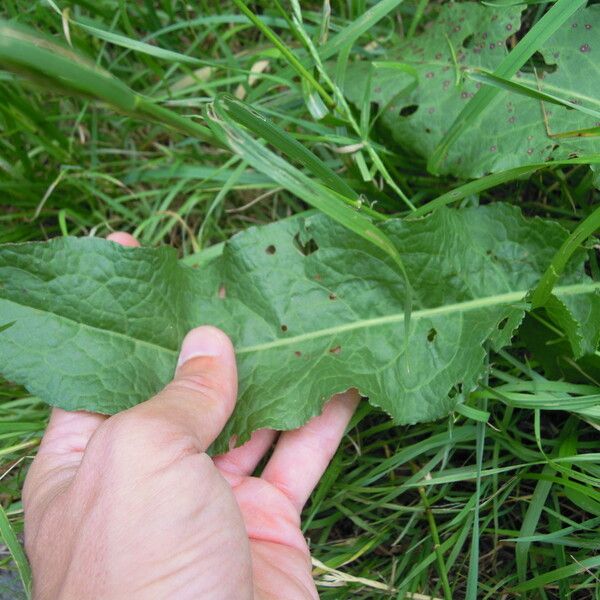
Often called the Meadow Dock, this plant is the botanical equivalent of a "nature's mashup." As a natural hybrid between the Curled Dock (Rumex crispus) and the Broad-leaved Dock (Rumex obtusifolius), it blends the traits of two of the most common weeds in the world. It is a resilient, opportunistic survivor often found lurking at the edges of pastures and disturbed roadsides where its parent species meet.
🔍 How to Identify
- 🍃 Hybrid Leaves: The leaves are a perfect middle ground; they are narrower than the Broad-leaved Dock but lack the extreme "crinkled" waves of the Curled Dock.
- 🌾 Tall Flower Spikes: It produces towering, greenish-brown flower stalks that turn a deep, rusty chocolate brown as the seeds mature in late summer.
- 🧬 Seed Valves: If you look closely at the seeds (valves), they usually feature small, irregular teeth—a tell-tale sign of its mixed heritage inherited from the Broad-leaved side.
🏡 In Your Garden
- 🌱 The Stubborn Taproot: Like its parents, Meadow Dock anchors itself with a massive, fleshy taproot. If you try to pull it out, you must get the whole root; even a small fragment left behind can regenerate a brand-new plant.
- 🚜 Indicator Plant: This hybrid loves heavy, damp, and slightly compacted soils. If it is thriving in your garden, it’s a sign that your soil might be holding too much water or suffering from high nitrogen levels.
⚠️ Safety & Toxicity
- 🚫 Caution: While some docks are used in traditional foraging, the Meadow Dock is high in oxalic acid.
- 🐾 Pet & Livestock Risk: If consumed in large quantities, it can be toxic to cattle, horses, and small pets, potentially leading to kidney stress or digestive upset. The leaves can also cause mild skin irritation for those with sensitive skin.
✨ Fun Fact
Meadow Dock is a prime example of "Hybrid Vigor." Because it combines the genetic strengths of two different species, it is often more robust and faster-growing than either of its parents, allowing it to colonize new territory with ease!

Detailed Care Instructions
To grow a Rumex X Pratensis plant, also known as golden dock or meadow sorrel, follow these steps:
- Choose a suitable location: Select a spot in your garden that receives full to partial sunlight. The soil should be well-draining and slightly acidic.
- Prepare the soil: Loosen the soil using a garden fork or tiller. Remove any weeds or debris and break up large clumps. You can amend the soil with organic matter like compost or well-rotted manure to improve its nutrient content and drainage.
- Sow the seeds: Rumex X Pratensis can be propagated from seeds. Sow the seeds directly into the prepared soil, following the recommended planting depth indicated on the seed packet. Space the seeds about 12 inches apart to allow sufficient room for growth.
- Watering: After sowing the seeds, water the area thoroughly to ensure that the soil is evenly moist. Once the plants start to grow, water them regularly to keep the soil consistently moist, but avoid overwatering, as it can lead to root rot.
- Fertilize: Apply a balanced all-purpose fertilizer or a slow-release organic fertilizer according to package instructions. This will provide the necessary nutrients for optimal growth. Repeat the application every 4-6 weeks during the growing season.
- Weed control: Regularly check for any weeds growing near the Rumex X Pratensis plants and remove them promptly to prevent competition for nutrients and moisture.
- Mulching: Apply a layer of organic mulch such as straw or wood chips around the plants to help conserve soil moisture and suppress weed growth. Keep the mulch a few inches away from the plant stems to prevent moisture-related issues.
- Maintenance: Prune or cut back the plants occasionally to promote bushier growth and prevent them from becoming leggy. Deadhead any flowers to prevent self-seeding and to encourage prolonged blooming.
- Pests and diseases: Fortunately, Rumex X Pratensis is relatively resistant to pests and diseases. However, keeping the plants adequately spaced and preventing overcrowding can help minimize the risk of issues.
- Winter care: In colder regions, the plant may die back in winter. Apply a layer of mulch over the crown of the plants to provide protection from freezing temperatures. In spring, remove the mulch and new growth should emerge.
Remember to research and adhere to any specific instructions or guidelines for the Rumex X Pratensis variety you are planting, as some cultivars may have specific requirements or nuances in their care.

Place in a bright room that is sun drenched almost all day. Or directly in a south-facing window.

To water this plant, make sure the soil is dry to the touch before watering. Place a watering can or hose at the base of the plant and water slowly until the soil is moist. Avoid getting water on the leaves to prevent fungal growth. Water once a week or as needed, especially during hot, dry weather. It is important not to overwater the plant as this can lead to root rot. Observe the plant regularly to ensure it is receiving enough water.
To fertilize this plant, apply a balanced, all-purpose fertilizer containing nitrogen, phosphorus, and potassium according to the package instructions. It is recommended to start fertilizing in early spring when the plant begins to come out of dormancy and continue fertilization once every four to six weeks throughout the growing season. Be cautious not to apply too much fertilizer as this plant is sensitive to over-fertilization. Water the plant well after fertilizing to prevent fertilizer burn.
The Rumex X Pratensis plant thrives best in a well-draining soil mix with a pH level around 6-7. It requires fertile soil, rich in necessary nutrients such as nitrogen, phosphorus, and potassium. The soil type should be loamy or sandy with good water retention capacity. The plant prefers slightly moist soil, not too wet or too dry, and a well-draining pot is crucial for healthy growth. Organic matter such as compost or aged manure can be added to the soil mix to improve its fertility. It is recommended to perform a soil test to determine the nutrient content of the soil and adjust it accordingly for optimal growth.
To propagate this plant, take stem cuttings from a mature plant and remove any leaves from the bottom one-third of the cutting. Dip the cut end of the stem into rooting hormone and plant in well-draining soil. Water the cutting thoroughly and cover with a clear plastic bag to create a humid environment. Keep the cutting in a bright, indirect light and mist the plant daily. After roots have formed, remove the plastic bag and transplant the cutting to a larger container or outside in the garden.








