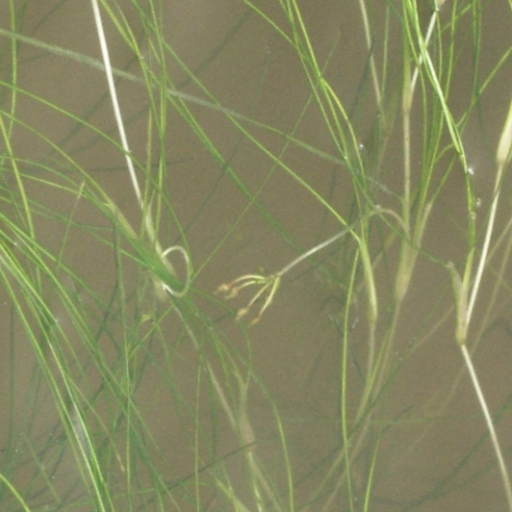
Plant Overview
Often called "Widgeon Grass" or "Sea Tassel," Ruppia maritima is a resilient wanderer of the world’s coastlines. Unlike many picky aquatic plants, it is a master of adaptation, thriving in the salty, shifting waters of estuaries, lagoons, and salt marshes where others would wither. It serves as a bustling underwater "nursery" and a favorite high-energy snack for migratory ducks.
🔍 How to Identify
- 🌿 Thread-like Leaves: The leaves are incredibly narrow and pointed, resembling delicate green threads waving in the current. They typically grow up to 4 inches long.
- 🌊 Spiral Peduncles: One of its most distinct features is the long, thin flower stalk (peduncle) that often coils like a spring or a "tassel" as it reaches for the water's surface.
- 🎋 Zig-Zag Stems: The stems are slender and frequently branch out in a distinct zig-zag pattern, creating a dense, tangled underwater thicket.
🌊 Habitat & Ecology
- 🦢 The Waterfowl Buffet: If you find this in a coastal pond, expect company. Ducks, particularly the Widgeon (its namesake), rely heavily on its seeds and foliage for energy during long migrations.
- 🦀 Coastal Nursery: In the wild, it acts as a vital "safe house" for juvenile shrimp, blue crabs, and small fish, providing a complex structural hiding spot from larger predators.
- 🧂 Salinity Survivor: This plant is famous for its ability to survive in everything from nearly fresh water to hypersaline lagoons, making it a pioneer species in unstable environments.
⚠️ Safety & Toxicity
- ✅ Safe Status: Ruppia maritima is considered non-toxic to humans, dogs, and cats.
- 🌾 Ecosystem Health: While safe to touch, it is a sensitive indicator of water quality. Large die-offs usually signal high levels of nutrient pollution or murky water that blocks necessary sunlight.
✨ Fun Fact
- ⛵ The Floating Fleet: To pollinate, the plant releases its pollen directly onto the water's surface. The pollen grains are shaped like tiny bananas, allowing them to float like rafts until they collide with a floating female flower.

Detailed Care Instructions
To grow Ruppia Maritima (commonly known as widgeon grass or ditch-grass), follow these steps:
- Select the Right Location: Ruppia Maritima prefers to grow in brackish or saltwater environments such as bays, estuaries, or coastal areas. Ensure that the location has adequate sunlight.
- Preparation: If you plan to grow Ruppia Maritima in a container, choose a wide container with a mix of soil and sand (2:1 ratio). If growing in a natural environment, ensure there is a suitable area available for planting.
- Planting Seeds: Ruppia Maritima can be propagated from seeds. Spread the seeds directly over the soil and gently press them into the ground to anchor them. Spread a thin layer of sand over the seeds to protect them.
- Watering: Ensure that the seeds are kept moist until germination occurs. If growing in a container, keep the water level low to mimic the brackish environment. Once the plants start growing, they can be watered with brackish or saltwater. It is essential to maintain the appropriate salinity level.
- Maintenance: Gently mix the water occasionally to prevent stagnation and promote oxygenation. Remove any algae or debris that may accumulate near the plants. Monitor salinity levels regularly and adjust as needed.
- Growth: Ruppia Maritima typically grows during the late spring and summer months. It may take several weeks for the plants to reach a reasonable size. They usually spread through runners below the water surface known as rhizomes.
- Harvesting: Allow the Ruppia Maritima plants to grow and establish before harvesting any of them. Take care not to remove all the plants, as some need to remain for propagation and to maintain a healthy ecosystem.
Note: Growing Ruppia Maritima may require specific permits or legal authorization, depending on your location. Make sure to confirm with relevant authorities before planting this species.

Place in a bright room that is sun drenched almost all day. Or directly in a south-facing window.

To water this aquatic plant, it is important to keep the soil consistently moist, but not waterlogged. This can be achieved by watering regularly with a gentle stream of water and checking the soil frequently to ensure it does not dry out. It is also important to avoid overwatering, as this can cause the roots to rot. The plant should be watered from the base, rather than from above, to avoid getting water on the leaves and stems. Additionally, the water used to irrigate the plant should be free of chemicals and pollutants, as this can harm the delicate ecosystem of the aquatic environment.
The plant should be fertilized with a balanced fertilizer that contains equal amounts of nitrogen, phosphorous, and potassium. Fertilize the plant every 4-6 weeks during the growing season, using a water-soluble fertilizer. Dilute the fertilizer according to the manufacturer's instructions and apply it to the soil around the base of the plant. Be careful not to over-fertilize, as this can lead to excessive growth and poor plant health. It is also important to keep the plant moist but not waterlogged, as Ruppia Maritima prefers well-draining soil.
Ruppia Maritima thrives in a soil that is rich in nutrients and has good drainage. The soil should be slightly alkaline, with a pH of around 7.5. It should be sandy or gravelly, with a high concentration of organic matter. The plant requires a lot of sunlight, so it should be planted in a spot that gets at least six hours of direct sunshine per day. The soil should stay moist, but not waterlogged, so irrigation is important. A layer of organic mulch can help to retain moisture and prevent the soil from drying out too quickly.
There are several ways to propagate this plant. One method is by collecting seeds from mature plants and directly sowing them in a suitable growing medium. Another way is to divide the parent plant into smaller parts, ensuring that each division has enough roots and foliage to establish itself as a new plant. It can also be propagated from cuttings taken from the parent plant and planted in moist soil or water until new roots and foliage emerge. Regardless of the method used, it is important to keep the new plants well-watered and in a suitable environment to ensure their healthy growth.








