Plant Overview
Often called the "Spineless Butcher’s Broom" or "Horse Tongue Lily," Ruscus hypophyllum is one of nature’s most delightful optical illusions. Native to the Mediterranean and North Africa, it looks like a typical leafy shrub until you notice tiny flowers sprouting directly from the center of its "leaves." This architectural evergreen is a favorite for florists and shade gardeners who need a plant that is virtually indestructible.
🔍 How to Identify
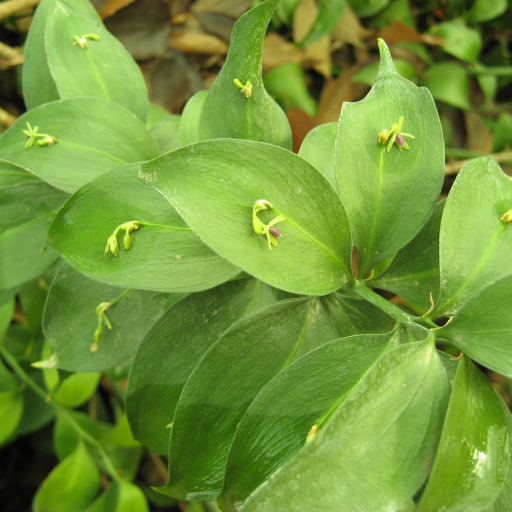
- 🍃 Cladodes (Modified Stems): What look like leaves are actually flattened, leaf-like stems called cladodes. They are glossy, leathery, and dark green, lacking the sharp spines found on its cousin, the common Butcher's Broom.
- 🌸 Mid-Leaf Blooms: In a strange botanical twist, tiny white or pale-green flowers emerge from the center of the "leaf" surface.
- 🍒 Red Berries: After flowering, female plants produce round, bright red berries that sit elegantly in the middle of the green stems, looking almost like they were glued there by hand.
🏡 In Your Garden
- 🌑 The Shade Solution: This plant is a champion of the "dry shade" niche. It thrives in dark corners under tree canopies or in north-facing garden spots where most other plants would wither and fade.
- ✂️ Floral Longevity: Because the "leaves" are actually hardy stems, they stay green and fresh for weeks—or even months—in a vase. It is highly prized in floral arrangements for its structural beauty and legendary shelf life.
- 🌱 Slow and Steady: It grows via underground rhizomes. While it isn't invasive, it is "patient," taking its time to form a lush, thick carpet of green that requires very little maintenance once established.
⚠️ Safety & Toxicity
- 🚫 Status: Low to Moderate Toxicity.
- 🐾 Details: The berries contain saponins, which can cause stomach upset, drooling, or vomiting if ingested by pets or curious children. While the foliage is generally safe to touch, it's best kept as an ornamental rather than a snack.
✨ Fun Fact
The name "Butcher’s Broom" comes from the historical use of a related species (Ruscus aculeatus). Because the stems are stiff and contain natural antibacterial oils, butchers would bundle them together to scrub and sanitize their wooden cutting blocks!

Detailed Care Instructions
| Soil Ph | 7-9 |
| Lighting | Full Sun |
| Soil Type | Well-Drained, Slightly Acidic |
| Bloom Time | Late Winter To Early Spring |
| Plant Type | Evergreen |
| Mature Size | About 18 In. In Height |
| Native Area | Iberia And Northwest Africa |
| Sun Exposure | Partial To Full Shade |
| Hardiness Zones | 6-9 |
To grow Ruscus Hypophyllum plant, also known as the Butcher's Broom or Mouse Thorn, you can follow these steps:
- Obtain a plant: Look for a healthy Ruscus Hypophyllum plant from a nursery or online plant store. Alternatively, you can propagate it from a cutting, but this requires more skill and time.
- Choose a suitable location: Ruscus Hypophyllum prefers partial shade to full shade conditions, making it an ideal plant for areas with less direct sunlight. Ensure the chosen area has well-draining soil.
- Prepare the soil: Ruscus Hypophyllum prefers slightly acidic to neutral soil. If your soil is too alkaline, consider adding sulfur or organic matter like compost to increase acidity levels. Well-draining soil is crucial to prevent waterlogging, which can harm the plant.
- Planting: Dig a hole in the prepared soil that is slightly wider and deeper than the root ball of the Ruscus Hypophyllum plant. Place the plant in the hole and fill it with soil, gently pressing it down to remove any air pockets. Water thoroughly after planting.
- Watering: Ruscus Hypophyllum prefers to be kept consistently moist, but not overly wet. Water the plant regularly, ensuring the top inch of soil remains moist. However, do not let the plant sit in waterlogged soil, as it can cause root rot.
- Fertilizing: Apply a balanced, slow-release fertilizer during the spring and summer months to provide essential nutrients to the plant. Follow the instructions on the fertilizer package for proper application.
- Pruning: Ruscus Hypophyllum does not require significant pruning, but you can trim it to shape if desired. Remove any dead or damaged foliage to maintain plant health.
- Pests and diseases: Ruscus Hypophyllum is generally resistant to most pests and diseases. However, be watchful for common problems like spider mites, scale insects, or fungal diseases. Treat any issues promptly as needed.
- Mulching: Apply a layer of organic mulch, such as wood chips or compost, around the base of the plant. Mulching helps to retain soil moisture, suppress weeds, and provide additional nutrients as it breaks down over time.
- Winter care: Ruscus Hypophyllum is a hardy plant and can tolerate frost. However, if you live in an area with harsh winters, consider protecting the plant with a layer of mulch or a frost cloth to shield it from extreme cold temperatures.
Remember to regularly monitor the plant's growth, water it appropriately, and provide it with the necessary care to ensure its health and vitality.

Place in a window with dappled sun or a spot in the middle of a room. Or directly in a window facing west or east.

To water this plant, make sure to give it a deep and thorough watering once every week or two. Allow the soil to dry out slightly in between waterings to prevent overwatering and root rot. Use room temperature water and water the soil directly, avoiding getting water on the leaves. Additionally, it's important to ensure adequate drainage by using a well-draining soil mix and pot with drainage holes.
To fertilize this plant, apply a balanced fertilizer with equal amounts of nitrogen, phosphorus, and potassium every four to six weeks during the growing season. Dilute the fertilizer in water to half the recommended strength and apply it to the soil around the plant. Avoid applying fertilizer directly to the leaves or stem. Water the plant thoroughly after fertilizing to ensure the nutrients reach the roots.
To successfully grow Ruscus Hypophyllum, it is important to use a well-draining soil mixture. The ideal soil pH for this plant should be between 6.0 and 7.0, allowing for optimum nutrient absorption. The soil needs to have good aeration and should not become compacted, as this can hinder root development. A mixture of perlite, sand, peat moss, and loam can be used to create a well-draining soil that can provide the necessary nutrients for the plant. It is also important to avoid overwatering the plant, as this can lead to root rot.
There are a few ways to propagate this plant species. One method is by taking stem cuttings from a mature plant. Cut a healthy stem at a 45-degree angle just below a leaf node. Remove the bottom leaves from the cutting and dip the cut end into rooting hormone. Plant the cutting in a pot filled with well-draining soil and keep it moist but not waterlogged. Place the pot in a bright place with indirect sunlight and wait for roots to grow.
Another method is to divide a mature plant. Carefully dig up the plant and separate the root system into smaller sections. Replant each section in a new pot with fresh soil and water well.
It is also possible to propagate this species by seed, but it can be more complicated and require more knowledge and attention to grow successfully.
Common pests of the spineless butcher's-broom include Scale insect, mealybugs. Make a habit of checking your spineless butcher's-broom frequently for pests so that any infestations can be caught and managed early.








