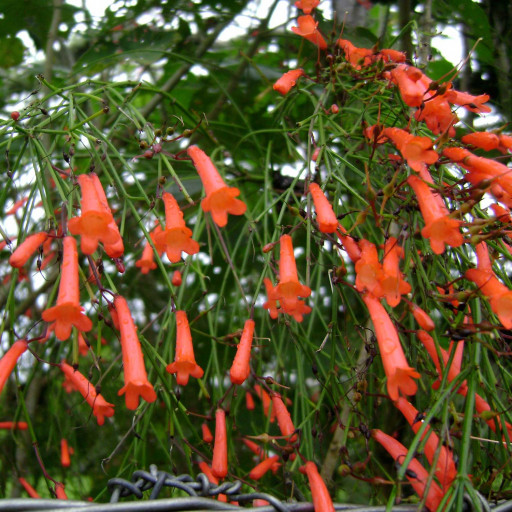
Plant Overview
Known as the "Firecracker Plant" or "Fountain Bush," this Mexican native looks like a botanical firework frozen in mid-explosion. Its cascading, wiry stems spill over like water from a fountain, adorned with hundreds of scarlet-red tubular blooms. It is a favorite for gardeners looking to add high-energy color and a touch of wild, weeping elegance to their outdoor spaces.
🔍 How to Identify
- 🌿 The Stems: Long, slender, and bright green, these rush-like stems arch gracefully and can reach up to 5 feet in length, giving the plant a soft, airy texture.
- 🍃 The Foliage: The leaves are so small they are often reduced to tiny, inconspicuous scales, which helps the plant conserve moisture in sunny environments.
- 🧨 The Flowers: Dozens of 1-inch long, tubular flowers in vibrant red or coral hang in pendulous clusters, resembling miniature firecrackers or thin cigars.
🏡 In Your Garden
- 💧 Well-Draining Needs: While it is incredibly hardy, it despises "wet feet." It is essential to plant it in sandy or well-aerated soil to prevent root rot, especially if you live in a rainy climate.
- ☀️ Sun Chaser: To get the most "explosive" blooming performance, place it in full sun. While it can survive in partial shade, the stems will become leggy and the flower production will drop significantly.
- 🧺 Versatile Growth: Because of its weeping habit, it is an elite choice for the tops of retaining walls, hanging baskets, or large elevated containers where the stems can drape naturally toward the ground.
⚠️ Safety & Toxicity
- ✅ Pet Friendly: Russelia equisetiformis is generally considered non-toxic to humans, cats, and dogs, making it a safe choice for family-friendly landscapes.
- 🧤 Pruning Note: While the plant isn't poisonous, the dense, wiry stems can be slightly abrasive. Wearing gloves during seasonal pruning is a good idea to avoid minor skin irritation from the friction.
✨ Fun Fact
The Firecracker Plant is a master of "specialized pollination." Because of the deep, tubular shape of the flowers, only creatures with long tongues or beaks—specifically hummingbirds and certain large butterflies—can reach the nectar hidden deep inside!

Detailed Care Instructions
To grow Russelia Equisetiformis, commonly known as firecracker plant or coral fountain, you can follow these steps:
- Location: Choose a sunny spot in your garden or a location that receives at least 6-8 hours of sunlight per day. Russelia Equisetiformis thrives in full sun but can tolerate partial shade.
- Soil: Ensure well-draining soil, as waterlogged soil can lead to root rot. If your soil doesn't drain well, consider adding some perlite or sand to improve drainage.
- Planting: Dig a hole twice the size of the plant's root ball. Place the plant in the hole and backfill it with soil, gently firming it around the roots. Leave enough space between plants as they can spread out up to 4-5 feet.
- Watering: Water the newly planted Russelia Equisetiformis thoroughly to settle the soil, but avoid overwatering. Once established, water regularly to keep the soil moist but not waterlogged. Reduce watering during winter or in periods of extreme rainfall.
- Fertilizer: Apply a balanced slow-release fertilizer during the growing season, typically in spring. Follow the instructions on the fertilizer package for dosage and application.
- Pruning: Russelia Equisetiformis benefits from regular pruning to maintain its shape and promote bushiness. It is best to prune in late winter or early spring before new growth starts. Just trim back any dead or damaged branches and shape the plant as desired.
- Winter care: In frost-prone areas, Russelia Equisetiformis is considered a tender perennial. If you experience freezing temperatures, provide insulation with mulch or cover the plant with a frost cloth to protect it during winter.
- Propagation: You can propagate Russelia Equisetiformis through stem cuttings. Take 4-6 inch long cuttings from new growth, dip the cut ends in rooting hormone, and plant them in a well-draining potting mix. Keep the soil moist and place the cuttings in a warm, bright location. Roots should develop in a few weeks.
With regular care and maintenance, Russelia Equisetiformis can grow into a beautiful, vibrant plant that attracts hummingbirds and butterflies to your garden.

Place in a window with dappled sun or a spot in the middle of a room. Or directly in a window facing west or east.

To properly water this plant, you should first consider the soil moisture level. It is important to allow the top inch of soil to dry out before watering again. When you do water, make sure to thoroughly saturate the soil. You may need to water more frequently in hotter or drier conditions. It is also important to avoid getting water on the foliage as this can cause leaf spots or fungal diseases. Instead, direct the water towards the soil at the base of the plant.
- Begin fertilizing the plant in the spring once new growth starts to appear.
- Use a balanced fertilizer with an equal N-P-K ratio (such as a 10-10-10).
- Dilute the fertilizer to half strength according to the package instructions.
- Apply the fertilizer directly to the soil around the base of the plant, making sure to cover the entire root zone.
- Water the plant thoroughly after fertilizing to help distribute the nutrients evenly.
- Repeat fertilizing every four to six weeks during the growing season (spring and summer).
- Stop fertilizing in the fall and winter months when the plant goes dormant.
The best soil to use for this particular plant is a well-draining soil that is comprised of a mixture of organic and inorganic materials. The soil should have good water retention capabilities while also allowing for adequate air circulation around the roots. A mixture of peat moss and sand would be appropriate to provide a suitable medium for root development. Soil pH should be between 6.0 to 7.5 for optimal growth. Additionally, a layer of mulch on top of the soil can help to maintain moisture and insulate the roots during cooler temperatures.
To propagate this plant, you will need to take stem cuttings from a healthy parent plant. Choose a stem that is about 4-5 inches long and has several leaves on it. Using a sharp, sterilized pruning shears, make a clean cut at a 45-degree angle just below a leaf node.
Remove any leaves or flowers from the bottom 2 inches of the cutting. Dip the cut end of the stem into a rooting hormone powder, tapping off any excess. Plant the cutting in a pot filled with damp, well-draining potting soil. Firm the soil around the cutting and water well.
To encourage rooting, place the pot in a warm, bright spot but out of direct sunlight. Cover the pot with a clear plastic bag to create a mini greenhouse and to keep the soil moist. After a few weeks, check for roots by gently tugging on the cutting. If it resists, then roots have started to grow.
Once the roots have developed, remove the plastic covering and gradually expose the plant to more sunlight. When the new plant has grown enough to fill the pot, it can be transplanted into a larger container or placed outdoors in a well-draining soil.
Common pests of the firecracker plant include Scale insect, mealybugs, spider mites. Make a habit of checking your firecracker plant frequently for pests so that any infestations can be caught and managed early.








