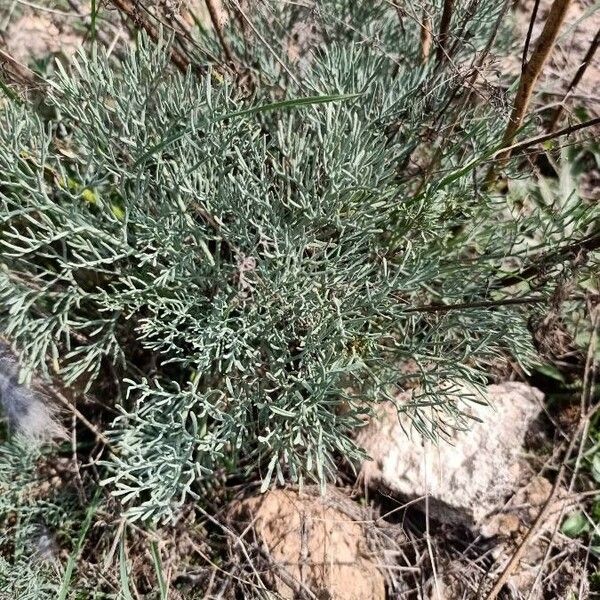
Plant Overview
Mountain Rue is a rugged, sun-drenched survivor of the Mediterranean hillsides. Often called the "Herb of Grace," this aromatic sub-shrub is legendary for its pungent scent and its role in ancient folklore as a protective charm against misfortune. While it looks delicate with its lacy, blue-tinted foliage, it is a tough-as-nails plant built for rocky terrains and intense heat.
🔍 How to Identify
- 🌿 The Foliage: The leaves are fine, deeply divided, and lace-like. They have a distinct glaucous (waxy blue-grey) coating that helps the plant conserve moisture in the heat.
- 🟡 The Flowers: It produces clusters of bright lemon-yellow blossoms at the stem tips. Look closely, and you’ll see four fringed petals surrounding a prominent green center.
- 👃 The Scent: If you brush against the plant, it releases a powerful, bitter, and almost medicinal aroma that is unmistakable and can linger for hours.
🏡 In Your Garden
- ⛰️ Soil & Resilience: This plant thrives in poor, stony, or sandy soil where most other plants would wither. It has evolved a deep taproot to find water in mountain crevices, making it exceptionally drought-tolerant.
- ☀️ Sun Worshiper: It craves intense, direct sunlight. In a garden setting, it needs the brightest spot available; otherwise, it will become "leggy" and lose its compact, silvery charm.
- ✂️ Pruning Strategy: It responds well to a light trim in early spring to keep it bushy, but be careful—the woody base does not sprout well if cut back too harshly into old wood.
⚠️ Safety & Toxicity
- 🚫 Status: High Skin Irritant & Toxic.
- ☀️ Phototoxicity: The plant contains furanocoumarins. If the sap gets on your skin and is then exposed to sunlight, it can cause severe blistering and "phytophotodermatitis." Always wear gloves and long sleeves when handling it.
- 🐾 Pets & Kids: It is highly toxic if ingested by humans, cats, or dogs. It should be planted in areas where it won't be accidentally brushed against or nibbled.
✨ Fun Fact
Historically, Rue was known as the "Herb of Vision." Renowned artists like Michelangelo and Leonardo da Vinci reportedly consumed small amounts of the bitter leaves because they believed it sharpened their eyesight and boosted their creative "inner vision."

Detailed Care Instructions
| Humidity | Normal |
| Lighting | Shade |
| Toxicity | Poisonous |
| Difficulty | Medium |
| Hardiness Zones | Max 7 |
Growing Ruta Montana (also known as the mountain rue or Algerian rue) requires specific conditions to ensure optimal growth. Here are some steps you can follow to successfully grow this plant:
- Climate: Ruta Montana thrives in subtropical and Mediterranean climates. It prefers full sun but can tolerate partial shade.
- Soil: The plant prefers well-draining soil with a slightly acidic to neutral pH (around 6.5-7.5). Amend heavy soils with organic matter like compost or sand to improve drainage.
- Planting: Start by acquiring seeds or young plants from a reputable nursery or garden center. The best time to plant Ruta Montana is during the spring or autumn when temperatures are moderate.
- Location: Choose a location with direct sunlight and protection from strong winds. Ruta Montana requires good air circulation to prevent diseases.
- Watering: Water the plant regularly but avoid over-watering, as this can lead to root rot. Allow the soil to dry between watering. Once established, the plant is relatively drought-tolerant.
- Fertilization: Apply a balanced fertilizer once or twice a year during the growing season (spring and summer). Follow the instructions on the fertilizer packaging for proper application rates.
- Pruning: To encourage bushier growth, prune the plant in the spring before new growth appears. Remove any dead or damaged branches and shape the plant as desired.
- Pests and diseases: Ruta Montana is generally resistant to pests and diseases. However, it may be susceptible to aphids, snails, or powdery mildew. Monitor the plant regularly and take appropriate measures if necessary, such as using organic pest control or removing affected leaves.
- Overwintering: In colder climates, consider moving potted Ruta Montana indoors during winter, as it is sensitive to frost. In the ground, apply a layer of mulch around the base of the plant to protect the roots.
Remember that Ruta Montana contains toxic compounds, so handle it with care and keep it away from children and pets.

Place in a bright room that is sun drenched almost all day. Or directly in a south-facing window.

To water this plant, it is important to ensure that the soil is moist but not waterlogged. It is recommended to water the plant deeply once or twice a week, allowing the soil to dry slightly in between waterings. When watering, avoid getting water on the leaves and focus on directing the water towards the soil. If the air is particularly dry, misting the plant with water can help to increase humidity around the plant. During the winter months, it is important to reduce watering as the plant goes into a dormant period.
To fertilize this plant, use a balanced fertilizer with equal parts nitrogen, phosphorus, and potassium. Apply the fertilizer to the soil in the spring, after the last frost, and then again in the middle of summer. Be careful not to over-fertilize, as this can lead to burnt foliage and weak growth. Always follow the manufacturer's instructions for application rates and frequency.
For Ruta Montana plant, it is recommended to use a well-draining soil mix that is slightly acidic. The soil should also be enriched with organic matter and should have a pH range of 5.5-6.5. Additionally, Ruta Montana plants thrive best in soils that are loamy and have good water retention capabilities. The use of a potting mix that contains a blend of sand, perlite, and peat moss can also be beneficial. It is important to avoid using heavy soils that can lead to waterlogging and root rot. Additionally, the soil should be kept moist but not waterlogged, and ample drainage holes are recommended to avoid waterlogging.
Propagation of the plant usually involves taking stem cuttings from the parent plant. Choose healthy stems that have at least 2-3 nodes, and make a clean cut just below the node using a sharp, sterile blade. Remove any leaves from the lower portion of the cutting, leaving only 1-2 leaves on the top. Dip the cut end in rooting hormone powder and place it in a well-draining potting mix. Keep the soil moist and provide indirect light to encourage root growth. Once the cutting has rooted, it can be transferred to a larger pot or planted in the ground.








