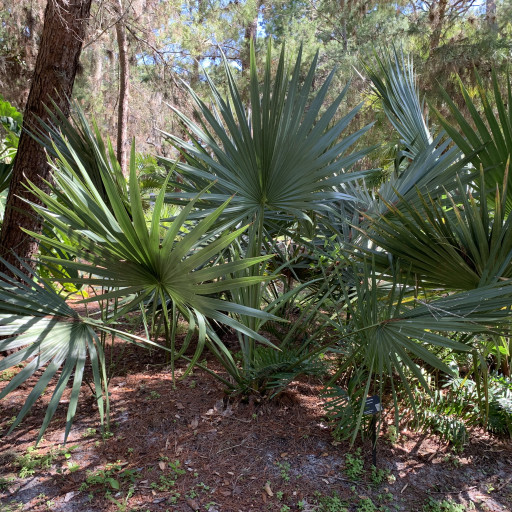
Plant Overview
Often called the Dwarf Palmetto or "Little Blue Palmetto," this rugged evergreen is the "tough-as-nails" survivor of the palm family. Unlike its towering cousins, it stays close to the earth, forming a lush, architectural mound that feels both prehistoric and tropical. It is a staple of the American Southeast, often found thriving in places where other palms would shiver.
🔍 How to Identify
- 🌿 Leaf Shape: Large, fan-shaped fronds (palmate) that spread out like oversized, emerald-green hands.
- 📏 The Central Split: Each leaf features a distinct split or "V" in the center midrib, which gives the fronds a slightly folded, three-dimensional look.
- 🪵 The Hidden Trunk: In most cases, the trunk grows entirely underground; the leaves appear to sprout directly from the soil, rarely reaching more than 5–7 feet in height.
- 🍇 Fruit Spikes: In summer, it sends up long, upright stalks covered in tiny white flowers, which eventually turn into small, shiny black berries.
🏡 In Your Garden
- 💧 The Moisture Paradox: While it naturally thrives in soggy swamps and bottomlands, it is surprisingly drought-tolerant once established. It’s the perfect solution for that "difficult" spot in the yard that stays wet after rain.
- ❄️ Ice & Snow: This is one of the most cold-hardy palms in existence. It can survive temperatures dropping toward 0°F (-18°C), making it a favorite for gardeners in temperate climates who want a tropical "vibe" without the winter worry.
- 🐢 Patience is Key: It is a notoriously slow grower. Because it puts so much energy into its deep, sensitive root system, it hates being transplanted. Choose its "forever home" carefully, as it won't forgive a move.
⚠️ Safety & Toxicity
- ✅ Safe for All: The Dwarf Palmetto is non-toxic to humans, dogs, and cats. It is a "worry-free" addition to a family landscape.
- 🧤 Physical Caution: While not poisonous, the leaf segments are quite stiff and can have sharp edges. It is wise to wear gardening gloves when pruning away old, browned fronds to avoid "leaf-cuts."
✨ Fun Fact
- 🦖 A Living Fossil: Fossil records show that the ancestors of the Sabal genus were shaking their fronds over 60 million years ago, meaning these plants likely shared the landscape with the very last of the dinosaurs!

Detailed Care Instructions
To grow a Sabal Minor plant, also known as the Dwarf Palmetto or Bush Palm, follow these steps:
- Choose a suitable location: Sabal Minor plants prefer partial to full sun exposure. Select a location in your garden or landscape that receives at least six hours of direct sunlight per day.
- Prepare the soil: Sabal Minor plants thrive in well-drained soil with a slightly acidic to neutral pH level. Amend the soil with organic matter, such as compost or aged manure, to improve drainage and fertility. Avoid heavy clay or waterlogged soil.
- Planting the seed or transplanting: You can either start from seed or purchase a ready-to-plant Sabal Minor plant from a nursery. If using seeds, soak them in warm water for 24-48 hours before planting to soften the outer seed coat. Then, plant the seeds 1-2 inches deep in the prepared soil. If transplanting, dig a hole slightly larger than the root ball and place the plant in it, making sure it sits at the same depth it was previously growing.
- Watering: Initially, keep the soil consistently moist but not waterlogged. As the plant establishes, reduce the frequency of watering and allow the top inch of soil to dry out between watering sessions. Once fully established, the Sabal Minor plant is drought-resistant and can tolerate brief periods of dryness.
- Mulching: Apply a layer of organic mulch around the base of the plant, such as wood chips or leaves, to help retain moisture, regulate soil temperature, and suppress weed growth. Leave some space around the trunk to prevent moisture accumulation and potential rotting.
- Fertilizing: Sabal Minor plants generally do not require heavy fertilization. However, you can apply a balanced, slow-release fertilizer during the growing season to provide essential nutrients. Follow the instructions on the fertilizer packaging for the recommended application rate.
- Pruning: Sabal Minor plants do not typically require extensive pruning. Remove dead or damaged fronds to maintain the plant's appearance and health. Be cautious not to over-prune the plant, as it needs a sufficient number of healthy fronds to produce energy through photosynthesis.
- Protection from harsh conditions: In cooler regions, Sabal Minor plants may require protection during freezing temperatures. Cover the plant with a breathable fabric, such as burlap, and secure it around the trunk. This helps protect the plant from frost damage.
By following these steps, you can successfully grow a Sabal Minor plant and enjoy the unique beauty of this palm species.

Place in a window with dappled sun or a spot in the middle of a room. Or directly in a window facing west or east.

To water this type of plant, one should consider the watering needs based on the environment it is planted in. The ideal frequency of watering depends on factors such as the level of humidity, temperature and the type of soil. It is important to keep the soil moist, but not excessively wet which can cause damage to the roots. One way to determine if the plant needs water is to feel the soil- if it feels dry to the touch, it's time to water. When watering, it's best to do so slowly and deeply to ensure that the water reaches the roots and to prevent runoff. It is also important to avoid spraying water on the leaves to prevent fungal growth. Overall, always be mindful of the plant's needs and adjust watering accordingly.
Fertilize this plant with a well-balanced, slow-release fertilizer in the early spring before new growth emerges and again in midsummer. Use a fertilizer with a ratio of 10-10-10 or 20-20-20 and apply according to the manufacturer's instructions. Be cautious not to over-fertilize, which can lead to salt build-up and damage to the plant. Always water thoroughly after fertilizing to help distribute the nutrients evenly throughout the soil.
Sabal minor is a plant that belongs to the palm family and requires a specific type of soil to grow effectively. The ideal soil for this plant should be a well-draining, moist, and slightly acidic mixture. The soil should have good aeration and be rich in organic matter to provide the necessary nutrients for robust growth. It is recommended to avoid using heavy clay soils or sandy soils that drain too quickly. A soil with a pH range of 6.0-7.5 is suitable for Sabal minor. Adding compost or leaf mold to the soil can help improve soil structure and texture, retain moisture while improving nutrient availability. When planting Sabal minor, it is essential to ensure that the soil is evenly moist and watered as needed throughout the growing season.
To propagate this particular plant species, you will need to start by collecting seeds from a mature plant. Ensure that the seeds are fresh and haven't been left exposed to the elements for too long. Once you have the seeds, you can begin the process of germinating them. To do this, start by soaking the seeds in warm water for about 24 hours to help remove any hard outer shell.
Next, prepare a potting mix that is rich in organic matter. Ensure that the potting mix is well-draining and loose enough to allow air circulation. Fill a container with the mix and create small shallow holes with your fingers. Place the seeds into the holes and cover them lightly with more potting mix.
You can then water the seeds lightly and cover the container with a plastic wrap to help retain moisture and keep the seeds warm. Place the container in a warm area with bright indirect sunlight. Check your seeds regularly, and keep the soil moist but not too wet.
After 4-8 weeks, your seeds should begin to germinate, and you will see small shoots coming out of the soil. At this point, remove the plastic wrap and move the container to an area with more direct sunlight. As the seedlings grow, you can transplant them into individual pots filled with the same potting mix.
Over time, your Sabal Minor seedlings will grow into mature plants, ready for planting outdoors in a suitable location.
Common pests of the dwarf palmetto include Scale insect, mealybugs, spider mites. Make a habit of checking your dwarf palmetto frequently for pests so that any infestations can be caught and managed early.








